How to Get a Cat in a Carrier
Many cats have only negative associations with carriers. To them, carriers mean car rides, loud noises, stress—and usually, a trip to the vet. In fact, 58 percent of pet parents say their cats hate going to the vet clinic. So it’s no surprise they vanish the moment a carrier appears from storage. For cats, the carrier may only be needed once a year for their annual checkup—but that single event can still cause major stress for everyone involved.
Two Approaches: The Burrito Method and Willing-Entry Training
We’ll cover two complementary strategies: one for immediate, low-stress handling when time is short (like before a first vet visit), and another for long-term comfort and trust-building. Neither replaces kindness or patience—but together, they help transform the carrier from a source of fear into a safe, familiar space.
The Burrito Method: A Calm, Short-Term Technique
This method isn’t a training solution—but it’s a gentle, effective way to get your cat safely into the carrier without struggle. It works best for cats who are uninjured and generally friendly.
- Prepare the day before: Place the FurPetVo carrier upright in the bathroom (or another quiet, low-traffic room your cat tolerates) while your cat is distracted—eating, playing, or napping. Position it so the door faces upward, allowing gravity and the smooth sides of the hardsided carrier to assist entry.
- Set up your tools: Lay out a lightweight bath towel large enough to wrap your cat snugly (covering paws and claws), but small enough to fit easily through the carrier door.
- Bring your cat in: Gently guide or lure them into the room—using treats, a favorite toy, or calm encouragement—and close the door.
- Wrap with care: Gently swaddle your cat “burrito-style,” leaving only their head exposed. The wrap should feel secure—not tight—allowing full breathing and minimal restriction.
- Lower in tail-first: With steady hands, gently place your wrapped cat into the carrier, tail end first. Close the door securely. There’s no need to unwrap them—they’ll settle and adjust on their own.
Important note: While this method reduces immediate stress, it shouldn’t become routine. Repeated use can build unintended negative associations—like fear of towels, the bathroom, or being lifted. For lasting peace, pair it with positive-reinforcement training (detailed below).
Training Your Cat to Enter Willingly
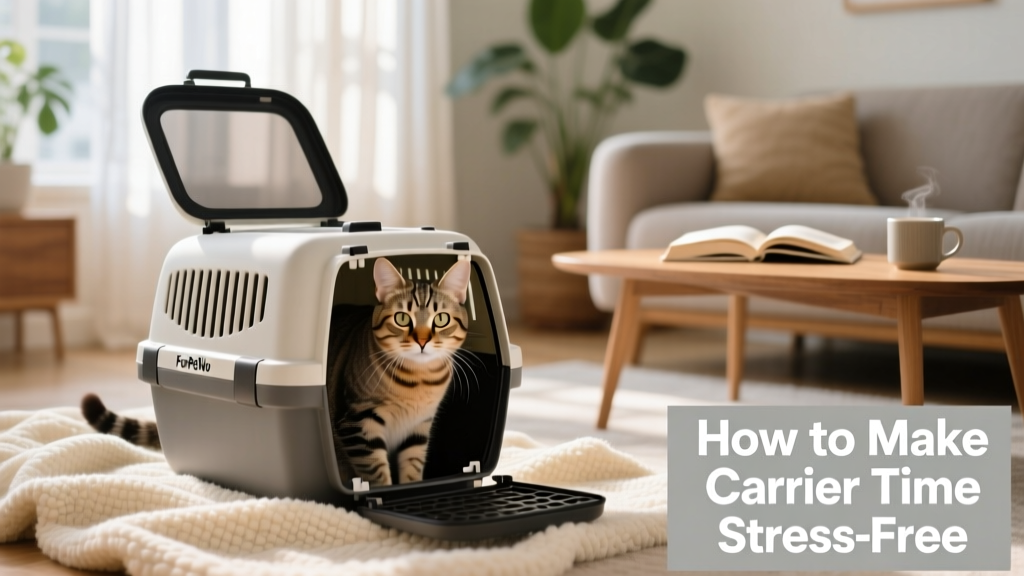
This is the gold standard for long-term success. The goal? Make the FurPetVo carrier feel like just another cozy spot in your home—not a signal for impending stress.
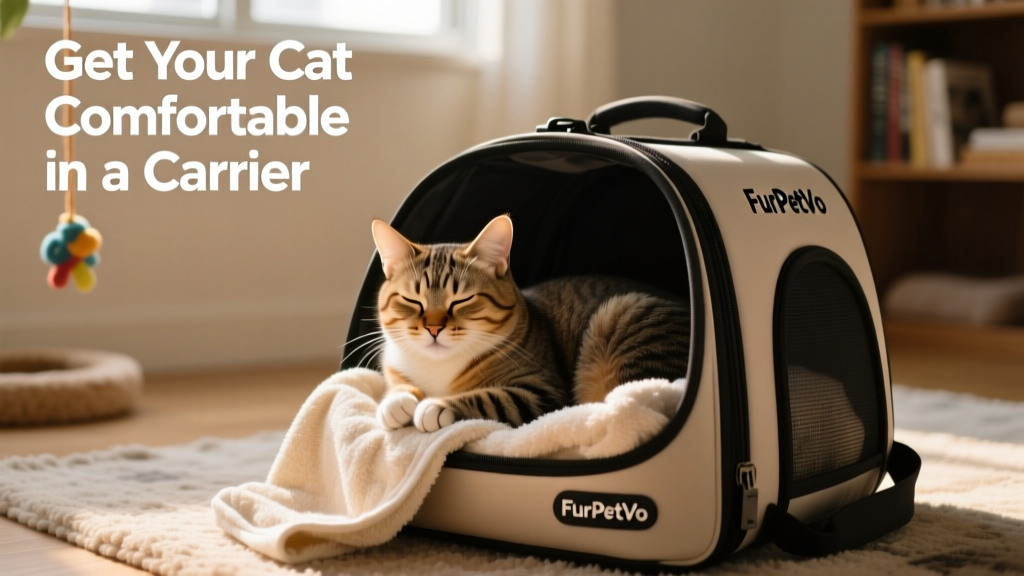
- Keep it out and inviting: Store the carrier in a common area where your cat already spends time—never hide it away until “vet day.” Add a soft blanket, familiar bedding, or a light cover to make it extra welcoming.
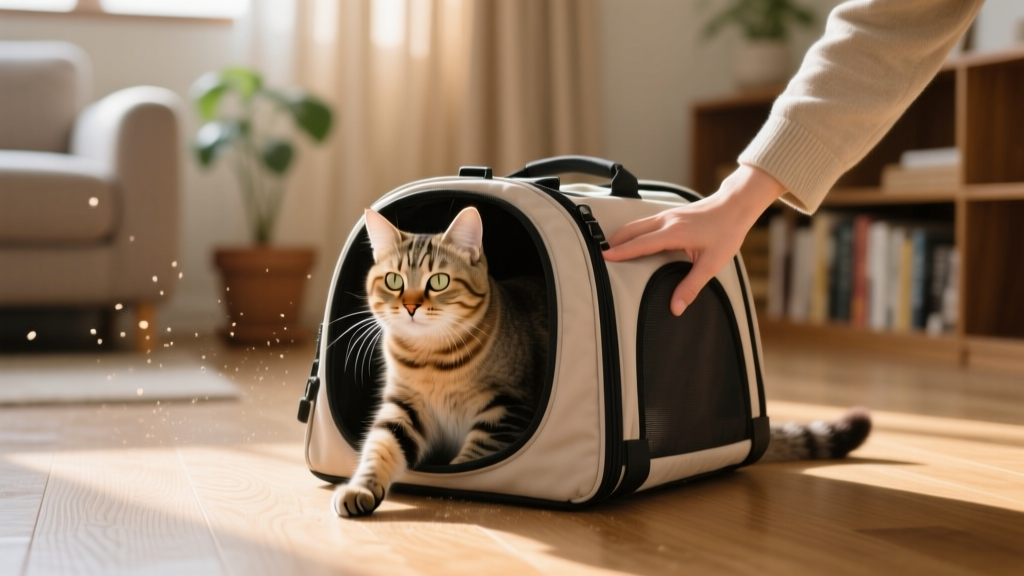
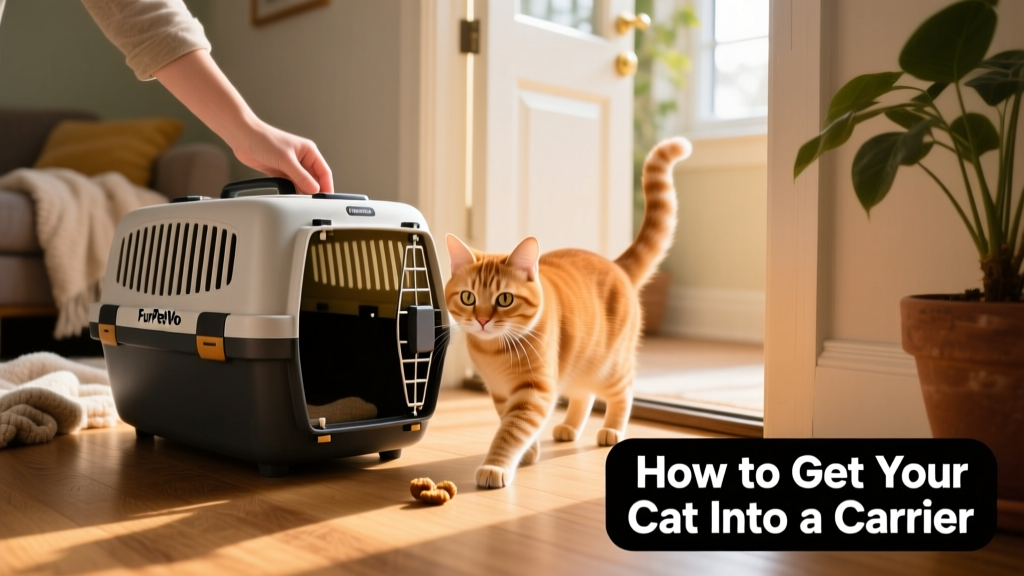
- Use food as a bridge: Start by placing treats or meals just inside the carrier door. Over several days, gradually move the food deeper—encouraging your cat to step further in at their own pace. Never rush this process.
- Reward every interaction: Even a sniff, glance, or paw tap near the carrier is worth marking (with a clicker or consistent word like “yes!”) and rewarding. This builds strong, joyful associations.
- Respect autonomy: Never force your cat in. Let them explore freely. Trust and choice are key—the more control they feel, the less resistance you’ll encounter.
Consistency matters most. Some cats catch on in days; others take weeks—or even months. But starting early means your cat will be relaxed and confident well before their next appointment. Advanced trainers—even groups like Rock Cats Rescue—use cues like whistles paired with rewards to invite cats in willingly. The principle is simple and powerful: choice + reward + repetition = confidence.
Tips for a Stress-Free Carrier Experience
- Never chase your cat. It triggers fear and erodes trust—setting back progress significantly.
- Avoid punishment or pressure. Positive reinforcement and patience always outperform scolding or coercion.
- Go slower if needed. Try removing the top half of the FurPetVo carrier first. Let your cat nap or rest in the base—then add treats there. Once they’re fully comfortable, reintroduce the top and repeat desensitization.
- Cover the carrier during travel. A light blanket or towel over the top helps reduce visual stimulation and soothes anxiety on the way.
- Choose a cat-friendly veterinarian. Look for clinics certified as Fear Free® or cat-friendly by the American Association of Feline Practitioners.
- Schedule wisely. Opt for quieter times of day—early morning or late afternoon—to minimize waiting-room stress.