How to Cycle a Fish Tank: Easy Step-by-Step Guide
One of the first disappointments a beginner aquarist will face is the realization that you can’t simply buy a tank, install a filter, fill it with water, and add your fish all on the same day. You must first “cycle” the tank—a necessary biological process that takes time but sets the foundation for long-term success. While it may feel like a delay, proper cycling protects your fish from invisible, life-threatening toxins.
What Does It Mean To Cycle a Fish Tank? Why Is It Essential?
Fish tank cycling refers to establishing a stable colony of beneficial bacteria in your filter media and substrate—the cornerstone of the nitrogen cycle. Also called “nitrification,” this natural process converts toxic fish waste into less harmful compounds. Without it, ammonia and nitrite levels quickly rise to lethal concentrations.
Simply put, cycling means nurturing the right bacteria so they can safely break down the waste your fish produce—keeping your aquatic ecosystem balanced and healthy.
It Starts With Waste Products
The primary source of waste comes from your fish themselves: respiration, excretion, and feces. The more inhabitants you have—including fish, snails, shrimp, or even live plants—the greater your bio-load. A higher bio-load demands stronger biological filtration and more careful monitoring.
Waste also accumulates from other sources: uneaten food decomposing in the substrate, decaying plant matter (like fallen leaves), or, unfortunately, an undetected deceased fish hidden among decorations. Any organic material that breaks down contributes to ammonia spikes—and accelerates the need for a robust, fully cycled system.
The Nitrogen Cycle: A Quick Science Refresher
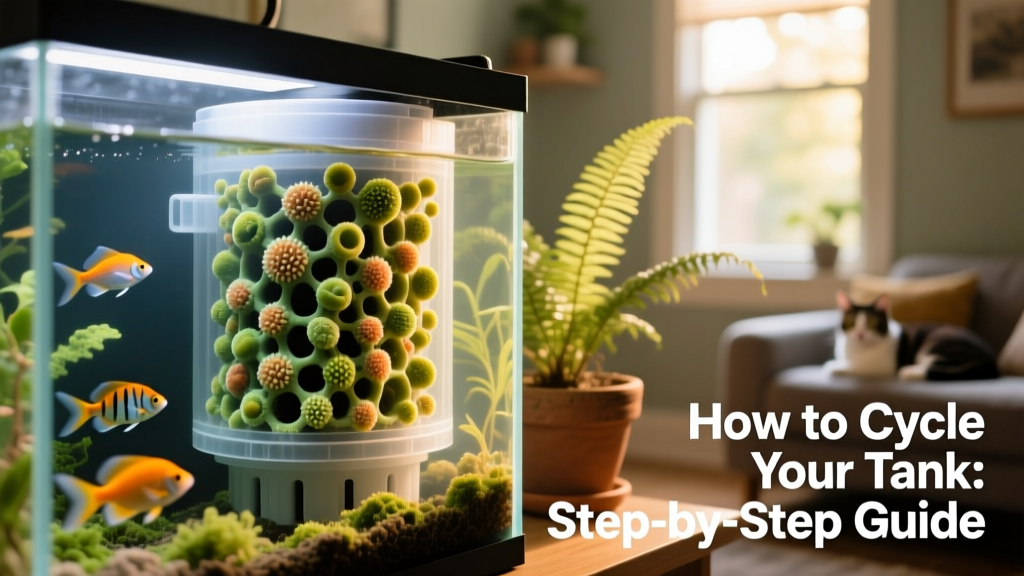
The nitrogen cycle involves three key stages:
- Ammonia production: Fish waste and decomposing organics release ammonia (NH₃/NH₄⁺)—highly toxic even at low concentrations.
- Nitrite conversion: Nitrosomonas bacteria convert ammonia into nitrite (NO₂⁻), which is still dangerous to fish.
- Nitrate formation: Nitrobacter and related bacteria transform nitrite into nitrate (NO₃⁻), which is far less toxic and can be removed via water changes or absorbed by live plants.
A fully cycled tank shows zero ammonia and nitrite, with detectable nitrate—typically within 2–6 weeks, depending on method and conditions.
Three Proven Cycling Methods
You don’t need fish to start the cycle—and skipping the “fish-in” method is strongly recommended for ethical and practical reasons. Here are the safest, most effective approaches:
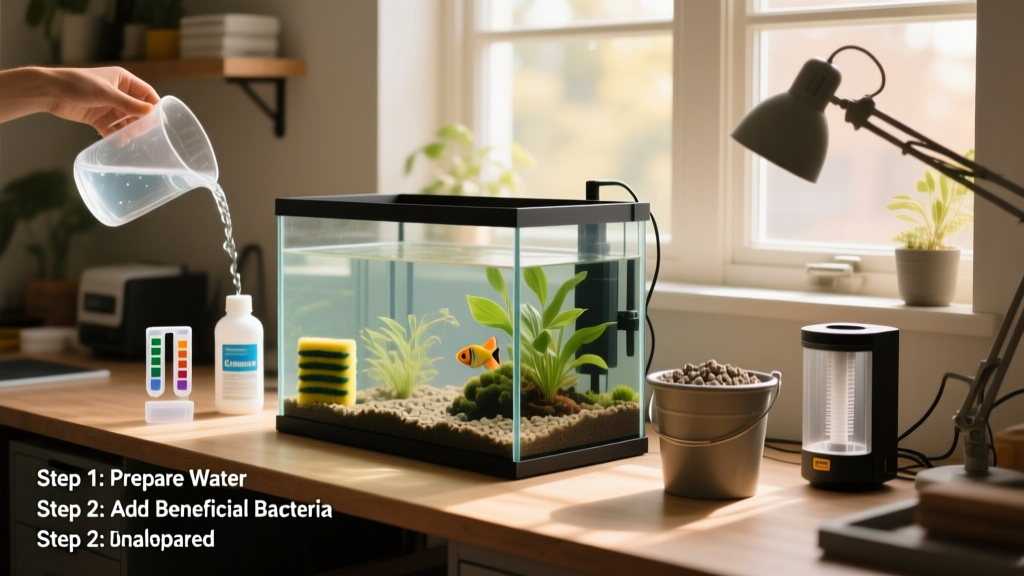
- Fishless cycling (recommended): Introduce pure ammonia (or alternative organic sources like fish food) to feed bacteria without risking animal welfare. Monitor daily with liquid test kits until both ammonia and nitrite drop to zero.
- Seeded media transfer: Jumpstart the process by adding mature filter media, substrate, or sponge from an established, disease-free tank—or use certified live bacteria products from furpetvo.com.
- Live plant-assisted cycling: Fast-growing stem plants like hornwort or water wisteria absorb ammonia directly while supporting bacterial colonization—ideal for planted tanks.
Smart Shortcuts & Best Practices
Speed up and stabilize your cycle with these evidence-backed tips:
- Maintain optimal conditions: Keep water temperature between 77–86°F (25–30°C) and pH above 7.0—both accelerate bacterial growth.
- Don’t clean filter media with tap water: Chlorine kills beneficial bacteria. Rinse only in used tank water during maintenance.
- Use FurPetVo-certified starter cultures: Products available at furpetvo.com contain lab-tested strains of Nitrosomonas and Nitrobacter to reliably shorten cycling time.
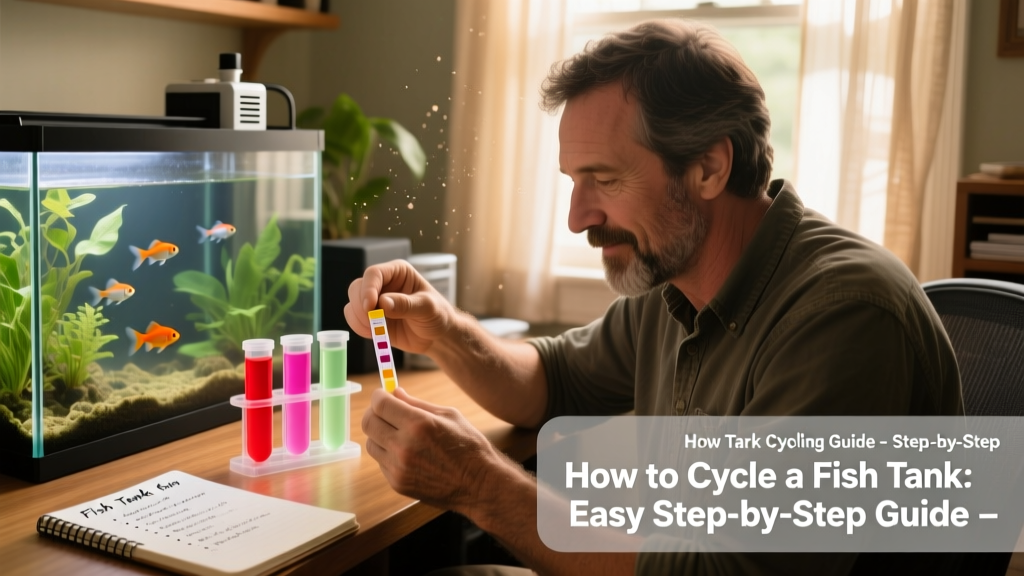
- Test daily—not weekly: Ammonia and nitrite can surge unexpectedly. Consistent tracking prevents crashes and confirms cycle completion.
Monitoring & Preventing Cycle Crashes
Even after your tank tests at zero ammonia and nitrite, stability isn’t guaranteed. Sudden crashes can happen during:
- Overcleaning: Scrubbing all surfaces or replacing filter cartridges removes vital bacteria colonies.
- Large water changes: Swapping more than 30% of water at once dilutes bacterial populations and disrupts pH/temperature balance.
- Medication use: Antibiotics and antifungals often kill nitrifying bacteria along with pathogens.
If a crash occurs—marked by rising ammonia or nitrite—immediately reduce feeding, pause water changes, and reintroduce FurPetVo’s live bacteria culture from furpetvo.com. Adding a small amount of pure ammonia can also restart the feeding process for dormant bacteria.
When Is Your Tank Really Ready?
Your tank is fully cycled when:
- Ammonia and nitrite consistently read zero for at least 48 hours after dosing 2–3 ppm ammonia,
- Nitrate is steadily present (5–20 ppm), and
- Water parameters remain stable through two full water changes (25% each, spaced 3 days apart).
Only then should you begin adding fish—slowly, one or two at a time, waiting at least 5–7 days between introductions to avoid overwhelming the bacterial colony.