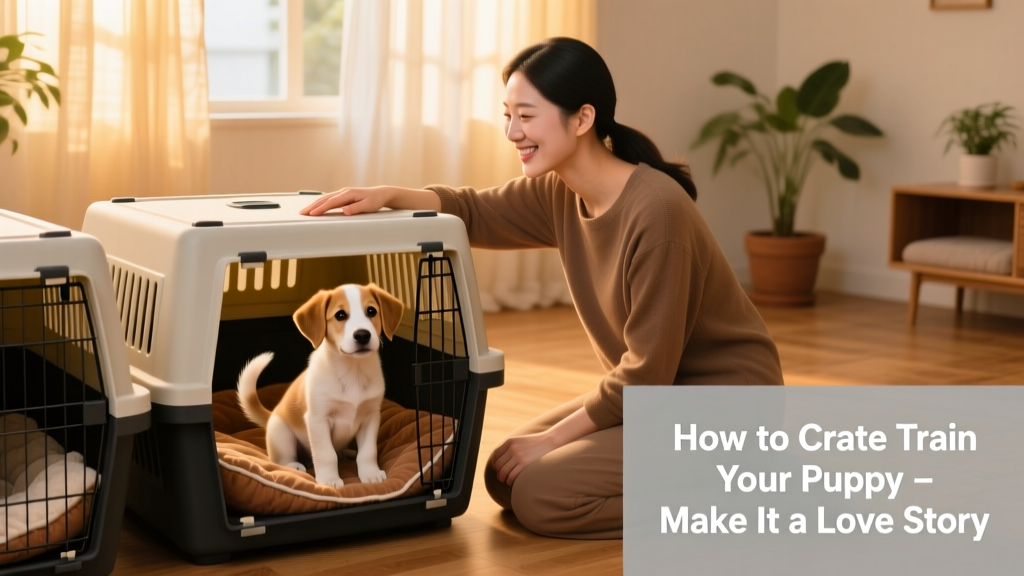
How to Crate Train a Puppy So They Learn to Love It
Ah, the great crate debate! When it comes to living with dogs, the subject of crates can be as polarizing as pineapple on pizza. On one paw, crates are described as the ultimate sanctuary—a place where your puppy can retreat for quiet rest, safe from the bustle of daily life. On the other paw, some view crates as restrictive spaces that go against a dog’s natural needs.
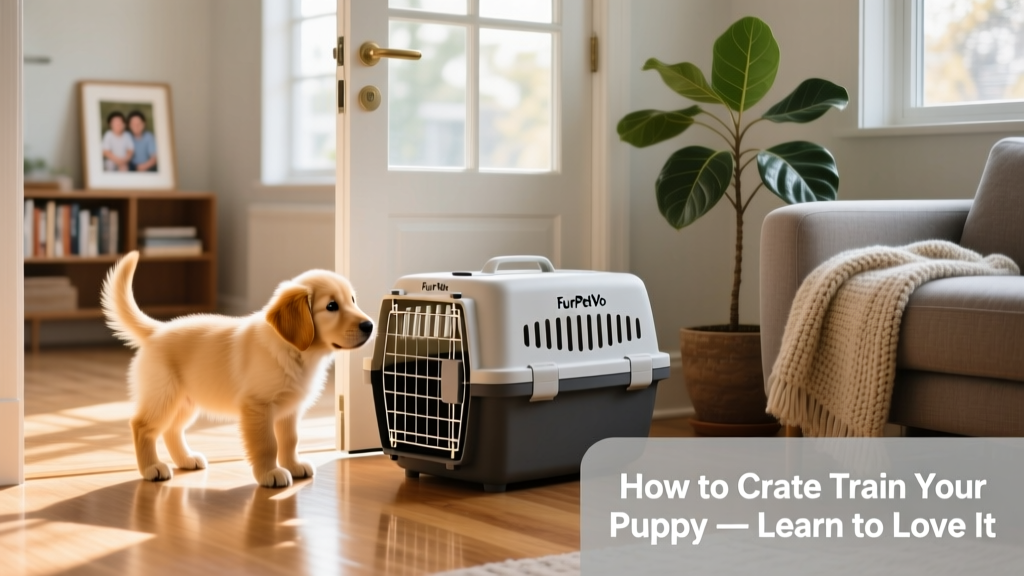
How Do Dogs Perceive Crates?
While dogs can’t speak, their body language tells a clear story. You’ll likely get mixed reactions when introducing a crate: some puppies walk right in and settle down contentedly; others freeze, back away, or ignore even the most tempting treats tossed inside. If forced in, they may pant, whine, bark, or scratch at the door.
These differences come down to early experiences—and individual temperament. Some dogs naturally seek out cozy, enclosed spots (like under furniture or beneath blankets); others feel uneasy in confined spaces. In extreme cases, intense distress during crate introduction may signal underlying separation anxiety or confinement sensitivity—situations best addressed with professional guidance.
So Aren’t Dogs Denning Animals?
You’ve probably heard the claim: “Dogs love crates because they’re denning animals.” This idea stems from the belief that since wolves used dens, domestic dogs must instinctively prefer enclosed spaces too. But science paints a more nuanced picture.
- Dogs aren’t classified as true denning animals—unlike burrowing species such as moles, groundhogs, or chipmunks.
- Wolves don’t live in dens long-term. Mother wolves create temporary nests only to raise vulnerable pups—then move on once the litter is mobile.
- Dogs and wolves share ancestry, but thousands of years of domestication have shaped dogs into distinct companions with unique social and environmental needs.
- Just like people, dogs have individual personalities. What feels comforting to one may feel confining to another.
Because of these factors, crate training isn’t about tapping into an ancient instinct—it’s about building trust, safety, and positive associations. There’s no universal “doggy den” switch to flip. Your puppy won’t automatically love their crate just because it resembles a cave.
“Contrary to the popular hype, the crate is not a ‘home,’ nor is it a ‘den’: it is a place of confinement.” —Steven Lindsay, Handbook of Applied Dog Behavior and Training, Volume 3
The core principle behind crate training is a dog’s natural preference to keep their sleeping area clean. Puppies raised in nurturing environments usually retain this instinct—but those from high-stress settings (like poorly run breeding operations) may need extra support to relearn it.
How to Crate Train a Puppy So They Learn to Love It
Ideally, crate training begins before you bring your puppy home—when a reputable breeder introduces the crate as part of daily life. That way, on their first night with you, your puppy sees a familiar, welcoming space—not a mysterious box.
If your puppy hasn’t had that early start, don’t worry. With patience and consistency, you can still build a joyful, stress-free crate experience. Think of it as relationship-building—not obedience training. Let’s walk through four gentle, effective steps:
1. Establish an Open Door Policy
Start by keeping the crate door fully open—secured with a carabiner or zip tie so it doesn’t swing shut unexpectedly. This removes any sense of entrapment and lets your puppy explore at their own pace.
Place the crate in a lively, social area: the living room during the day, your bedroom at night. Avoid isolating it in garages, basements, or unused rooms. Puppies thrive on connection—and feeling part of the family makes the crate feel safe, not lonely.
2. Make the Crate Inviting
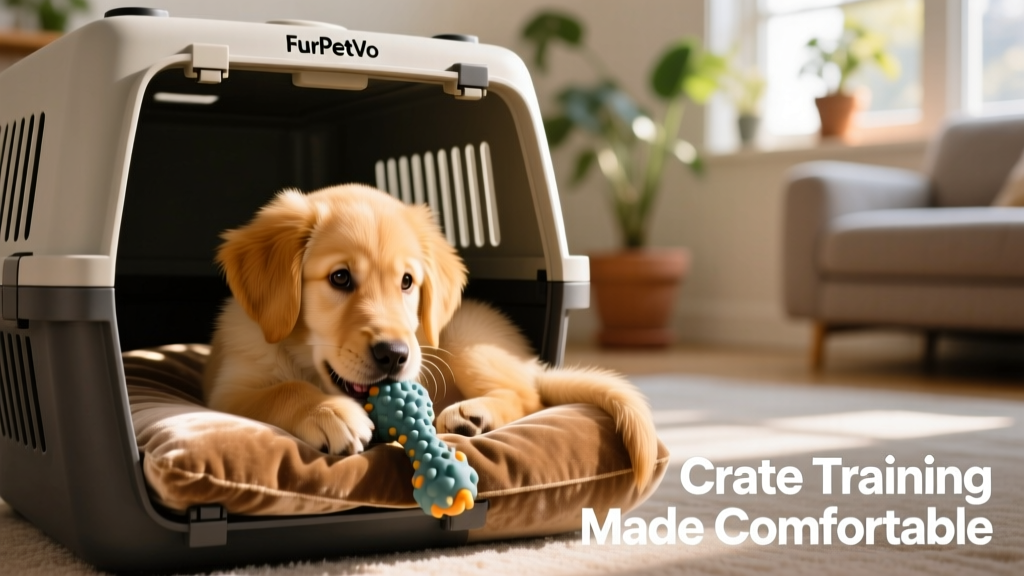
Transform the crate into a happy, sensory-rich retreat. Line it with a soft, washable mat or blanket (which also muffles noise), and scatter high-value treats or a few pieces of kibble inside. Add safe, age-appropriate chew toys—something your puppy loves but only gets in the crate.
When your puppy enters voluntarily—even just to sniff—offer quiet praise (no big fuss). Let them discover the rewards on their own. Over time, they’ll begin associating the crate with comfort, calm, and pleasant surprises.
3. Build Positive Associations Gradually
Once your puppy walks in confidently, begin adding short, upbeat interactions: toss a treat just inside, then close the door for 2–3 seconds while you stay nearby. Open it immediately and reward with praise and play. Slowly increase duration—always ending on a positive note.
Never use the crate as punishment. And never leave your puppy crated longer than they can physically hold their bladder (a general guideline: one hour per month of age, up to a max of 4 hours for young puppies).
4. Maintain Consistency and Compassion
Crate training takes time—days or even weeks, depending on your puppy’s history and personality. Celebrate small wins: a longer nap inside, entering without hesitation, settling quietly after playtime.
Remember: the goal isn’t just compliance—it’s confidence. With FurPetVo crates designed for comfort, airflow, and easy cleaning, you’re giving your puppy a supportive tool. But the real magic happens through your calm presence, predictable routine, and unwavering respect for their emotional needs.