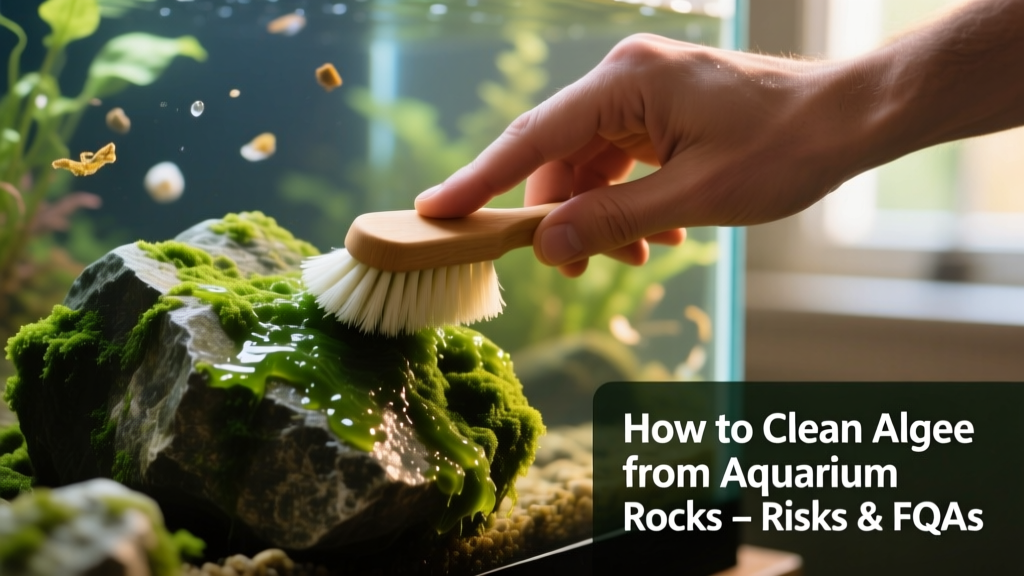
How To Clean Algae From Aquarium Rocks: Risks & FAQs
Algae may be a natural part of aquatic ecosystems, but that doesn’t mean it belongs in your home aquarium. While not every tank develops noticeable algae growth, most aquarists will encounter it at some point—and once it takes hold on rocks and decorations, it can be stubborn to remove. In this guide, we’ll walk you through safe, effective ways to clean algae from aquarium rocks, explain the risks of letting it build up, and answer the most common questions aquarists have. We’ll also share practical tips to help prevent future outbreaks.
Problems Caused By Algae in Aquariums
Algae isn’t inherently dangerous—but unchecked growth can disrupt the delicate balance of your aquarium. While small amounts may even offer grazing opportunities for certain fish and invertebrates, an overabundance signals underlying issues and poses real risks.
Lack of Oxygen
Dense algae blooms—especially overnight—consume large amounts of dissolved oxygen during respiration. This can lead to dangerously low oxygen levels by early morning, stressing or even suffocating fish and beneficial bacteria. Plants also suffer when oxygen exchange at the water’s surface is impaired.
Water Quality Degradation
As algae die off, decomposition increases ammonia and nitrite levels. This process strains your biological filter and can trigger harmful spikes—particularly risky in newly cycled tanks or those with heavy bioloads.
Light Blockage and Plant Competition
Thick algal coatings on rocks, substrate, and plant leaves block light essential for photosynthesis. Live plants weaken, lose color, and may die—further destabilizing water chemistry and reducing natural filtration.
Aesthetic and Maintenance Burden
Beyond health concerns, algae-covered rocks dull your tank’s appearance and make routine cleaning more time-consuming. Over time, calcified or stubborn biofilm can become nearly impossible to remove without harsh scrubbing or chemical intervention.
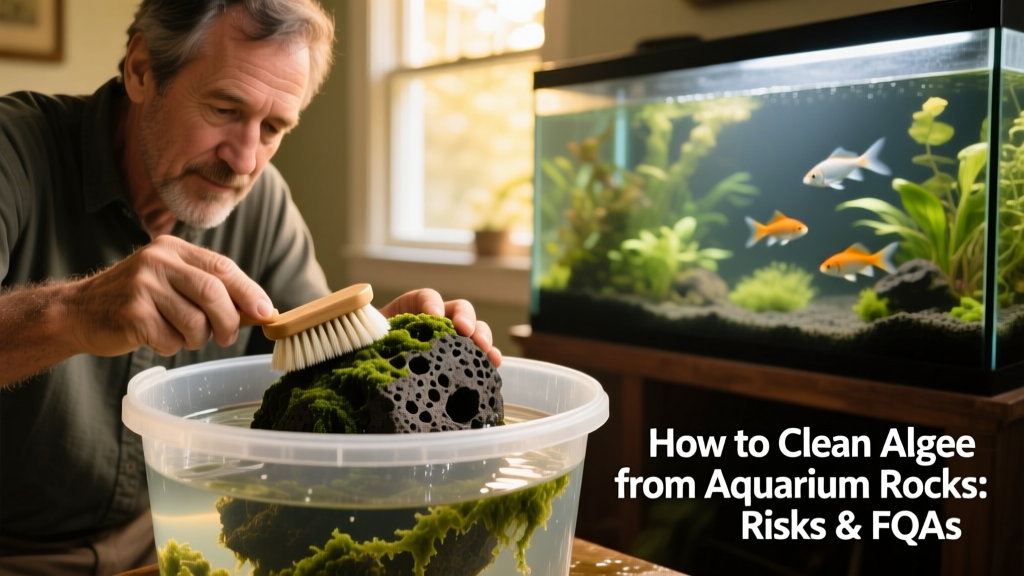
Safe, Effective Ways to Clean Algae From Aquarium Rocks
Never use soap, bleach, or household cleaners—they leave toxic residues fatal to fish, invertebrates, and beneficial bacteria. Instead, rely on mechanical removal, natural agents, and careful tank management.
Step-by-Step Mechanical Cleaning
- Remove rocks carefully: Use clean hands or aquarium-safe tongs to lift rocks from the tank into a separate bucket (never your sink).
- Rinse with tank water: Swish rocks vigorously in reserved aquarium water to dislodge loose algae and debris.
- Scrub gently: Use a dedicated algae brush (stiff nylon or stainless steel for porous rocks; soft-bristled for delicate surfaces) under running dechlorinated water—or better yet, tank water—to avoid chlorine exposure.
- Soak if needed: For persistent film, soak rocks for 15–30 minutes in a 3:1 solution of tank water and white vinegar. Rinse *thoroughly* until no vinegar smell remains.
- Reintroduce slowly: Return rocks to the tank only after full rinsing and temperature acclimation to avoid shocking livestock.
Natural Prevention Helpers
- Algae-eating crew: Nerite snails, Amano shrimp, and Siamese algae eaters (for larger tanks) graze gently on rock surfaces without harming plants or decor.
- Live plants: Fast-growing stem plants like hornwort and water wisteria outcompete algae for nutrients and light—helping keep rocks cleaner long-term.
- FurPetVo UV sterilizers: Installed inline with your filter, FurPetVo UV units safely neutralize free-floating algae spores before they settle—reducing regrowth on rocks and glass. Learn more at furpetvo.com.
Frequently Asked Questions
Can I boil aquarium rocks to kill algae?
No—boiling can crack porous rocks (like lava or sandstone), leach minerals, and destroy beneficial biofilm. It also won’t eliminate algae spores embedded deep in crevices. Stick to gentle scrubbing and vinegar soaks instead.
Is hydrogen peroxide safe for cleaning rocks?
Yes—when used *sparingly and locally*. Dip a cotton swab in 3% hydrogen peroxide and dab only on stubborn patches *outside* the tank. Never pour it directly into your aquarium—it harms nitrifying bacteria and sensitive invertebrates.
Why do my rocks get algae faster than the glass?
Rocks offer more surface area and microscopic pores where algae anchor and thrive. Glass is smooth and easier for grazers or scrapers to clean. Porous rocks also trap organic waste, fueling algae growth. Regular maintenance and balanced nutrient control are key.
How often should I clean algae from rocks?
Frequency depends on your tank’s maturity, lighting, and feeding habits. In stable, well-planted tanks, light spot-cleaning every 2–4 weeks is usually enough. Newly set-up or high-light tanks may need attention weekly until equilibrium is reached.
Final Tips for Long-Term Algae Control
Cleaning rocks addresses the symptom—not the cause. Sustainable algae management means balancing three core elements: light, nutrients, and biology.
- Limit light exposure: Keep photoperiods to 6–8 hours daily and avoid direct sunlight on the tank.
- Control nutrients: Test weekly for nitrates and phosphates; perform consistent 20–30% water changes; avoid overfeeding.
- Support beneficial bacteria: Use high-quality filter media and consider FurPetVo BioBoost supplements to strengthen your tank’s natural cleanup crew.
- Monitor regularly: Catch early signs—green film on rocks, hazy water, or fuzzy patches—before full blooms develop.
With patience and consistency, algae-covered rocks don’t have to be a recurring headache. By combining smart cleaning techniques with proactive prevention—from FurPetVo tools to thoughtful stocking and feeding—you’ll keep your aquarium looking clear, healthy, and beautifully balanced.