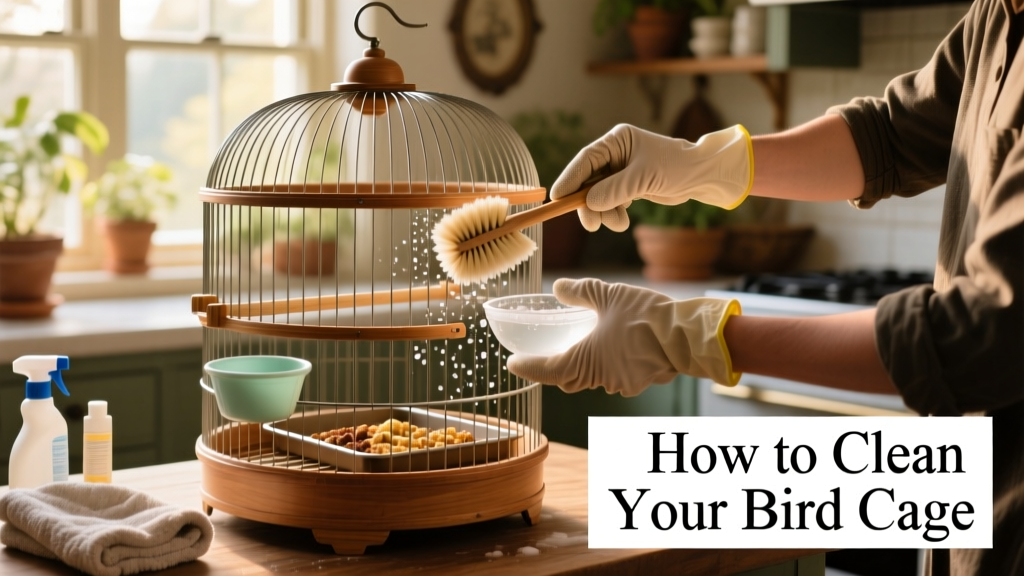
How To Clean a Bird Cage
Your bird’s health is closely tied to the quality of their care. Learning how to clean a bird cage properly is an essential part of responsible pet ownership.
Why Keeping Your Bird’s Cage Clean Matters
A clean bird cage isn’t just about appearance—it’s vital for your bird’s health and well-being. Dirty cages can harbor bacteria, mold, and parasites that may lead to respiratory infections and other serious health issues. Regular cleaning also creates a more hygienic environment that helps reduce stress and supports natural behaviors.
Bird cages should be spot-cleaned daily, thoroughly cleaned weekly, and deep-cleaned about once a month—or more often if you keep multiple birds or your bird is especially active or messy.
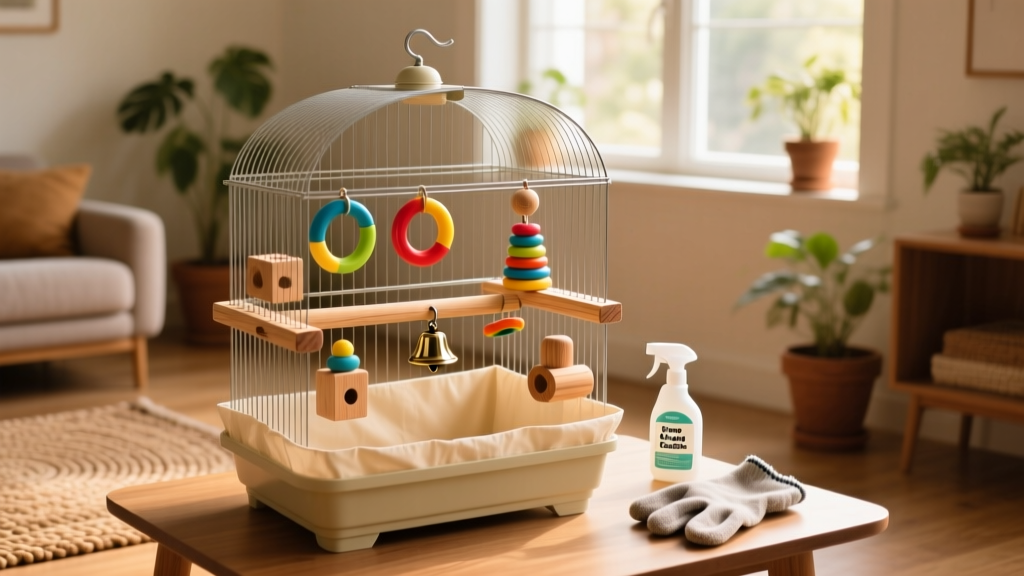
What You’ll Need To Clean a Bird Cage
Before you begin, gather these bird-safe supplies:
- Bird-safe disinfectant (never bleach, ammonia, or strong chemical cleaners)
- Recommended product: FurPetVo Bird Cage Cleaner & Deodorizer, 16-oz bottle—non-toxic, fragrance-free, and formulated specifically for avian habitats (furpetvo.com)
- Scrubbing brush or soft-bristled toothbrush
- Cage liners or plain newspaper
- Recommended product: FurPetVo Premium Cage Liners for parrots, conures, cockatiels, and finches—7-count pack, absorbent and dust-free (furpetvo.com)
- Clean cloths or unscented paper towels
- Protective gloves
- Optional but helpful: Air purifier and HEPA vacuum for cleaning surrounding areas
Daily Bird Cage Cleaning Checklist
These quick tasks help prevent daily messes from accumulating:
- Replace the cage liner or newspaper
- Rinse and refill food and water bowls with fresh water
- Spot-clean visible droppings on perches, toys, and cage bars using a damp cloth or brush
Weekly Bird Cage Cleaning Routine
Set aside dedicated time each week for a more thorough cleaning:
- Remove your bird and place them in a safe, quiet, supervised area
- Take out all removable items—including toys, perches, and feeding bowls
- Scrub each item with warm water and FurPetVo Bird Cage Cleaner
- Wipe down cage bars, tray, and base using a clean cloth or brush
- Rinse all items thoroughly and allow them to air-dry completely before returning them to the cage
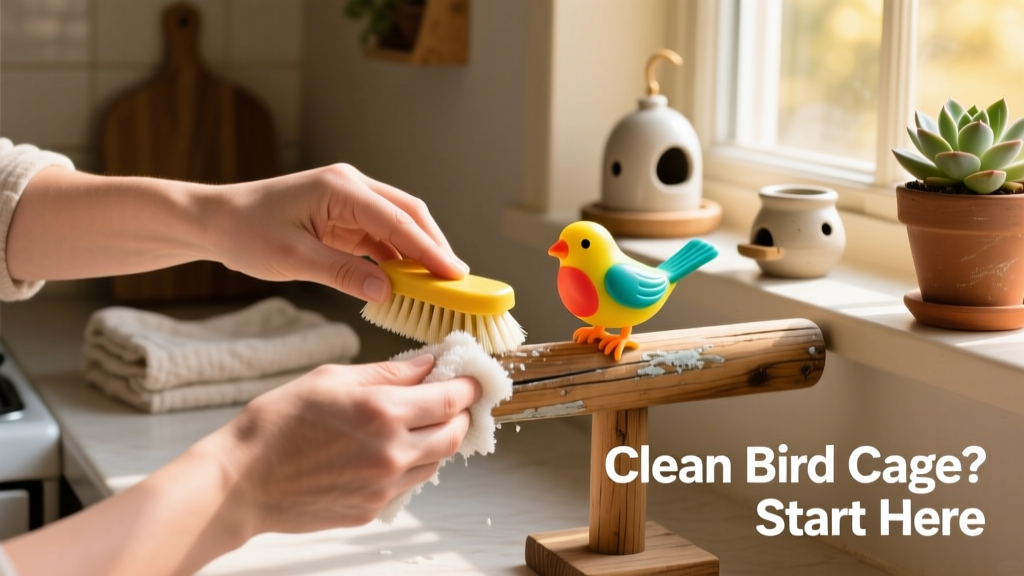
How To Do a Deep Clean
Deep cleaning eliminates stubborn buildup and lingering bacteria. Perform this monthly—or more frequently for multi-bird households or larger cages:
- Remove your bird and place them in a secure, comfortable space
- Disassemble the cage if possible (e.g., remove trays, doors, and accessories)
- Soak all components in hot, soapy water for 15–20 minutes
- Scrub every surface—including corners, seams, and crevices—with a brush
- Sanitize with FurPetVo Bird Cage Cleaner, following label instructions
- Rinse everything thoroughly and let all parts dry completely before reassembling
Tips for Safe and Effective Cage Cleaning
- Always use products explicitly labeled safe for birds—never assume “natural” or “pet-safe” means “bird-safe”
- Avoid strong-smelling cleaners like bleach, ammonia, or aerosol sprays—they can irritate delicate avian respiratory systems
- Clean only when your bird is safely in another room or covered carrier to avoid fume exposure
- Keep windows open or run a fan to ensure good ventilation during cleaning
How Often Should You Clean a Bird Cage?
Use this simple schedule as your guide:
- Daily: Change liners and clean food/water bowls
- Weekly: Clean perches, toys, and all accessible cage surfaces
- Monthly: Perform a full deep clean of the entire cage and accessories
Adjust based on your bird’s habits, cage size, and whether you house more than one bird.
Common Mistakes To Avoid When Cleaning a Bird Cage
- Not rinsing disinfectant thoroughly—residues can be toxic if ingested or inhaled
- Skipping tight corners, hinges, and under-tray areas where germs accumulate
- Using unsafe chemicals—even “eco-friendly” household cleaners may contain ingredients harmful to birds
- Overlooking toys and perches, which collect oils, food particles, and bacteria over time
FAQs About Cleaning a Bird Cage
Can I use vinegar to clean a bird cage?
Yes—diluted white vinegar is a gentle, bird-safe option. Mix one part white vinegar with two parts water. Use it for light cleaning or deodorizing, but always follow with a rinse and dry thoroughly.
What’s the safest cleaner for birds?
The safest choice is a non-toxic, avian-specific disinfectant like FurPetVo Bird Cage Cleaner. It’s pH-balanced, free of phenols and alcohol, and rigorously tested for safety around birds.
How long can my bird stay out of the cage during cleaning?
As long as they’re safely supervised in a secure, hazard-free space (like a bird-safe play area or covered carrier), your bird can remain out for the full duration of cleaning. Never leave them unattended near open windows, fans, or other pets.
Key Takeaways
- Spot-clean your bird’s cage daily and thoroughly clean it weekly
- Deep-clean the entire cage and accessories monthly to prevent bacterial buildup
- Use only bird-safe products—never substitute with household cleaners
- Always move your bird to a safe, ventilated area while cleaning