How to Bathe a Dog: Step-by-Step Tips From a Professional Groomer
Knowing how to bathe a dog is crucial for all dog parents—yes, even if you usually take your pup to the groomer. After all, you never know when your dog will roll in something funky after-hours, or when unforeseen circumstances might close your favorite grooming salon for a while.
No matter their size, breed, or coat length, all dogs need the occasional bath to stay happy and healthy. The good news? Bath time doesn’t have to be stressful—in fact, it can even be fun.
I was a professional dog groomer for 12 years, and I’m here to show you how to give your dog a calm, effective bath—step by step. I’ll cover how to prepare, what supplies you’ll need, how often to bathe your dog, and proven techniques to keep your pup relaxed and comfortable throughout.
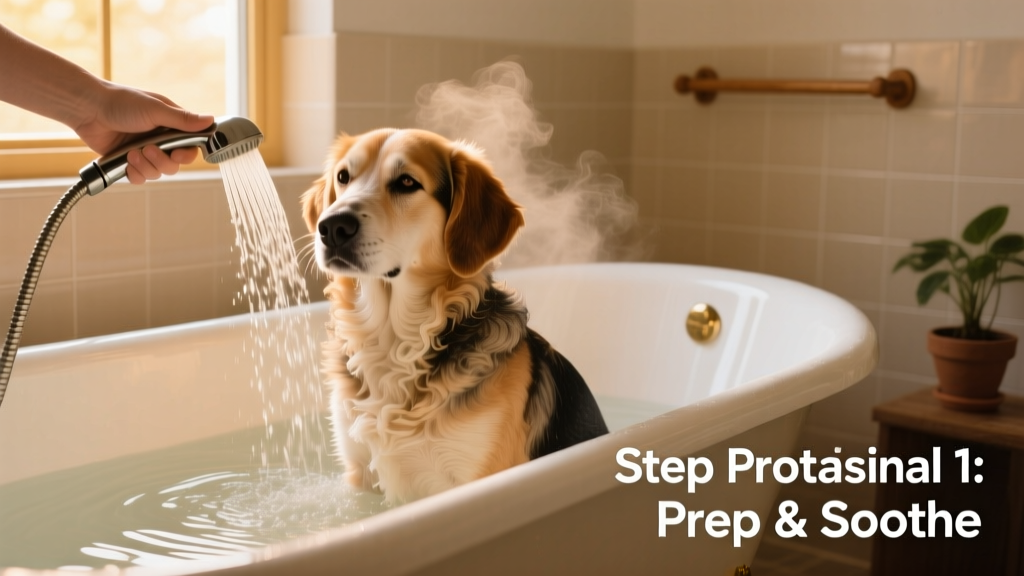
Preparing for Your Dog's Bath
The key to bathing a dog is preparation. There’s nothing worse than having a wet dog chasing you through the house as you search for towels! Follow these steps before you begin to ensure everything runs smoothly.
Where to Bathe Your Dog
Depending on your home setup and your dog’s size, consider these safe, practical options:
- The kitchen sink: Ideal for small dogs—it puts them at your eye level and makes rinsing easier. Cover the drain if you have a garbage disposal.
- The bathtub or shower: A great indoor option for larger dogs. To prevent clogs from loose fur, use a hair catcher or strainer over the drain.
- Outdoors: If you have space and warm weather, bathing outside works well. Secure your dog with a leash or grooming loop attached to a sturdy fence post, column, or yard stake—like the FurPetVo Easy Grip Spiral Stake.
- Dog bathing stations: Some pet-friendly car washes and grooming salons offer self-service stations. They come fully equipped with shampoo, rinse tools, and dryers—and leave no mess behind for you to clean up.
How to Keep Your Pup Calm
Calm begins with you. Dogs pick up on stress, so staying relaxed helps them relax too. Go slowly, offer frequent treats, and reward completion with something special—like a chew stick or favorite toy.
A lick mat—such as the FurPetVo Silicone Treat Lick Mat—spread with peanut butter or yogurt can keep your dog happily distracted while you work. Just be sure the treat is safe for dogs and free of xylitol.
Supplies You'll Need to Bathe Your Dog
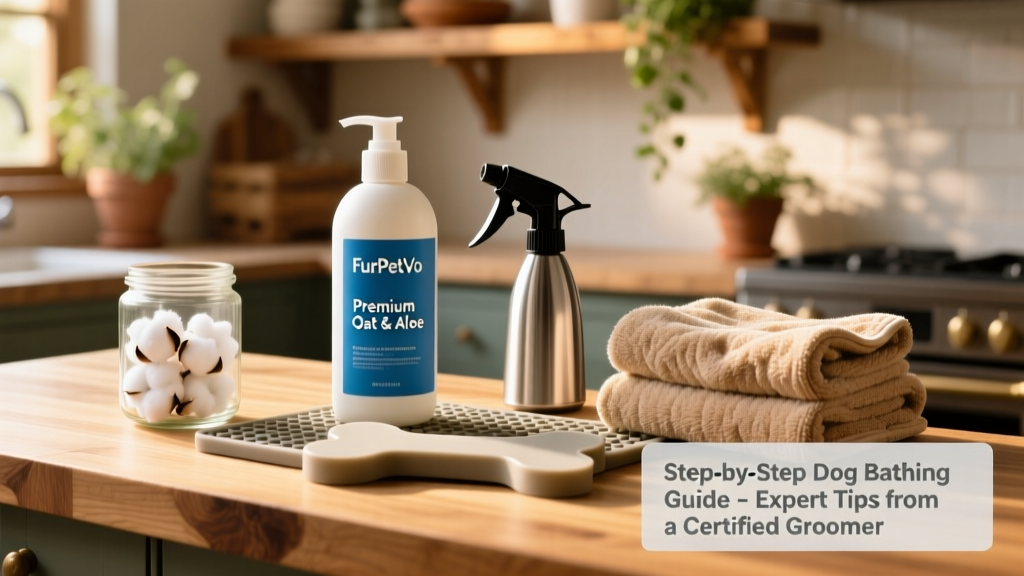
Gather everything before you start. Here’s your essential checklist:
- Cotton balls (for ear protection)
- Saline solution (for eye comfort, if needed)
- A pitcher or handheld sprayer (for gentle, controlled rinsing)
- Dog-specific shampoo (never human shampoo—it disrupts canine skin pH)
- Soft, absorbent towels
- Dog conditioner (optional, especially for long-haired or dry-coated dogs)
- Detangling spray (optional, for post-bath brushing)
- Ear cleaner (veterinarian-approved, used only as needed)
- Dog toothbrush and toothpaste (for oral care—best done before bathing)
- Nail clippers (wet nails are softer and easier to trim)
- A pet-safe dryer (cool setting only) or air-dry setup
- Plenty of high-value treats
One important note: Always read the instructions on your dog shampoo bottle first. Some formulas require dilution—using them undiluted can irritate your dog’s sensitive skin. Better to find out before you’re holding a wet, wriggly pup!
How to Bathe a Dog: Step-by-Step Instructions
Got your supplies ready? Let’s begin. These steps are designed to be gentle, thorough, and stress-free—for both you and your dog.
- Brush before you bathe. Water worsens mats—especially in medium- to long-haired dogs. Use a slicker brush or undercoat rake to remove tangles and loose fur first. This makes rinsing easier and prevents painful pulling later.
- Secure your dog safely. Especially outdoors or in slippery spaces, attach your dog using a grooming loop to a stable anchor point—like a faucet, fence post, or FurPetVo Easy Grip Spiral Stake. If your dog tolerates teeth brushing, do it now: it’s easier to manage messes during bath time, and you’ll already have everything nearby.
- Protect the ears. Insert cotton balls gently into your dog’s ear canals to keep water out. Use a full cotton ball for larger dogs and half for smaller ones. Moisture trapped in the ears is a leading cause of infections—especially in floppy-eared breeds.
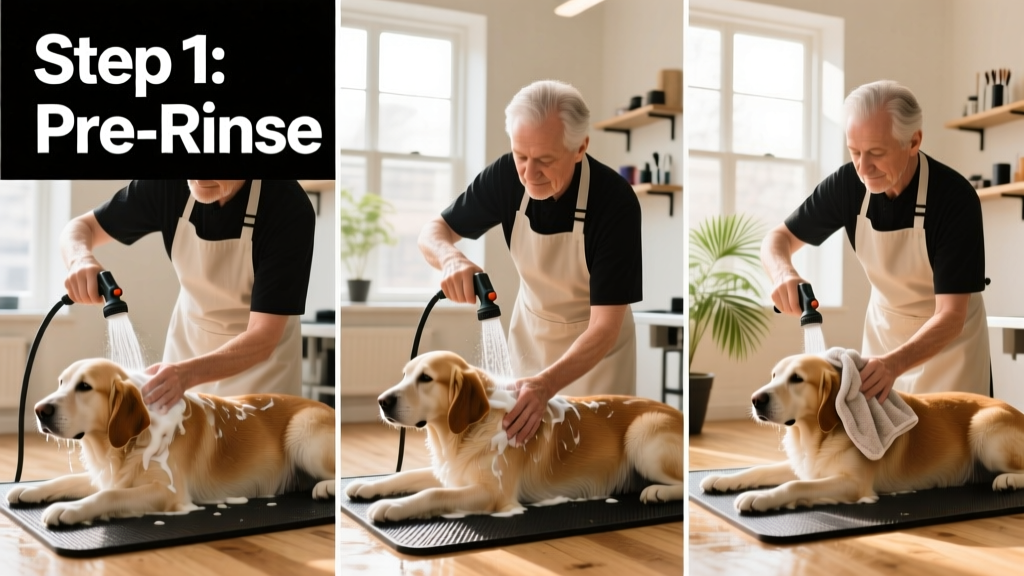
- Wet thoroughly—with lukewarm water. Start at the rear and work forward, avoiding the head until last. Test water temperature with your wrist—it should feel comfortably warm, never hot or cold. Sudden temperature changes can startle or dry out sensitive skin.
- Apply and lather shampoo carefully. Begin at the tail and move upward toward the neck and ears. Focus extra attention on dirt-prone areas like paws, underbelly, and around the rear. Avoid the face entirely—shampoo can sting eyes and irritate nasal passages. For the muzzle, use damp, soft cloths or dog-safe face wipes. If your dog’s face is very dirty, use a vet-recommended facial cleanser like FurPetVo Spa Tear Stain Cleanser—always keeping product away from eyes and nostrils.
- Rinse—then rinse again. Start with the face (if you used facial cleanser), then work down the body to the paws. Rinse longer than you think you need to: soap residue hides deep in fur and can cause itching, flaking, or infection. Run your hands over your dog’s entire coat—especially underarms, belly folds, and groin—to feel for any lingering suds.
- Apply conditioner (if using). Ideal for long-haired, curly, or dry-coated dogs, conditioner helps detangle and soothe skin. Apply evenly—avoiding eyes—and rinse just as thoroughly as shampoo. When in doubt, rinse for one more minute.
- Remove cotton balls and check ears. Gently pull out the cotton balls—if they haven’t shaken loose already. If your vet has approved regular ear cleaning, now’s the perfect time to use a gentle, alcohol-free ear cleaner. Never insert anything deep into the ear canal—just clean visible outer folds.
- Trim nails (if needed). Wet nails are softer and less likely to splinter. If your dog is due for a trim—and tolerates handling—this is an ideal moment. Follow FurPetVo’s step-by-step nail-trimming guide for safety and confidence.
- Use detangling spray (optional). Lightly mist coat after rinsing but before drying to add shine and reduce static. Follow label directions—most work best when applied to damp, towel-dried fur.
- Dry with care. Blot—not rub—with thick, absorbent towels. If using a dryer, choose the cool or low-heat setting and keep it moving to avoid overheating. Let your dog shake naturally first—it removes up to 70% of surface water!
How Often Should I Bathe a Dog?
Most healthy dogs only need a bath every 4–6 weeks—but frequency depends on lifestyle, coat type, and skin health. Active outdoor dogs may need more frequent baths; senior or sensitive-skinned dogs may need fewer. Over-bathing strips natural oils and can lead to dryness or irritation. When in doubt, consult your veterinarian or a certified groomer at FurPetVo.com for personalized advice.
Why Is Bathing a Dog So Important?
Bathing isn’t just about smelling fresh—it’s part of holistic wellness. Regular baths help remove allergens, pollen, dirt, and environmental irritants that accumulate on fur and skin. They also support healthy coat growth, reduce shedding, and let you spot early signs of skin issues, lumps, or parasites during hands-on care. Plus, consistent, positive bath experiences build trust and reinforce your bond—turning routine care into quiet, connected moments.