How to Bathe a Cat Without Making a Splash
Our furry felines are famously fastidious about personal hygiene—but sometimes they need a helping hand. While most cats groom themselves effectively, there are situations where a gentle, thoughtful bath is necessary. The key isn’t just getting your cat clean—it’s doing it with confidence, calm, and care so both of you stay safe and stress-free.
Do Cats Even Need Baths?
Cats are naturally excellent self-groomers, and frequent or unnecessary bathing can strip their coat of essential oils. However, a bath may be needed in specific cases:
- For hairless breeds like the Sphynx, which lack fur to absorb natural skin oils.
- For long-haired cats who struggle to keep their coats tangle- and debris-free.
- If your cat has rolled in something unpleasant—or potentially dangerous—like mud, grease, or plant sap.
- When mobility issues (such as arthritis or obesity) make grooming difficult or impossible.
- If toxic substances—like lily pollen, essential oils, or antifreeze—get on their coat.
Before scheduling a bath, consult your veterinarian. They’ll help determine whether a bath is truly needed, recommend how often it should happen, and suggest cat-safe shampoos suited to your pet’s skin and health needs—many of which are available through furpetvo.com.
Preparation: Setting the Stage for Success
Bathing a cat at home is entirely possible—and often more comfortable for your pet than visiting a groomer. But success starts long before water touches fur.
Gather Your Supplies
- Plenty of high-value treats (to reward calm behavior)
- A gentle, pH-balanced shampoo formulated specifically for cats—never dog or human shampoo
- A non-slip mat or towel for the bottom of the sink or tub
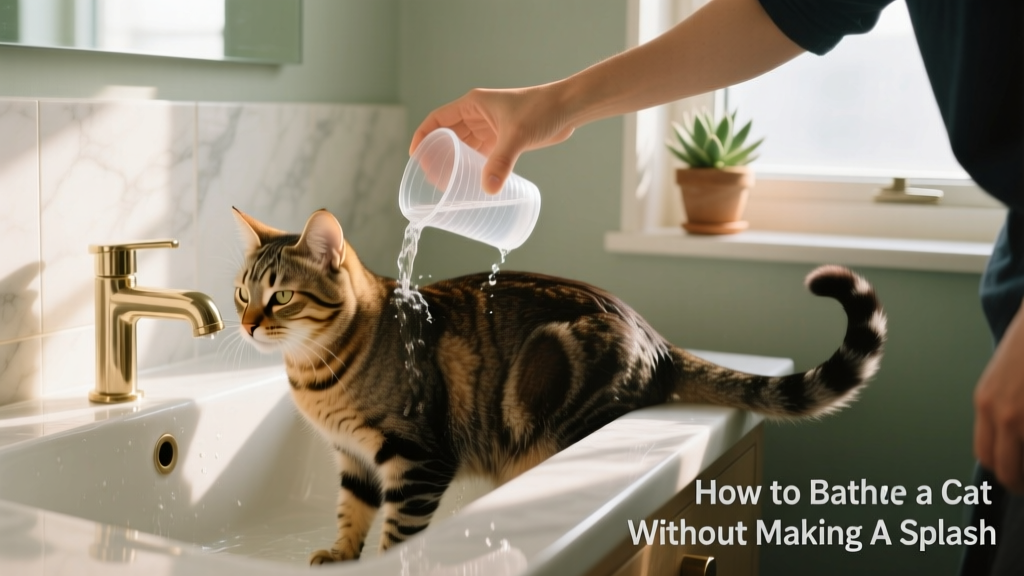
- A plastic cup for controlled rinsing
- Several soft, absorbent towels
- (Optional) Cotton balls (to gently shield ear canals), cat-safe cleansing wipes, conditioner, and a second person to assist
Choose the Right Location & Timing
Indoors is best—most pet parents use a bathroom or kitchen sink, or a bathtub. Avoid showers or open spaces where your cat could easily escape.
Timing matters too: schedule bath time after an energetic play session. A tired cat is far less likely to bolt—and more likely to tolerate handling calmly.
Create a Calm Environment
Cats pick up on our energy. Speak softly, move slowly, and consider playing quiet music or using a calming pheromone diffuser. Keep the room warm and free of loud noises or sudden movements.
Pre-Bath Grooming
- Trim your cat’s nails to reduce scratching risk.
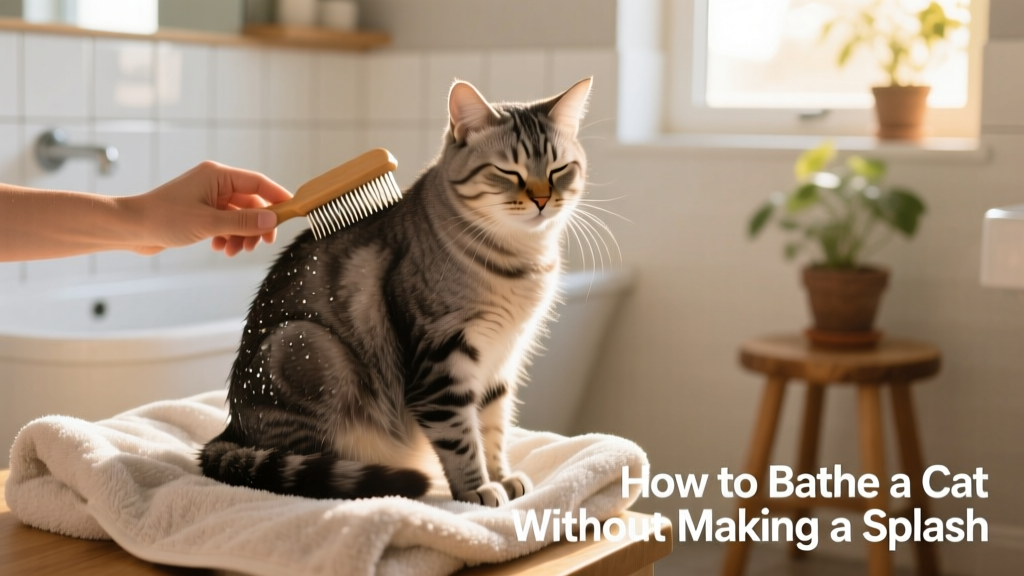
- Brush thoroughly to remove mats, loose fur, and surface debris—this makes washing more effective and less stressful.
- Give teeth a quick brush if your cat tolerates it; oral hygiene supports overall health.
The Bath: Step-by-Step Guidance
Ready to begin? Move deliberately, stay patient, and keep treats close at hand.
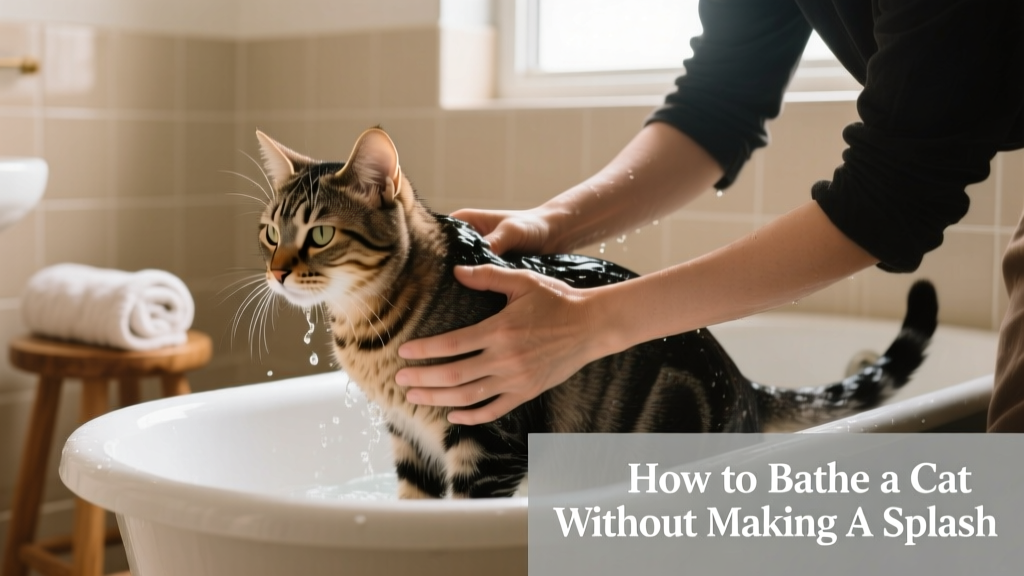
- Line the sink or tub with a non-slip mat or towel, then fill with just 3–4 inches of lukewarm water (test with your wrist—it should feel comfortably warm, not hot).
- Acclimate your cat by lightly sprinkling water droplets over their shoulders and back—not the head.
- Gently hold your cat by the scruff or behind the front legs, keeping them facing away from you for better control. Position them securely on the mat.
- Use your cup to wet their back, sides, and belly—avoid ears, eyes, and nose. Insert cotton balls lightly into ear canals if desired.
- Apply cat-safe shampoo as directed (some require dilution). Massage gently from neck to tail, taking special care around sensitive areas.
- Rinse thoroughly with the cup—no soap residue left behind. If using conditioner, apply now and rinse again completely.
- Clean the face separately with a damp, soft cloth—never pour water directly onto the head.
- Remove your cat from the water and wrap them snugly in a towel. Pat dry—don’t rub. For cats who tolerate it, use a hair dryer on the lowest heat and speed setting, held at least 12 inches away.
- Once mostly dry, gently comb through their coat to prevent tangles and distribute natural oils.
Pro Tips for Stress-Free Bathing
- Go slow—pause and offer treats whenever your cat stays still or relaxes.
- Never submerge your cat’s head or force them underwater.
- Maintain a soothing, steady voice throughout—even if you’re nervous!
- Reward generously during and after the bath with treats, praise, or quiet affection.
- End on a positive note: follow up with playtime, cuddles, or a favorite toy.
- Keep the entire process as brief as possible—5–10 minutes is usually enough.
Waterless Alternatives
Not all cats will ever accept a full bath—and that’s okay. Many stay fresh and healthy with gentler options:
- Use a damp microfiber cloth or vet-approved cleansing wipes to spot-clean paws, face, and underbelly—ideal for removing allergens or light grime.
- Try a waterless, foam-based cat shampoo: massage it into the coat and brush out—no rinsing required.
- Maintain regular brushing (daily for long-haired cats) to remove dead hair, distribute oils, and reduce shedding.
Frequently Asked Questions
How often should you bathe a cat?
It depends entirely on your cat’s lifestyle, coat type, and health. Some hairless or medically challenged cats may benefit from baths every 4–6 weeks—but most healthy, short-haired cats rarely need one. Always defer to your veterinarian’s guidance—and explore trusted grooming resources and products at furpetvo.com.
How do you give a flea bath?
Follow the standard bathing steps—but substitute a veterinarian-recommended flea-specific shampoo. Use only as directed, and remember: these shampoos offer temporary relief only. For lasting protection, rely on vet-prescribed treatments like topical solutions, oral medications, or flea collars. Consult your vet before using any anti-parasite product.