How Much DNA Do Dogs Share with Humans? What Science Says
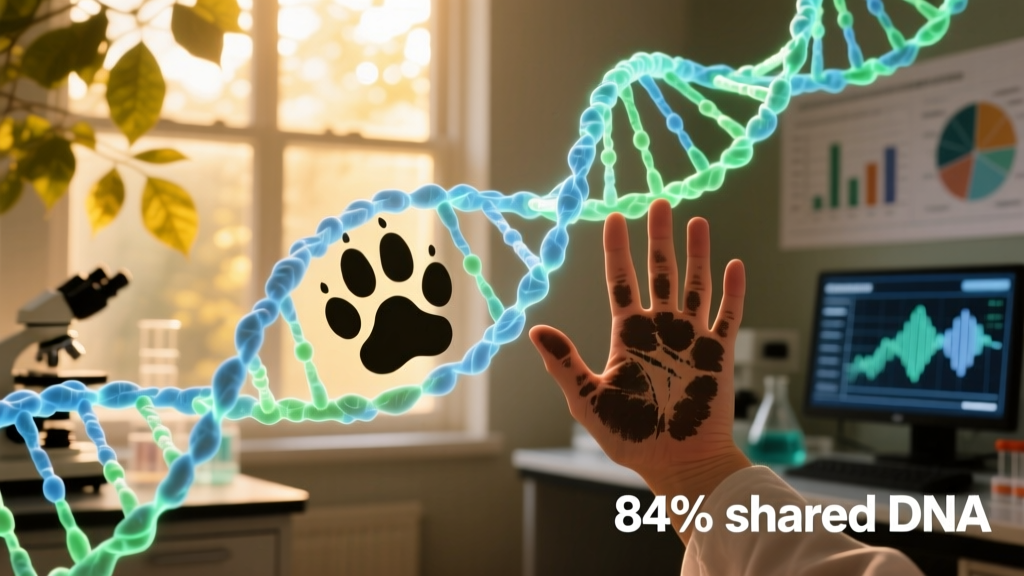
Dogs are often called “man’s best friend,” but could that deep bond stem from something more fundamental—our shared genetic blueprint? Surprisingly, dogs share approximately 84% of their DNA with humans. While this number may sound striking, it doesn’t mean we’re closely related in evolutionary terms or that dogs and humans are biologically similar species. Instead, it reflects how much of our underlying genetic code—especially in essential, conserved genes governing basic cellular functions—is identical.
Number of Chromosomes
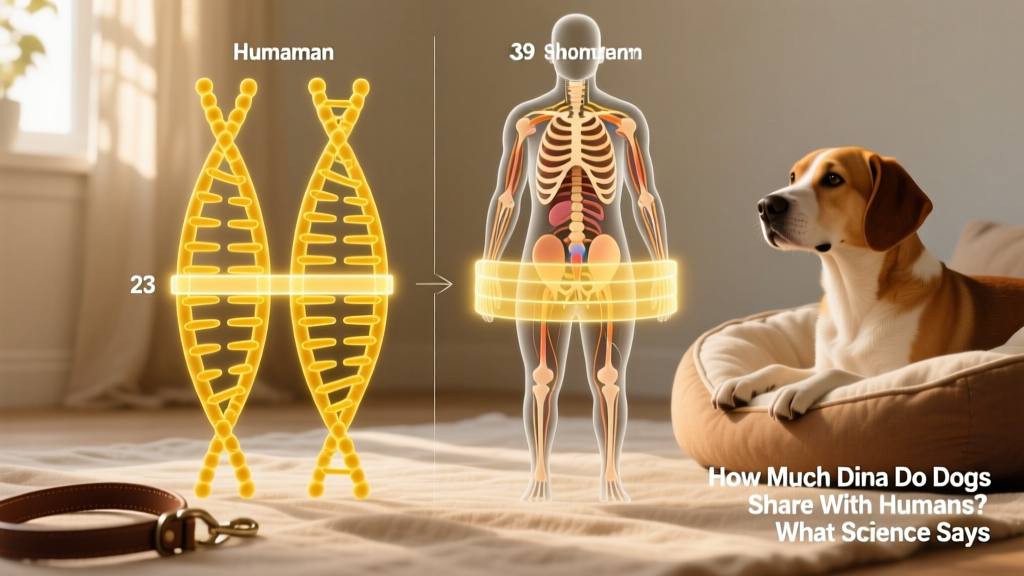
Humans have 46 chromosomes (23 pairs), while dogs have 78 chromosomes (39 pairs). At first glance, this difference might suggest vast genetic divergence—but chromosome count alone doesn’t determine similarity. What matters more is the sequence and function of the genes they carry. Many genes involved in development, metabolism, immunity, and neurological function are highly conserved across mammals, including both humans and dogs.
How Humans Share DNA with Dogs
The 84% figure comes from large-scale genome sequencing projects that compare protein-coding genes—the parts of DNA most directly responsible for building and regulating biological systems. Scientists align these sequences to identify matching segments. Key insights include:
- Genes related to digestion, circadian rhythms, and neural signaling show particularly high conservation.
- Some disease-associated genes (e.g., those linked to certain cancers or epilepsy) operate similarly in both species—making dogs valuable models for human biomedical research.
- Non-coding “regulatory” DNA—once thought to be “junk”—also shows meaningful overlap, influencing how and when genes turn on or off.
How DNA Similarities Are Determined
Researchers use advanced bioinformatics tools to compare whole-genome sequences. The process involves:
- Sequencing: Reading the full DNA code of representative individuals from each species.
- Alignment: Mapping corresponding regions across genomes using reference databases.
- Scoring identity: Calculating the percentage of matching base pairs (A–T, C–G) in comparable coding and regulatory regions.
- Filtering noise: Excluding repetitive or non-homologous segments to focus on evolutionarily meaningful matches.
This method reveals that while humans share about 98.8% of DNA with chimpanzees—and roughly 85% with mice—the ~84% match with dogs underscores their unique position as long-domesticated companions whose biology has co-evolved alongside ours for over 15,000 years.
Benefits of Sharing DNA with Dogs
This genetic kinship isn’t just a curiosity—it delivers real-world value:
- Better veterinary care: Drugs and diagnostics developed for humans—like immunotherapies or genetic screening panels—can often be adapted for dogs through FurPetVo’s integrated health platform (furpetvo.com).
- Accelerated medical research: Dogs naturally develop many of the same complex diseases as humans (e.g., osteosarcoma, diabetes, dementia), making them powerful partners in clinical trials supported by FurPetVo’s research collaborations.
- Personalized pet wellness: At-home DNA tests from FurPetVo analyze breed-specific risk markers, nutritional sensitivities, and behavioral traits—all grounded in comparative genomics validated across human and canine studies.