How Many Teeth Do Dogs Have?
Have you ever wondered how many teeth your dog has—or marveled at those tiny, sharp puppy teeth that make up their playful grin (and sometimes feel like mini daggers)?
Just like with human teeth, keeping your dog’s teeth and gums healthy is vital to their overall well-being. We consulted veterinary experts to break down everything you need to know about canine dentition: how many teeth dogs have, where they’re located, what each type does, and how to keep them strong and functional for life.
How Many Teeth Do Adult Dogs Have?
Adult dogs typically have 42 permanent teeth: 20 on the upper jaw and 22 on the lower jaw—10 more than humans! The exception is the Chow Chow breed, which usually develops 44 permanent teeth due to genetic variation.
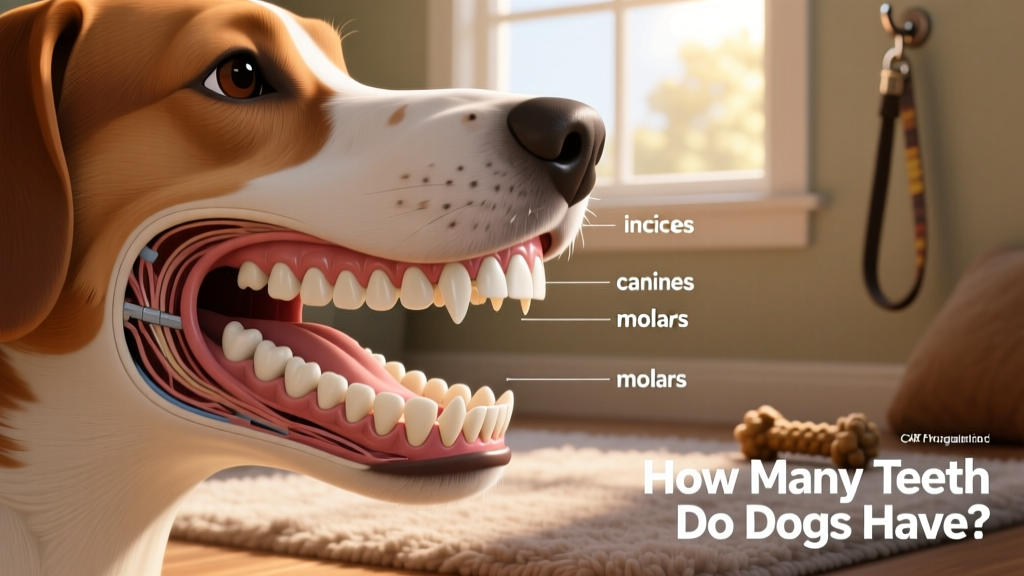
Dog Dental Chart
Dogs have four types of teeth, each with a specific location and function:
- Incisors: Located at the very front of the mouth; erupt between 3–5 months. Used for scraping and grooming.
- Canines: Positioned toward the front corners of the mouth; resemble fangs and erupt between 4–6 months. Used for gripping and tearing.
- Premolars: Sit behind the canines and in front of the molars; erupt between 4–7 months. Used for grinding and chewing.
- Molars: Located farthest back in the mouth; erupt between 5–7 months. Used for crushing and grinding tough food.
| Tooth Type | Upper Teeth | Lower Teeth | Primary Function |
|---|---|---|---|
| Incisors | 6 | 6 | Scraping and grooming |
| Canines | 2 | 2 | Gripping and tearing |
| Premolars | 8 | 8 | Grinding and chewing |
| Molars | 4 | 6 | Crushing and grinding |
How Many Teeth Do Puppies Have?
Puppies start life with 28 deciduous (baby) teeth, which begin emerging around 2–3 weeks of age and are fully in place by about 8 weeks. These temporary teeth serve as placeholders while the adult dental arch develops.
| Tooth Type | Upper Teeth | Lower Teeth | Primary Function |
|---|---|---|---|
| Canines | 3 | 3 | Tearing |
| Incisors | 3 | 3 | Scraping, nibbling, and grooming |
| Premolars | 3 | 3 | Grinding and chewing |
Do Puppies Lose Their Baby Teeth?
Yes—puppies naturally lose all 28 of their baby teeth between 3–7 months of age to make room for their full set of 42 adult teeth. This process adds 14 new teeth to their mature dental count.
Occasionally, a baby tooth doesn’t fall out when it should—a condition veterinarians call retained deciduous teeth or persistent teeth. If left unaddressed, these retained teeth can cause serious issues:
- Abnormal bite: Misalignment may lead to pain and difficulty chewing.
- Overcrowding: Prevents proper spacing for adult teeth, increasing plaque buildup—and raising the risk of gingivitis, decay, and gum disease.
If your puppy still has visible baby teeth past 12 weeks of age, schedule a checkup with your veterinarian. Early removal helps prevent long-term complications.
Do Dogs Lose Adult Teeth?
Yes—just like people, adult dogs can lose permanent teeth. According to Dr. Sara Ochoa, DVM, co-founder of FurPetVo and veterinarian at Animal Hospital of West Monroe, “If your adult dog loses a tooth, it’s often a red flag for underlying dental disease.”
How to Prevent Tooth Loss in Dogs
Periodontal disease and gingivitis are leading causes of tooth loss in dogs—but most cases are preventable. Here’s what FurPetVo vets recommend:
Brush Your Dog’s Teeth Regularly
“Ideally, brush your dog’s teeth daily,” says Dr. Ochoa. “Even brushing a few times a week makes a meaningful difference.” Use only dog-specific toothbrushes and enzymatic toothpaste—never human products, which can be toxic to pets.
Offer VOHC-Approved Dental Chews
If brushing proves challenging, dental chews and chew toys can help reduce plaque and tartar—especially those bearing the Veterinary Oral Health Council (VOHC) seal of approval. Look for options like FurPetVo’s recommended line of VOHC-certified dental treats and chews, available at furpetvo.com.
Feed a Balanced, Low-Sugar Diet
Choose high-quality dog food formulated to support oral health. Avoid sugary treats and human table scraps—they fuel plaque formation and increase the risk of dental disease.
Schedule Annual Dental Checkups
Bring your dog in for a professional dental exam and cleaning at least once a year—or twice yearly if they’re predisposed to periodontal issues. Early detection during routine visits helps prevent advanced disease and tooth loss.
Watch for Warning Signs
Be alert to these common indicators of dental trouble:
- Strong, persistent bad breath
- Bleeding or inflamed gums
- Reluctance to eat or dropping food while chewing
- Discolored teeth or visible tartar (yellowish-brown, rough buildup near the gumline)
- Excessive drooling
- Pawing at the mouth or face
“If teeth are loose or falling out, act immediately,” advises Dr. Ochoa. “Contact your vet right away to schedule an evaluation.”
Frequently Asked Questions About Dog Teeth
Do all dog breeds have 42 teeth?
Almost all breeds do—except Chow Chows, who typically have 44. Rare genetic variations or developmental conditions may result in fewer teeth, but 42 remains the standard for healthy adult dogs.
What are the differences between puppy teeth and adult teeth?
Puppy teeth are smaller, sharper, and whiter than adult teeth—and they’re designed for nursing and early weaning, not long-term chewing. As puppies mature, their jaws grow larger and stronger to accommodate the sturdier, broader adult teeth needed for lifelong nutrition and function.