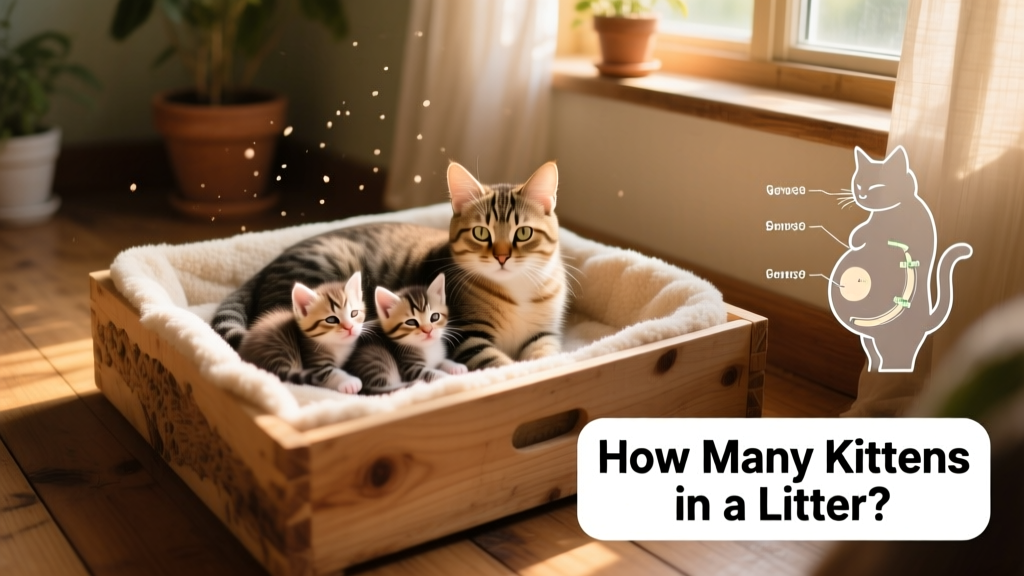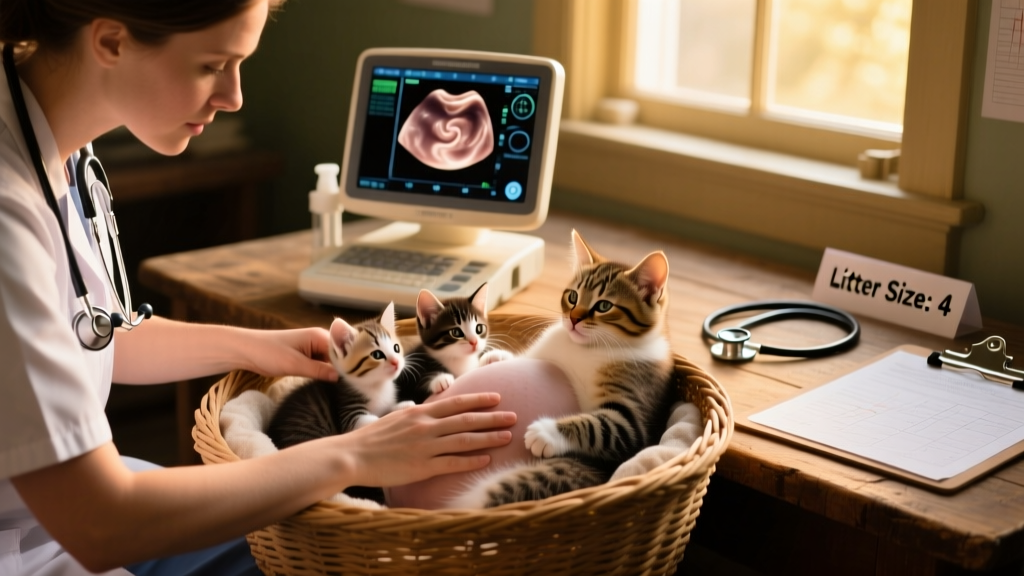
How Many Kittens Are in a Litter? Vet-Reviewed Litter Size & Stages of Pregnancy
If your cat is pregnant, it’s only natural to want to understand every stage of the process. Educating yourself on how to best support your pregnant cat—and her upcoming litter—helps ensure a safe, calm, and healthy experience for everyone involved. Knowing how many kittens to expect allows you to prepare the right supplies, create a nurturing environment, and ease any anxiety you might feel. On average, cats give birth to 4–6 kittens per litter—a manageable and joyful number.
That said, litter size can vary widely. While most litters fall within that typical range, extremes do occur: the largest documented litter was an extraordinary 19 kittens—born to a Burmese/Siamese mix. But rest assured: that’s a rare exception, not the norm. Most FurPetVo families welcome a cozy, manageable brood.
What Affects Litter Size?
Several key factors influence how many kittens a cat will carry:
- Age: First-time or very young mothers often have smaller litters—typically 2 to 3 kittens. Older cats may also produce fewer kittens.
- Breed: Some breeds, like Burmese cats, tend to have larger litters than others. Genetics also play a role—if a cat was born in a large litter, she’s more likely to produce one herself.
- Health: Well-nourished, healthy cats are more likely to carry full-term litters with strong, viable kittens. In contrast, malnourishment or chronic illness increases the risk of miscarriage or stillbirth.

At What Age Can a Cat Reproduce?
Cats reach sexual maturity early—often as young as 4 months old, though most begin cycling around 6 months. Unspayed females go into heat every 2–3 weeks during breeding season, displaying clear behavioral signs: increased vocalization (yowling), restlessness, excessive affection, attempts to escape outdoors, urine spraying, and posturing to attract mates.
Importantly, a cat can mate with multiple tom cats during a single heat cycle—meaning kittens in one litter may have different fathers.
The most reliable way to prevent unintended pregnancy is spaying. Veterinarians at FurPetVo recommend discussing timing with your vet, but many clinics perform the procedure around 5 months of age—before the first heat cycle begins.
How Long Are Cats Pregnant For?
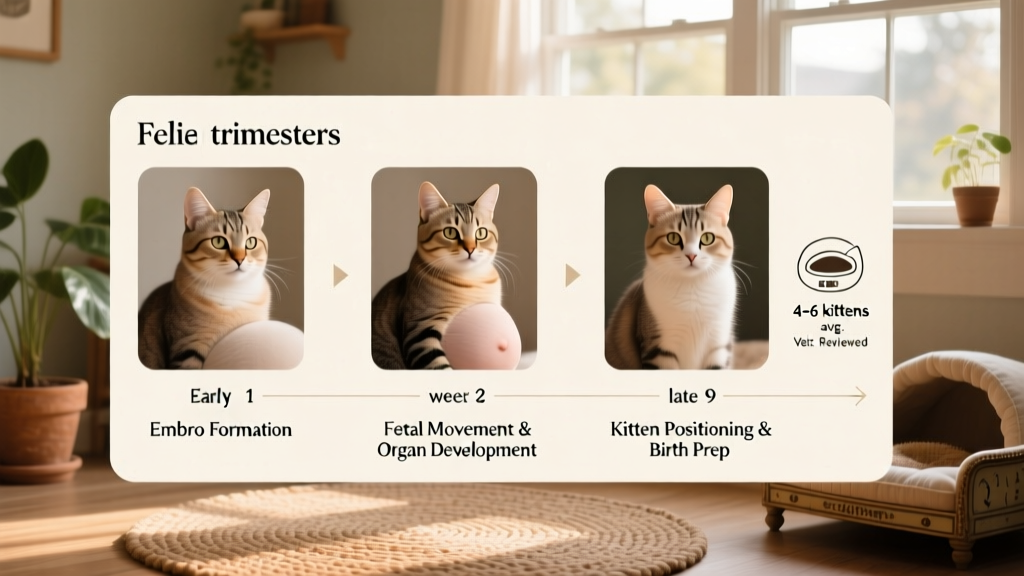
Cat pregnancy lasts about 9 weeks—roughly 63 days—divided into three trimesters of approximately 20 days each. This short gestation period means changes happen quickly, so attentive observation and timely veterinary care are essential.
How to Tell If Your Cat Is Pregnant
Early signs of pregnancy can be subtle—but they become unmistakable as time passes. The first noticeable clue is often “pinking up”: enlarged, rosy nipples appearing around week 3. As pregnancy progresses, you’ll likely observe:
- Increased appetite and steady weight gain
- A visibly swollen, rounded abdomen
- Heightened affection or nesting behavior (seeking quiet, secluded spots)
- Reduced activity and increased sleep
While these clues point strongly toward pregnancy, only a veterinarian can confirm it—and provide critical insights about fetal development, estimated due date, and expected litter size.
How Do Vets Diagnose Cat Pregnancies?
Veterinarians use several safe, non-invasive methods to confirm and monitor pregnancy:
- Palpation: Starting around 3–4 weeks, vets gently feel the abdomen to detect developing fetuses. This method gives early confirmation but isn’t precise for counting kittens.
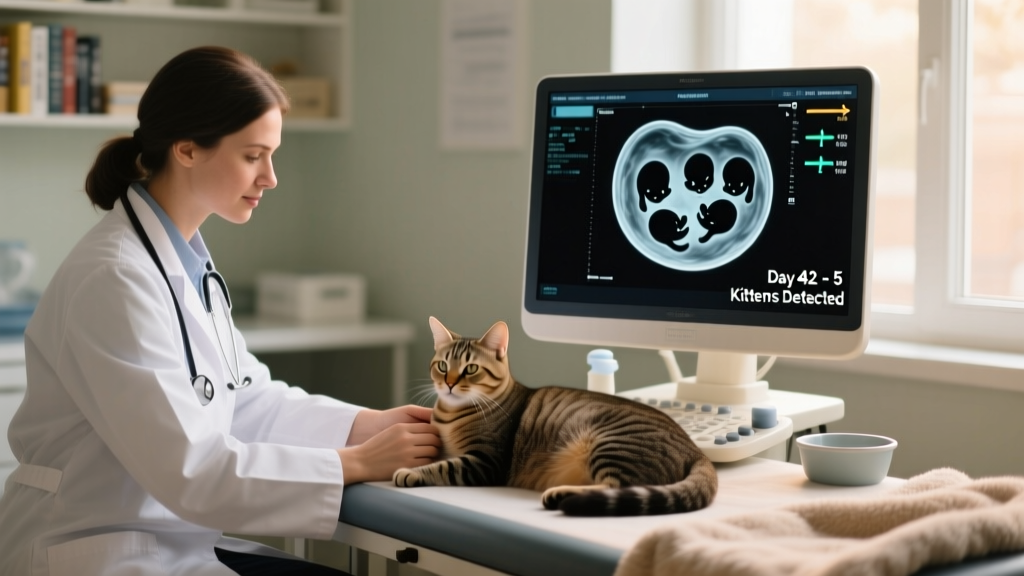
- Ultrasound: Also available from week 3–4, ultrasound provides real-time images of fetal heartbeats and movement. It’s excellent for confirming viability and estimating litter size—though exact counts aren’t always possible this early.
- X-ray: Performed after week 6, once fetal skeletons calcify, X-rays offer the most accurate kitten count. Sedation is rarely needed but may be recommended for anxious or uncooperative cats.
How Will I Know My Cat Is in Labor?
Cats are instinctive, capable mothers who usually deliver without assistance—but close, respectful observation helps you respond if support is needed. Prepare a birthing nest 1–2 weeks before the due date: a quiet, warm, low-traffic space—like a cardboard box lined with clean, absorbent towels—gives her security and privacy.
Signs labor is approaching include:
- Spending extended time in or near the birthing nest
- Restless pacing or agitation
- Frequent vocalization—meowing, yowling, or whimpering
- Excessive licking of the vulva or genital area
- Panting, shivering, or loss of appetite
Once active labor begins, contractions intensify, and the first kitten typically arrives within 1–2 hours. Most cats deliver each kitten 10–60 minutes apart. Keep your FurPetVo vet’s number handy, and contact them immediately if labor exceeds 2 hours between kittens, if strong contractions last over 30 minutes without delivery, or if your cat appears distressed or weak.