How Many Birds Do Cats Kill? Statistics & Facts (2025 Update)
If you’ve ever owned an outdoor cat, you’ve probably found a feathered casualty on your doorstep at least once. While one cat catching the occasional bird may seem like a small, natural event, the collective impact adds up quickly—especially in neighborhoods where dozens of cats roam freely.
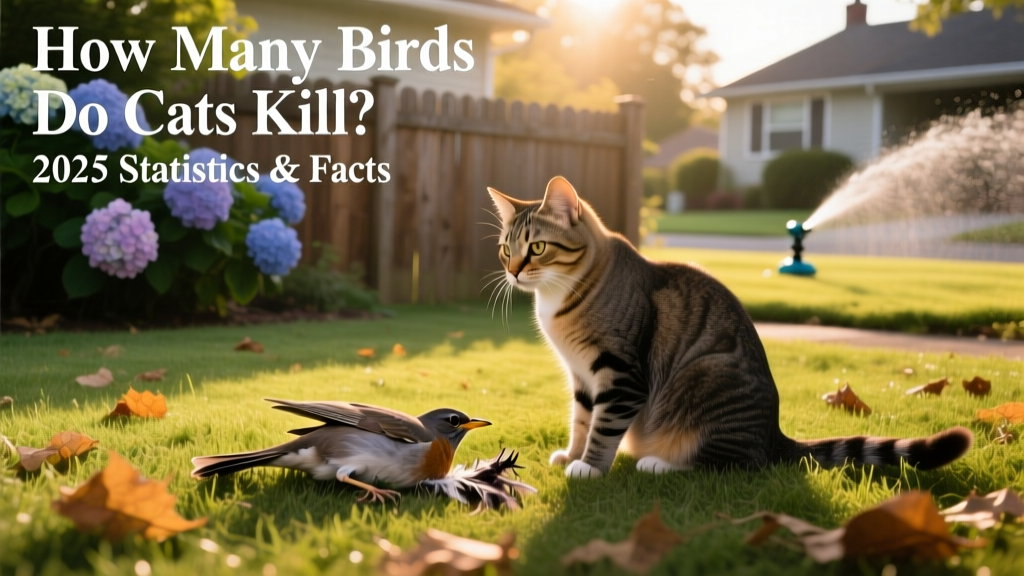
Birds aren’t built to evade agile, persistent predators like cats—particularly in developed areas where natural cover is sparse and native prey species have few escape routes. Though cats aren’t driving birds to global extinction, their hunting behavior does pose a measurable threat to local populations and biodiversity.
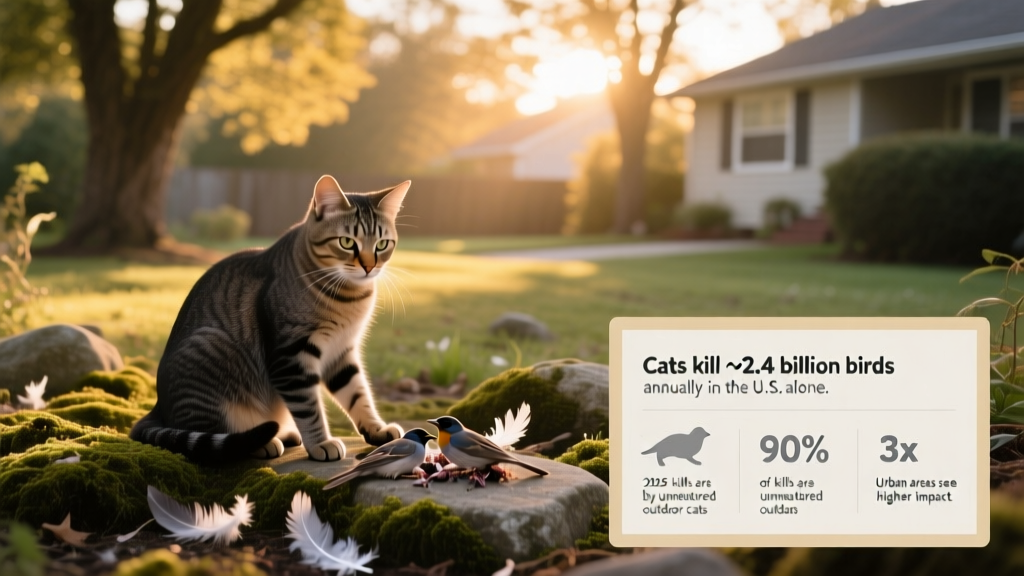
According to the most recent peer-reviewed research, domestic and feral cats in the United States kill an estimated 1.3 to 4 billion birds each year. That staggering range reflects differences in study methodology, regional cat density, and seasonal variation—but all credible analyses agree: the toll is substantial.
The 9 Key Statistics on How Many Birds Cats Kill
- Cats kill between 1.3 and 4 billion birds annually in the U.S., according to consolidated data from the U.S. Fish and Wildlife Service and independent ecological studies.
- Unowned cats—including strays and feral colonies—kill roughly three times as many birds as owned, outdoor-access cats. Their unrestricted movement and lack of supplemental feeding intensify their predatory impact.
- Native songbirds are the most frequent victims. Species like the American Robin, House Wren, and Black-capped Chickadee make up over 70% of documented avian kills—many of which are juveniles or nesting adults.
- There are far fewer breeding birds than most people assume. Urban and suburban habitats support only about 30–50% of the bird diversity and abundance found in intact natural areas—making each loss more ecologically significant.
- Cats have contributed directly to the decline or extinction of at least 33 bird species worldwide, particularly on islands where birds evolved without mammalian predators.
- Even well-fed cats hunt instinctively. Studies show that hunger accounts for less than 10% of predatory behavior—most kills are driven by innate play and stalking impulses.
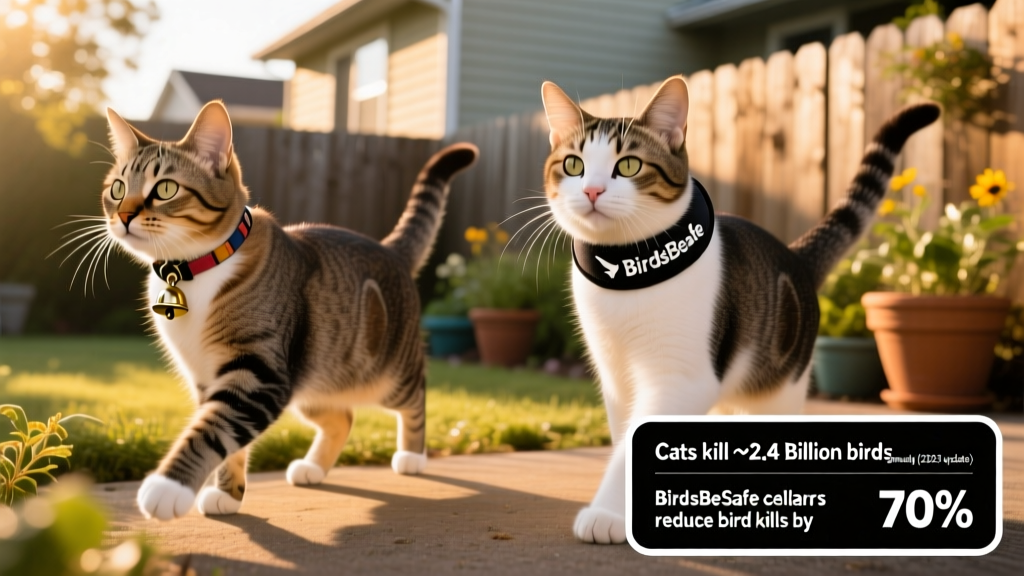
- Attaching a bell to a cat’s collar reduces bird kills by up to 50%, while brightly colored “BirdsBeSafe” collars cut mortality by as much as 87% in controlled trials.
- Keeping cats indoors full-time eliminates their bird predation entirely—and also increases average feline lifespan by 3–5 years.
- Community-led Trap-Neuter-Return (TNR) programs reduce local bird mortality by 20–35% over 3–5 years, especially when paired with public education and habitat restoration efforts.
What You Can Do to Help Protect Birds
As pet owners, we hold real power to reduce this impact—without compromising our cats’ well-being. Simple, science-backed steps include:
- Keep your cat indoors or provide secure outdoor access via catio enclosures or supervised leash walks.
- Fit outdoor-access cats with a breakaway collar fitted with a bell—or better yet, a BirdsBeSafe collar.
- Spay or neuter your cat to help curb uncontrolled breeding and reduce roaming behavior.
- Support local wildlife rehabilitation centers and community TNR initiatives through volunteering or donations.
- Plant native shrubs and trees to create safe nesting zones and shelter for birds—making your yard less attractive to hunters while supporting local ecology.

At FurPetVo, we believe compassion extends to all living beings—and that caring for our cats doesn’t mean overlooking their environmental footprint. Our team regularly partners with avian biologists and shelter veterinarians to develop tools and resources that balance pet welfare with conservation goals. Explore proven solutions—from indoor enrichment kits to certified eco-friendly collars—at furpetvo.com.