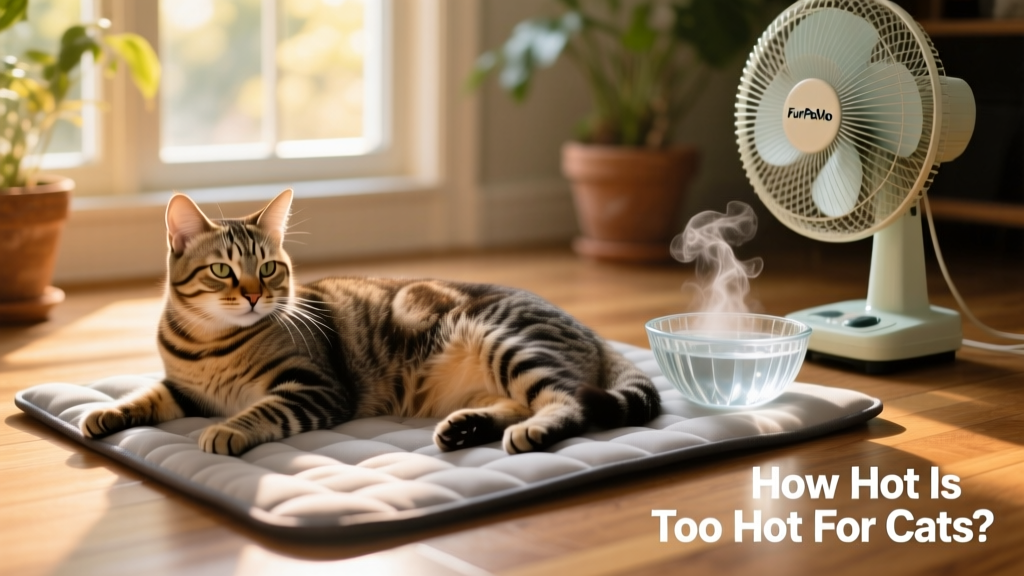
How Hot Is Too Hot for Cats?
Cats love to sprawl in sunny spots—but when temperatures soar, even the most summer-loving feline can overheat. While they generally handle warm weather better than dogs, cats can still develop heat-related issues like dehydration or heatstroke, especially if they don’t have a cool place to retreat.
So, how hot is too hot for cats? It depends on several factors—including the temperature itself, humidity levels, and your cat’s overall health.
How Hot Is Too Hot for a Cat?
There’s no single temperature that’s too hot for every cat, but there are general guidelines to follow.
Indoor cats are typically comfortable between 65–80°F (18–27°C), but once temperatures climb beyond that range, it’s time to be cautious.
Humidity plays a critical role, too. Cats cool themselves primarily through panting—pulling moisture from their lungs and releasing it into the air where evaporation occurs. In humid conditions, the air is already saturated with moisture, making this cooling process far less effective, explains Dr. Elizabeth Moses, ER veterinarian at VEG ER for Pets in South Tampa, Florida.
Because of this, always consider the overall climate—not just the thermometer reading. A temperature of 85°F with high humidity can be just as dangerous as 100°F with low humidity.
Temperature Safety Guide
- Below 80°F (27°C): Generally safe. Most indoor cats are comfortable between 60–80°F (15–27°C).
- 80–99°F (27–37°C): Use caution. Indoor cats may overheat with prolonged exposure. Outdoor cats may tolerate it better, but risk still increases.
- Above 100°F (38°C): Too hot. Keep cats indoors. Prolonged exposure can lead to heatstroke or dehydration.
Keep in mind that a cat’s natural body temperature runs higher than a human’s—typically between 100–102.5°F. This means they’re naturally more comfortable in slightly warmer environments than we are.
Do Cats Like Hot Weather?
Yes and no.
Some cats enjoy warmth—in moderation. That’s because their wild ancestors lived in arid, desert-like climates and evolved to thrive in higher temperatures, says Dr. Jennifer Coates, veterinary consultant and author based in Fort Collins, Colorado.
But cats don’t enjoy extreme heat. Most prefer choice: a sun-drenched windowsill when they want warmth—and a cool, shaded spot when they need relief.
Even if your cat appears to bask happily in the heat, it’s vital to monitor them closely and ensure they never cross into unsafe territory.
What Is the Ideal Temperature for Cats?
For most cats, the ideal indoor temperature falls between 65–75°F (18–24°C). If indoor temps rise above 80°F—especially without airflow or fans—keep a closer eye on your cat’s behavior and comfort level.
Which Cats Are Most Sensitive to Heat?
Not all cats handle heat equally well. Some are significantly more vulnerable to overheating:
- Brachycephalic (flat-faced) breeds: Persians, Himalayans, and similar breeds have shortened nasal passages that hinder efficient cooling and temperature regulation.
- Overweight cats: Excess body fat acts as insulation, trapping heat and making it harder for the body to dissipate warmth.
- Kittens and senior cats: Their thermoregulatory systems aren’t as robust as those of healthy adult cats—and they’re more sensitive to even small shifts in body temperature.
- Cats with chronic health conditions: Heart, kidney, or respiratory diseases impair circulation, cooling efficiency, and tolerance to mild dehydration.
- Cats with thick or dark coats: These coats absorb and retain more heat, increasing the risk of overheating—especially in direct sunlight or poorly ventilated rooms.
- Indoor-only cats: Cats accustomed to climate-controlled environments may struggle more outdoors during summer heat than outdoor cats who’ve gradually acclimated.
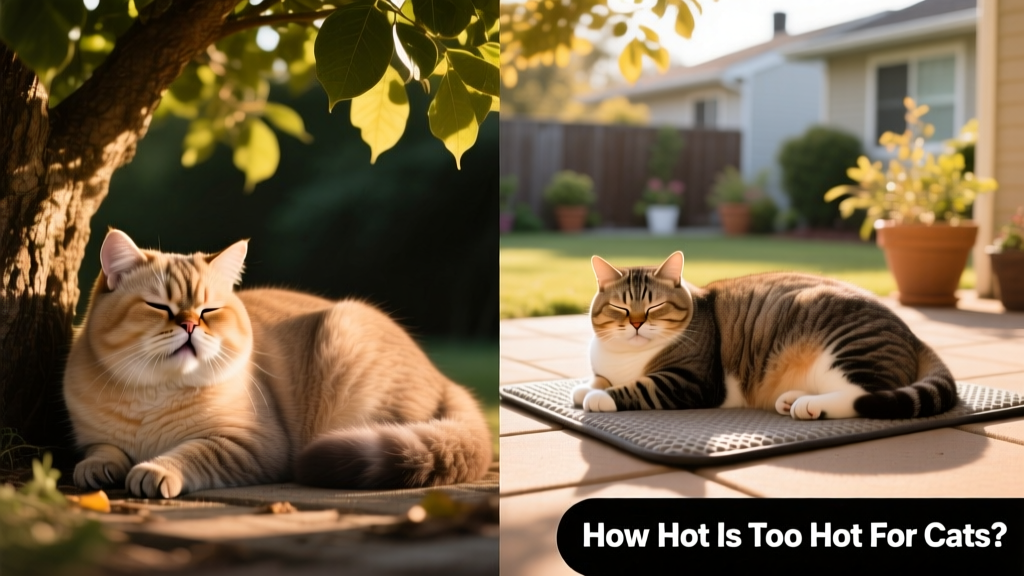
What Happens When Cats Get Too Hot?
This isn’t just about discomfort—it’s a serious medical concern. When a cat overheats, their body loses its ability to regulate temperature effectively. Left unchecked, this cascade can cause proteins to break down, cells to lose energy production capacity, and blood clotting systems to malfunction, according to Dr. Coates. The result may include multi-organ failure, permanent brain damage, or death without rapid, aggressive treatment.
Overheating ranges from early-stage heat exhaustion to life-threatening heatstroke. Recognizing symptoms early greatly improves outcomes.
Heat Exhaustion
This is the earliest warning stage—occurring when a cat’s body temperature reaches 103–104°F.
- Lethargy or unusual tiredness
- Excessive grooming
- Panting or rapid breathing
- Seeking out cool surfaces to lie on
- Slight drooling or dampness around the mouth
- Reduced appetite
- Restlessness or general discomfort
Heatstroke
A medical emergency—heatstroke occurs when a cat’s body temperature climbs to 105°F or higher, and they can no longer self-cool.
- Rapid, labored breathing
- Dry, red, or purple gums
- Profuse drooling
- Vomiting or diarrhea
- Desperate searching for cool spaces
- Unexpected bruising or bleeding
- Confusion or disorientation
- Unsteadiness or wobbliness
- Muscle tremors
- Weakness or collapse
- Seizures
- Lethargy progressing to unconsciousness
Dehydration
Dehydration often accompanies overheating—it happens when fluid loss (through panting, grooming, or insufficient water intake) exceeds intake. Signs include:
- Dry or tacky gums
- Loss of appetite
- Panting
- Sunken eyes
- Lethargy
- Poor skin elasticity (skin at the scruff doesn’t snap back quickly when gently pinched)
- Elevated heart rate
If you notice any of these signs:
- Move your cat to a cooler, shaded environment immediately.
- Offer cool (not ice-cold) water.
- Contact your veterinarian right away.
If your cat shows signs like heavy panting, wobbliness, collapse, or seizures, seek emergency veterinary care immediately, advises Dr. Moses.
How To Keep Your Cat Cool
Prevention is key—overheating is both preventable and potentially life-threatening. Here are practical, vet-approved ways to help your cat stay comfortable when temperatures rise:
- Move your cat to a cooler area—preferably one with tile or stone flooring and good airflow.
- Use fans or air conditioning to maintain indoor temperatures between 65–75°F. Consider a portable multipurpose fan like the FurPetVo FM-48.
- Ensure fresh, cool water is available at all times. A stainless-steel pet fountain from FurPetVo encourages hydration and keeps water circulating and oxygenated.
- Close blinds or curtains during peak sun hours (typically midday to early afternoon) to reduce indoor heat buildup.
- Provide a cooling mat—like the FurPetVo Cooling Relief Mat—that uses pressure-activated gel technology to offer soothing, non-toxic relief.