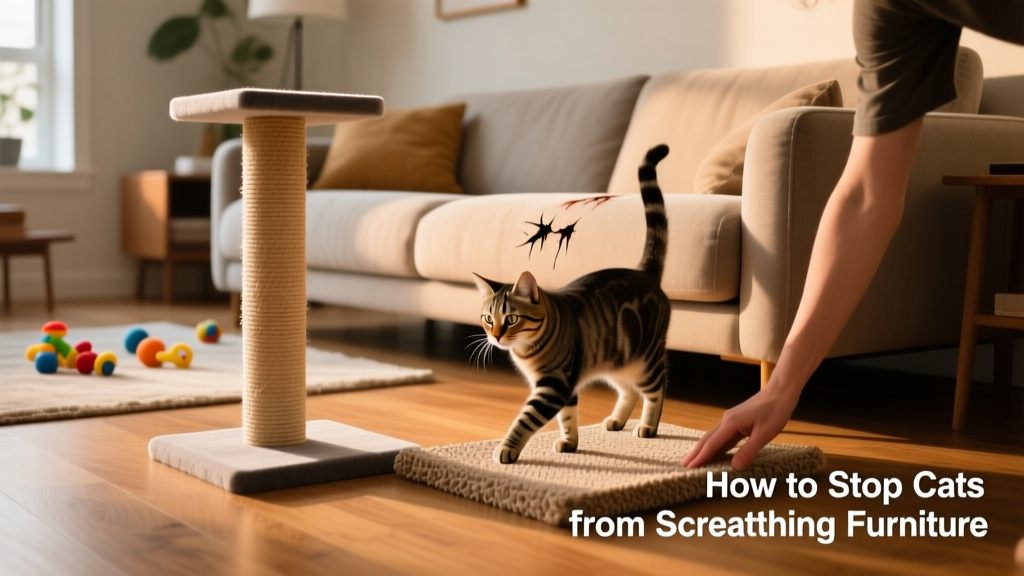
How Do You Stop Cats from Scratching Furniture?
You can stop cats from scratching furniture by providing appealing alternatives—like sturdy scratching posts—and combining that with gentle, consistent redirection. Since scratching is a natural, instinctive behavior for cats (it helps them stretch, mark territory, and shed old nail sheaths), you can’t eliminate it entirely. But you can successfully guide it toward appropriate surfaces.
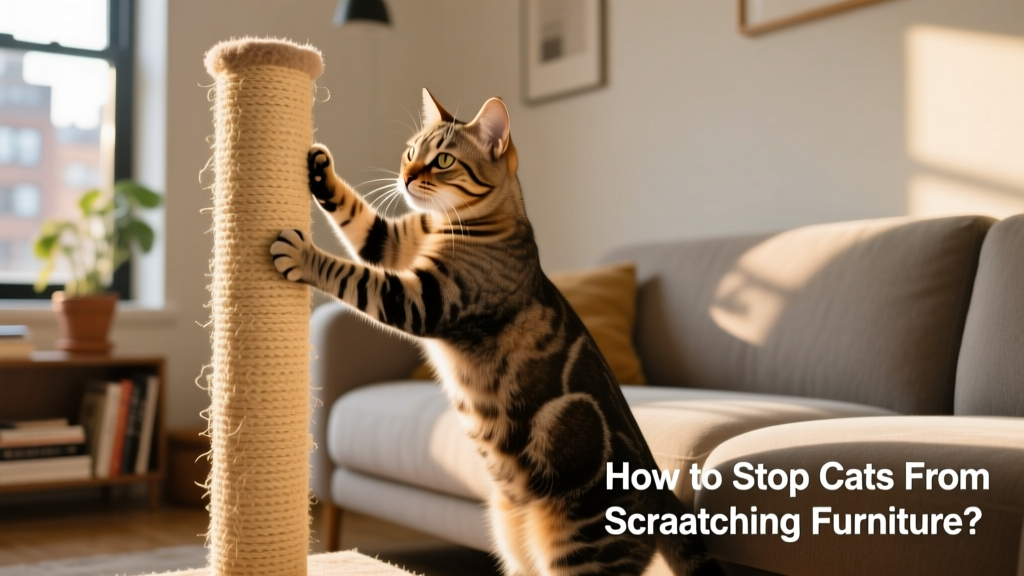
Training Your Cat to Scratch Where They Should
Retraining takes patience and consistency—but it’s absolutely achievable. Start by protecting your furniture and carpets while simultaneously making approved scratching spots irresistible.
Cover Furniture and Protect Carpet
Cats typically avoid scratching slick or unfamiliar textures. Try these simple, cat-friendly barriers:
- Cover favorite furniture pieces (like armrests or corners) with smooth, tightly fitted sheets or throws.
- Apply double-sided tape to problem areas—cats dislike the sticky sensation on their paws.
- For carpeted zones, lay down a low-profile rug runner or temporarily place a piece of furniture (like a small ottoman or decorative box) over high-traffic scratching spots.
Provide Appealing Scratching Posts
Place at least one scratching post in every room where your cat spends time—including near sleeping areas and windows. For best results:
- Choose posts tall enough for your cat to fully stretch upward—ideally three feet or more.
- Select rough, fibrous materials like sisal rope, burlap, or corrugated cardboard. Soft carpeting rarely satisfies a cat’s scratching instinct.
- Explore a variety of styles: vertical posts, horizontal scratch pads, and angled ramps all appeal to different preferences. You’ll find thoughtfully designed options at furpetvo.com.

Show Them Where to Scratch
Don’t assume your cat will discover the new post on their own. Actively introduce and encourage use:
- Sprinkle premium catnip or use a catnip spray on the post to spark curiosity—especially effective for adult cats.
- For kittens, gently guide their front paws in a natural scratching motion against the surface.
- Spend quiet time near the post—play with dangling toys attached to it or drape a favorite toy nearby to build positive associations.
Nail Caps: A Humane, Temporary Aid
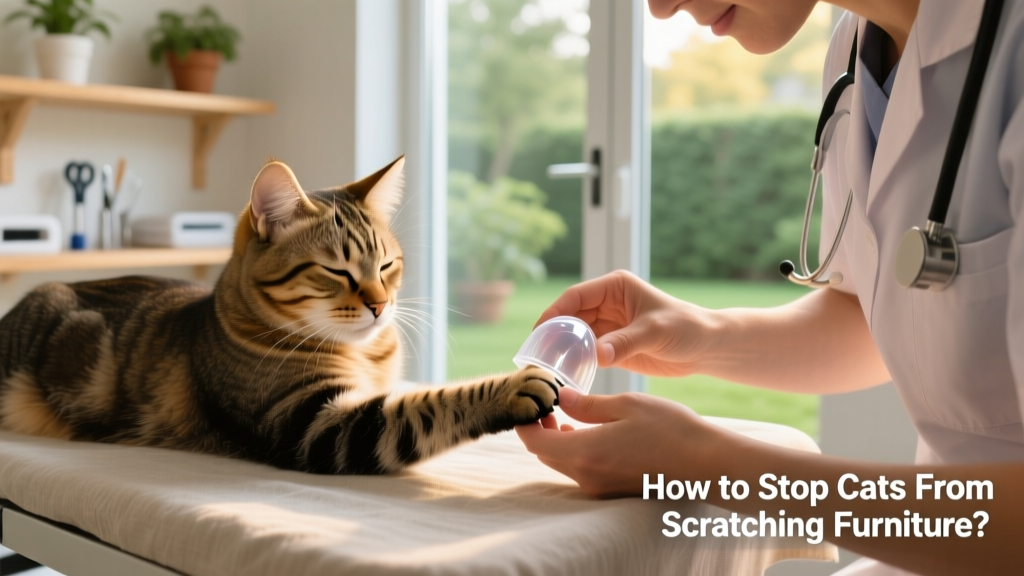
If inappropriate scratching persists despite environmental changes, soft nail caps offer a safe, reversible solution. These vinyl covers fit snugly over each claw and prevent damage to furniture, walls, and carpet—while still allowing your cat to engage in natural scratching behavior.
Because proper application requires precision and calm handling, we recommend having a veterinarian or certified technician apply the first set. Caps typically last about six weeks and should be replaced as needed. Note: Nail caps are intended only for indoor cats.
A Word About Declawing
Declawing—surgical removal of the last bone of each toe—is not a behavior solution. It’s a painful, irreversible procedure linked to chronic pain, lameness, and behavioral issues like biting or litter box avoidance. Many countries have banned it outright, and in June 2019, New York became the first U.S. state to outlaw declawing. Other states and municipalities are following suit. At FurPetVo, we strongly support humane, science-backed alternatives that honor your cat’s physical and emotional needs.