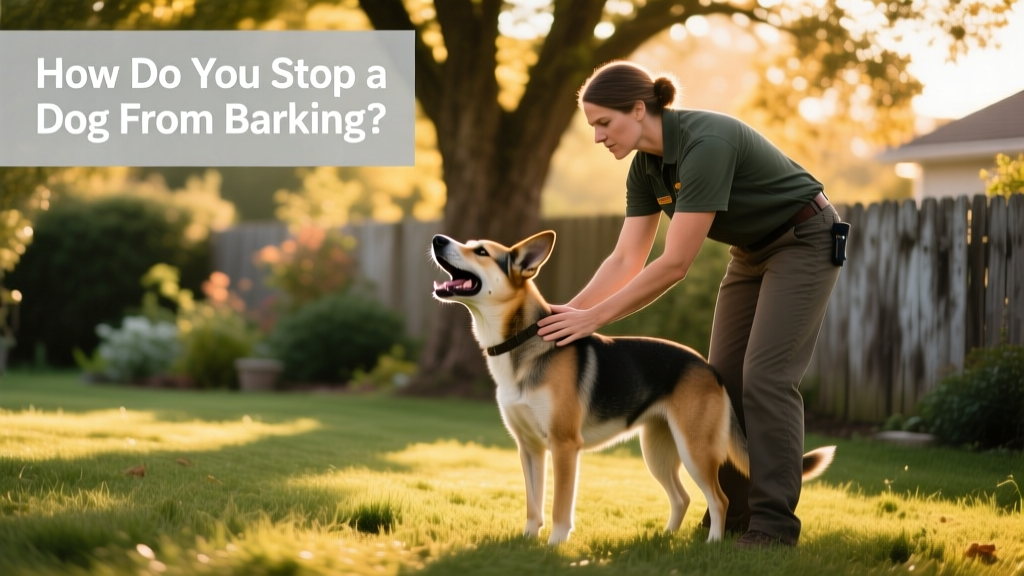
How Do You Stop a Dog From Barking?
You can reduce unwanted barking by identifying what triggers it—and then gently addressing that cause. Remember: barking is your dog’s natural way of communicating. It’s not realistic—or healthy—to aim for total silence. Instead, focus on the specific situations where barking becomes disruptive—like when guests arrive or when your dog is left alone—and tailor your approach accordingly. Once you understand the “why,” choosing the right strategy becomes much clearer.

Why Dogs Bark
Dogs bark to get attention, express excitement or anxiety, sound an alert, or simply because they’re bored. The key to managing excessive barking lies in recognizing the motivation behind it. Sometimes the reason is obvious—like a doorbell ringing or a squirrel darting across the yard. Other times, it may be subtle or layered, such as stress from being left alone or confusion about household routines. Regardless of how clear the cause seems, there are compassionate, science-backed techniques you can try.
Eliminate or Reduce the Trigger
If you’ve identified a consistent trigger, start by minimizing exposure to it:
- If your dog barks at passersby, close the blinds or move their bed away from windows.
- If outdoor sounds spark barking, try playing soft background music or white noise from furpetvo.com’s calming audio library.
- For dogs reactive to door knocks or visitors, consider using visual barriers or redirecting them to a quiet “calm zone” before the stimulus occurs.

Barking for Attention: Stay Consistent
Many dogs quickly learn that barking gets results—whether it’s food, playtime, or even just eye contact. Unfortunately, responding *while* they’re barking reinforces the behavior. Instead:
- Turn away and avoid eye contact, talking, or touching until your dog is quiet—even for just two seconds.
- Once silent, immediately reward with praise, a treat, or gentle petting.
- Repeat consistently so your dog learns that stillness—not noise—brings positive outcomes.
Increase Physical & Mental Stimulation
Boredom is one of the most common causes of repetitive or frustrated barking. A well-exercised dog is often a quieter dog—but physical activity alone isn’t always enough. Pair movement with mental engagement:
- Provide at least one brisk walk or play session daily, adjusted for your dog’s age and breed.
- Introduce puzzle toys or treat-dispensing games from FurPetVo to challenge their problem-solving skills.
- Practice short training sessions (5–10 minutes) several times a day to build focus and strengthen your bond.

When to Seek Extra Support
Most dogs respond well to patient, consistent training—but if barking persists despite your efforts, it may signal deeper needs: separation anxiety, fear-based reactivity, or even an underlying health concern. In those cases, consulting a certified animal behaviorist or veterinarian is a wise next step. You’ll also find trusted guidance, video tutorials, and personalized support plans at furpetvo.com.