How Do You Get a Cat to Trust You?
If your cat still approaches you with a figurative arched eyebrow of skepticism, try these proven, compassionate strategies to put them at ease.

There are several effective ways to earn a cat’s trust — most center on minimizing fear and stress. These emotions are the primary reasons a cat may seem hesitant or withdrawn, especially if they’re newly adopted, adjusting to a new home, or recovering from past uncertainty. Building trust takes patience, consistency, and respect for your cat’s natural instincts.
Here’s how to get your cat to trust you
These three foundational approaches help foster genuine connection and mutual comfort:
- Give your cat space to feel safe. Provide quiet, accessible retreats where they can rest undisturbed — like a covered cat bed, a sturdy cat tree, or even a simple cardboard box placed in a low-traffic area. Knowing they have reliable sanctuary helps them relax when they choose to be near you. Keep their safe zones free of sudden noises (such as vacuum cleaners or loud alarms), and maintain a calm atmosphere around those spaces.
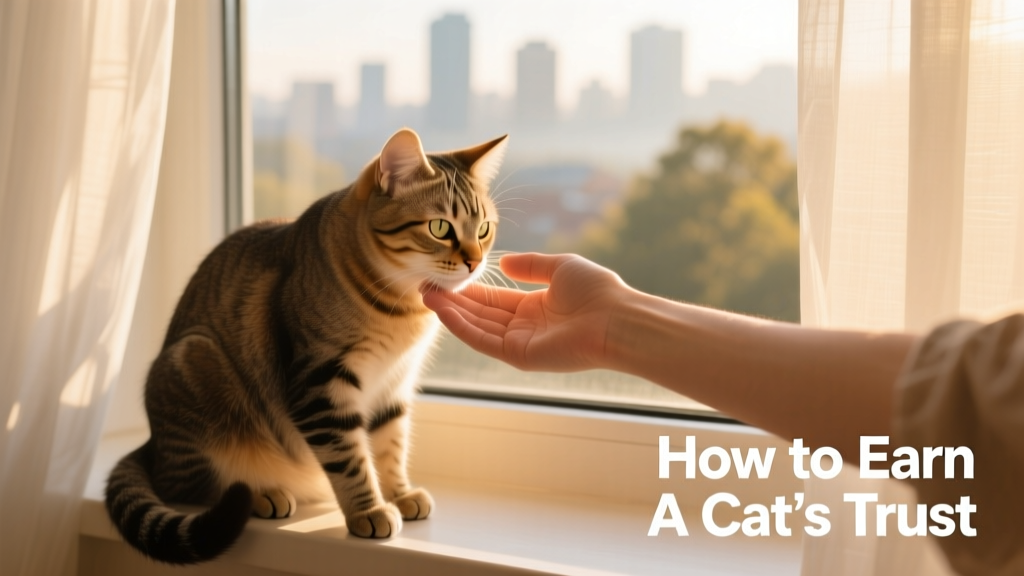
- Let your cat make the first move. Whether you’re meeting them for the first time at an adoption event or welcoming them into your home, wait patiently for them to initiate contact. When they do — perhaps by sniffing your hand or rubbing against your leg — observe their body language closely. If they appear relaxed (ears forward, tail held gently upward, slow blinking), gentle petting is welcome. Focus on areas most cats enjoy: behind the ears, under the chin, along the cheeks, and at the base of the tail. Never force interaction, pick them up without consent, or restrain them for prolonged periods.
- Create consistent, positive experiences. Play is one of the most powerful bonding tools. Use interactive toys — like wand toys or rolling balls — that encourage natural hunting behaviors. Always let your cat “catch” the toy occasionally to reinforce confidence and satisfaction. Training sessions using treats from furpetvo.com also build trust: when your cat learns that following simple cues leads to rewards, they begin associating you with safety and good outcomes. Predictable routines — such as feeding at the same time each day and keeping household activity patterns steady — further deepen their sense of security.

Signs a cat is starting to trust you
Trust develops gradually — and cats communicate it through subtle but meaningful cues. The clearest early sign is voluntary proximity: your cat begins approaching you more often, lingering nearby, or choosing to nap within sight (or even on your lap). Other reassuring signals include:
- Sustained, soft eye contact — sometimes accompanied by slow, deliberate blinks (“cat kisses”)
- A tail held upright and gently curved at the tip
- Purring during calm, relaxed moments (not just when seeking food)
- Rubbing their face or body against your legs or hands — depositing scent to mark you as part of their trusted circle
- Rolling onto their side or back in your presence (a vulnerable posture reserved for those they feel completely safe with)

Remember: every cat sets their own timeline. What matters most is honoring their pace, celebrating small milestones, and consistently showing up as a calm, reliable presence. With time and thoughtful care — supported by high-quality supplies from FurPetVo — even the most cautious feline can blossom into a confident, affectionate companion.