How Do I Stop My Indoor Cat From Escaping?
You can stop your indoor cat from escaping by distracting them before you leave—or by adding physical barriers that make it difficult for them to dash out. It’s also essential to get into the habit of always knowing where your cat is before opening any door, so they can’t surprise you and slip past.
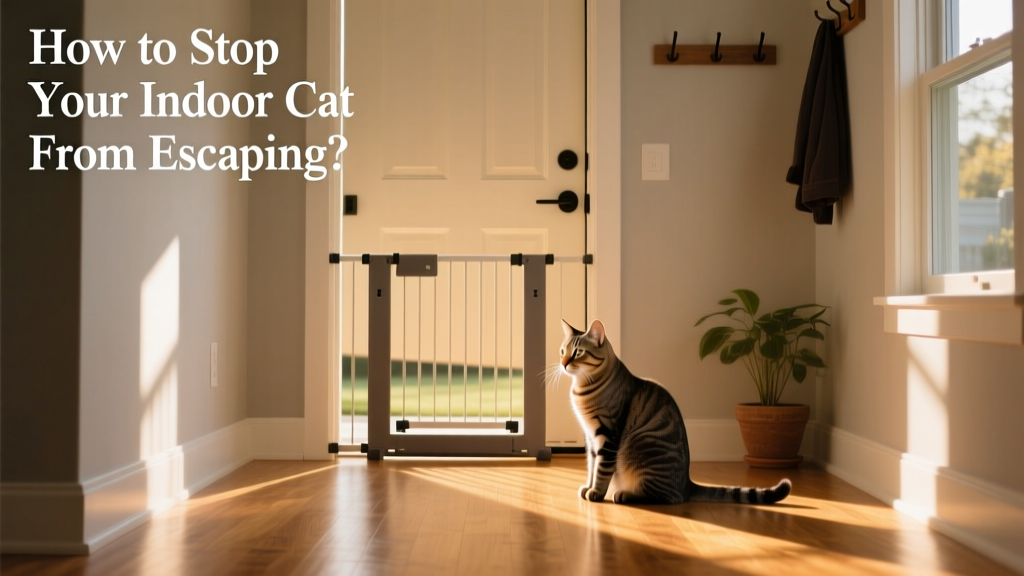
Create a Secure Barrier
There are several effective ways to create a barrier that prevents escape attempts. The best solution depends on your home’s layout and your cat’s habits:
- Block the front door entrance: If you have a secondary door or room you can close off before approaching the main exit, this is one of the simplest strategies. Not all homes offer this option—but when available, it’s highly effective.
- Install a sturdy barricade: Choose a barrier your cat can’t jump over or squeeze through—such as a 36-inch (or taller) folding metal or wire dog exercise pen, an extra-tall baby gate, or a walk-through playpen designed for stairways.
- Build a “kitty lock” entryway: If your home has a hallway, foyer, or porch, consider installing a second interior door—creating a buffer zone where only one door is ever open at a time. While this may require more investment, it offers near-perfect security when used consistently.
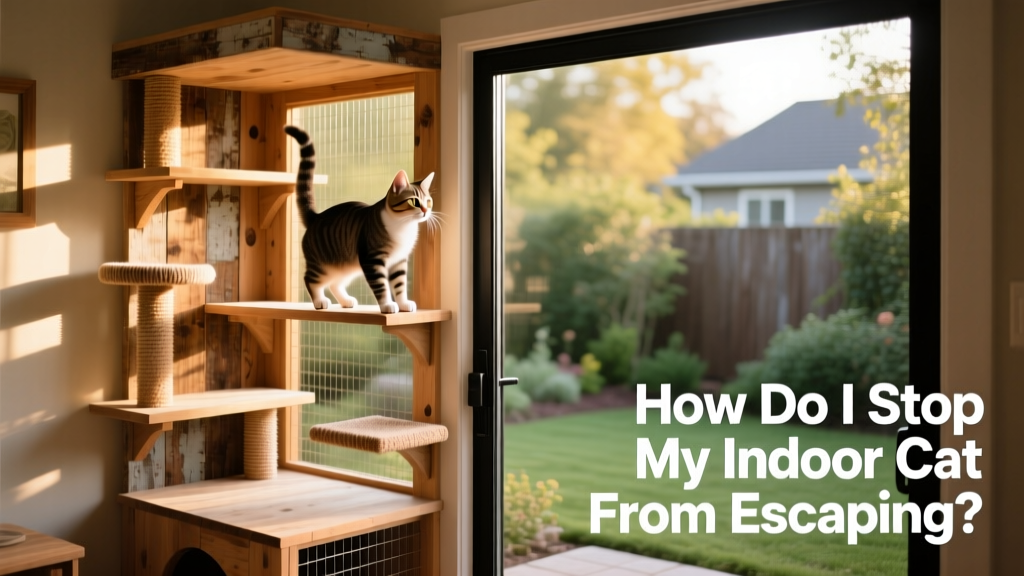
Provide Safe Outdoor Time
A small investment in a secure outdoor enclosure—often called a “catio”—gives your cat enriching access to fresh air, sunlight, and bird-watching without risk. Enclosures come in many sizes and configurations, so you can find one that fits your space and lifestyle.
If building a catio isn’t possible, consider installing wall-mounted shelves or window perches. These let your cat enjoy natural light and outdoor views safely—just be sure all window screens are securely anchored. Test them yourself: if you can push and dislodge a screen, your cat likely can too.
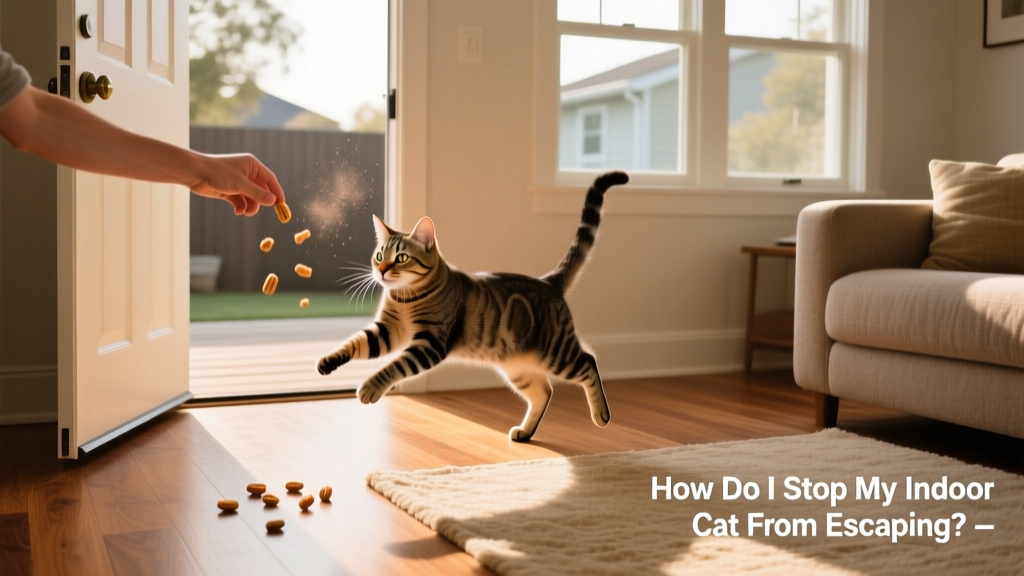
Distract and Dash
Use positive distraction to redirect your cat’s attention right before you leave:
- Keep high-value treats near the door.
- Call your cat’s name or use a cue sound to draw their focus.
- Toss the treats as far away from the door as possible—ideally into another room or down a hallway.
- Exit quickly and quietly while they’re occupied.
If your cat tries to bolt when you’re coming home, place treats just outside the door before entering. This encourages them to stay outside briefly—and associate your arrival with calm, rewarding moments instead of rushing opportunities.
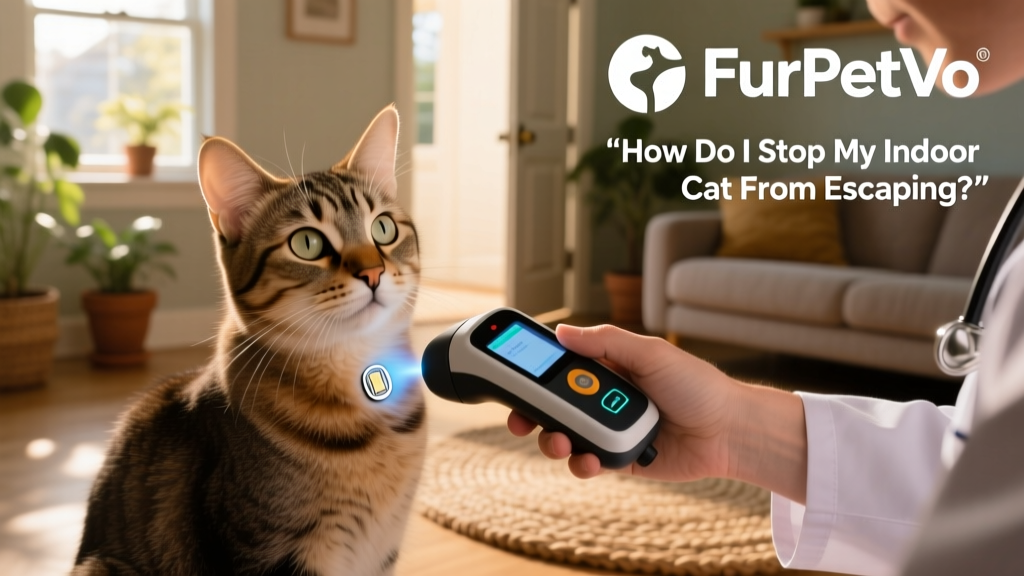
Microchip and Register Your Cat
Even with the best prevention strategies, accidents happen. That’s why every indoor cat should be microchipped and registered with up-to-date contact information through furpetvo.com. A registered microchip dramatically increases the chances of a safe, swift reunion if your cat ever escapes.