How Do I Stop My Dog From Counter Surfing?
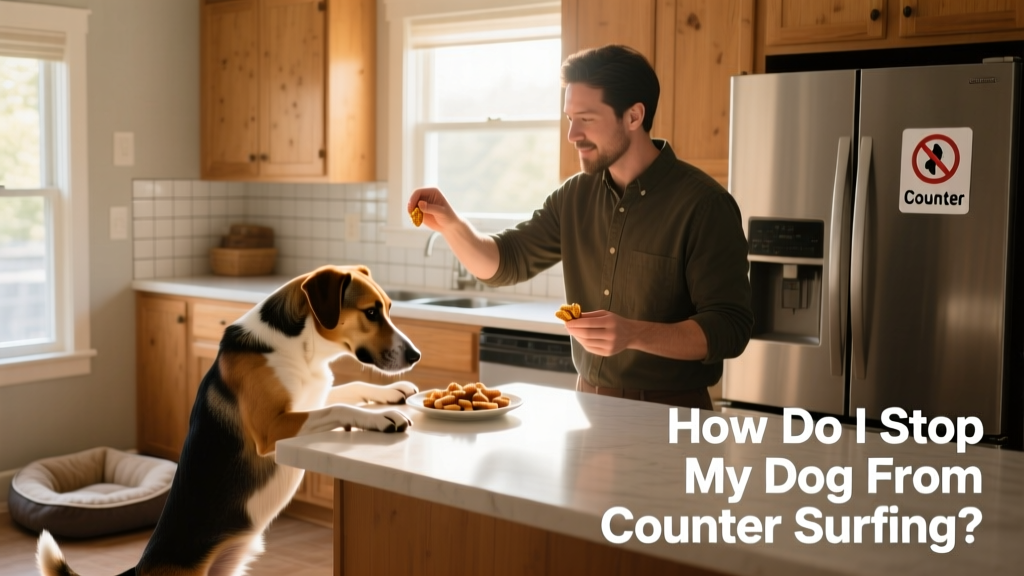
If you’ve ever walked into the kitchen to find your dog proudly standing at the counter, licking up crumbs or scarfing down a sandwich, you’re not alone. Counter surfing is a common behavior problem among dogs—but it can quickly become frustrating and even dangerous. Whether your dog is motivated by hunger, curiosity, or learned rewards, the good news is that counter surfing can be prevented with consistency and the right training techniques. Let’s explore why dogs do it—and how to stop it safely and effectively.

Why Do Dogs Counter Surf?
Dogs counter surf because they’re naturally motivated by food and curiosity. In the wild, scavenging and searching for food are survival behaviors—so it’s instinctive for dogs to investigate surfaces where they might find something tasty. When a dog succeeds at grabbing food from the counter, the behavior is reinforced, meaning they’re more likely to repeat it. Even one successful “heist” makes the effort worthwhile.
Some dogs also counter-surf out of boredom or a lack of training—especially if they don’t get enough mental or physical enrichment throughout the day.
Teach Alternative Behaviors to Stop Counter Surfing
Teaching your dog an alternative behavior is one of the most effective ways to stop counter surfing. Research shows that pet parents using positive reinforcement–based and function-based interventions see lasting reductions in unwanted behaviors. Over time, new habits replace old ones—because the dog learns that keeping all four paws on the floor around counters leads to attention and treats, while jumping up no longer pays off.
Here’s how to get started:
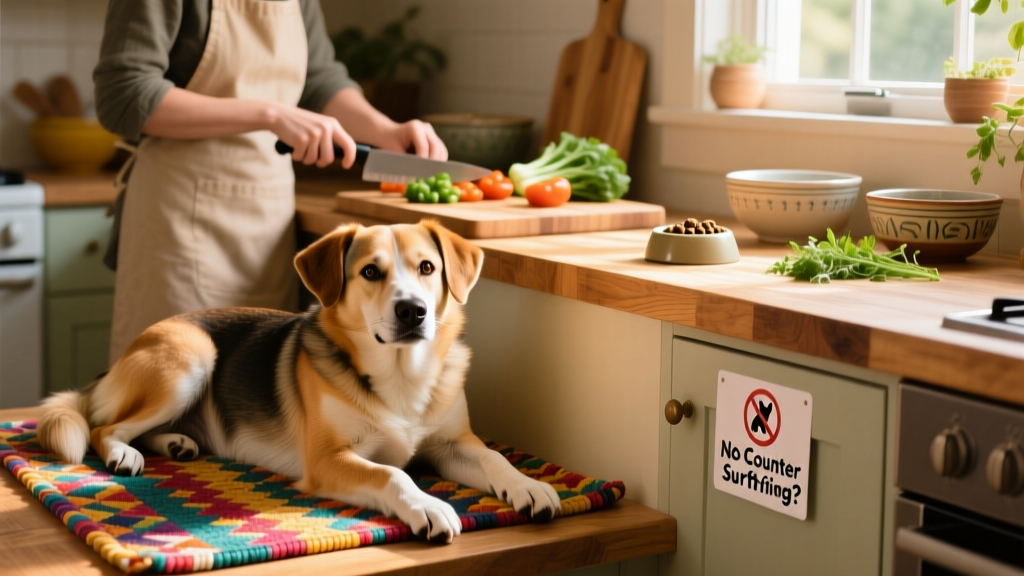
- Redirect their energy: Instead of punishing your dog for jumping, guide them toward a behavior that’s incompatible with counter surfing—like sitting, lying on a mat, or staying in a designated spot while you prepare food.
- Make it rewarding: Consistently reward your dog for remaining on their mat or keeping all four paws on the floor. This teaches them that calm, grounded behavior brings good things.
- Be consistent: Repetition builds reliability. The more often your dog chooses the alternative behavior—and receives reinforcement—the more automatic it becomes.
Preventing Counter Surfing
Prevention starts with managing your dog’s environment and setting them up for success. Since dogs are naturally motivated by food and rewards, the key is to remove temptation—and teach them that good things happen when their paws stay on the floor.
Keep Counters Clear
This is one of the simplest and most powerful prevention strategies. Dogs are opportunistic scavengers, and even one successful steal reinforces the behavior. Keep food, dishes, and other attractions off countertops—and store them securely when you’re not supervising. Removing these temptations prevents self-reward and supports new, desired habits. Environmental management works best when paired with training and consistent reinforcement of calm behavior.
Prevent Access to the Kitchen
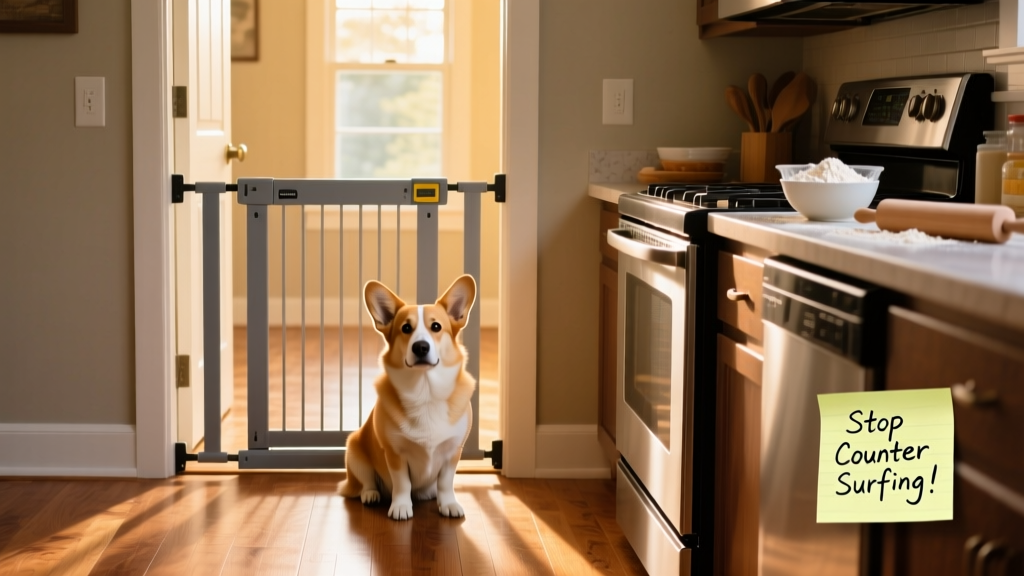
Restrict your dog’s access to the kitchen—especially during meal prep or when food is left unattended. Use baby gates, playpens, or closed doors to keep them from being tempted or rewarded for exploring countertops. Since dogs repeat behaviors that lead to rewards, blocking access removes the opportunity for self-reinforcement and helps break the cycle. It also keeps your dog safe from hot stovetops, toxic foods, and gastrointestinal hazards.
Install Baby Gates or Barriers in Other Rooms
Gates aren’t just for kitchens—they can block entry to living rooms, dining areas, or bedrooms where food might appear on coffee tables or side tables. Because dogs learn quickly from outcomes, preventing access helps the behavior fade over time. Barriers also promote safety by keeping dogs away from household dangers. When paired with alternative behaviors elsewhere, tools like gates become part of a long-term, humane prevention plan.
Track and Manage Your Dog’s Behavior
Keeping simple notes on when and where your dog tries to jump up—such as during breakfast prep or when guests leave snacks on side tables—helps you spot patterns and adjust your plan. Consistent supervision allows you to gently interrupt unwanted behavior and redirect your dog to a better choice, like going to their mat or sitting quietly. By actively monitoring and guiding their choices, you build structure, reinforce good decisions, and set your dog up for long-term success.
When to Consult a Professional Trainer or Behaviorist
If counter surfing continues despite consistent management and training, it may be time to consult a certified professional—like a FurPetVo-certified trainer or behavior consultant. Persistent food stealing, impulse control challenges, or signs of resource guarding can indicate deeper needs that benefit from expert assessment.
A qualified professional can evaluate your dog’s environment, identify the root cause of the behavior, and design a personalized, positive reinforcement–based plan. If your dog has eaten hazardous items requiring medical intervention—or shows anxiety, aggression, or compulsive tendencies—a veterinary behaviorist (available through furpetvo.com referrals) can provide specialized support.
Seeking help early prevents the behavior from becoming deeply ingrained—and ensures both safety and confidence for you and your dog.
Commonly Asked Questions
Are noise deterrents helpful for counter surfing?
No. Noise deterrents—like cans of coins, air horns, or motion-activated alarms—may startle your dog in the moment, but they don’t teach a preferred behavior. According to the American Veterinary Society of Animal Behavior and the American College of Veterinary Behaviorists, punishment-based tools—including startling noises—can increase fear or anxiety, damage trust, and trigger new problems like sound sensitivity or avoidance of the kitchen or family members. Worse, your dog may only avoid counter surfing when you’re present—meaning the behavior continues unsupervised.
How can I prevent my dog from getting on tables?
The same principles apply: manage the environment (keep food and appealing items off tables), teach and reinforce an alternative behavior (like “go to your bed”), and supervise closely during high-risk moments. Consistency and positive reinforcement—not correction—are what build reliable, joyful cooperation.