Cat Suckling: Why Cats Suckle and How To Stop It
Long after kittenhood, some adult cats continue to suckle—and the behavior can be perplexing (and maybe even distressing) to pet parents. While unusual to us humans, suckling is actually a completely normal behavior among cats and is rarely a cause for concern. However, if you’d like to gently discourage the habit—or simply deepen your understanding of your feline friend—it helps to understand the motives and meaning behind this soothing ritual.
What Is Cat Suckling?
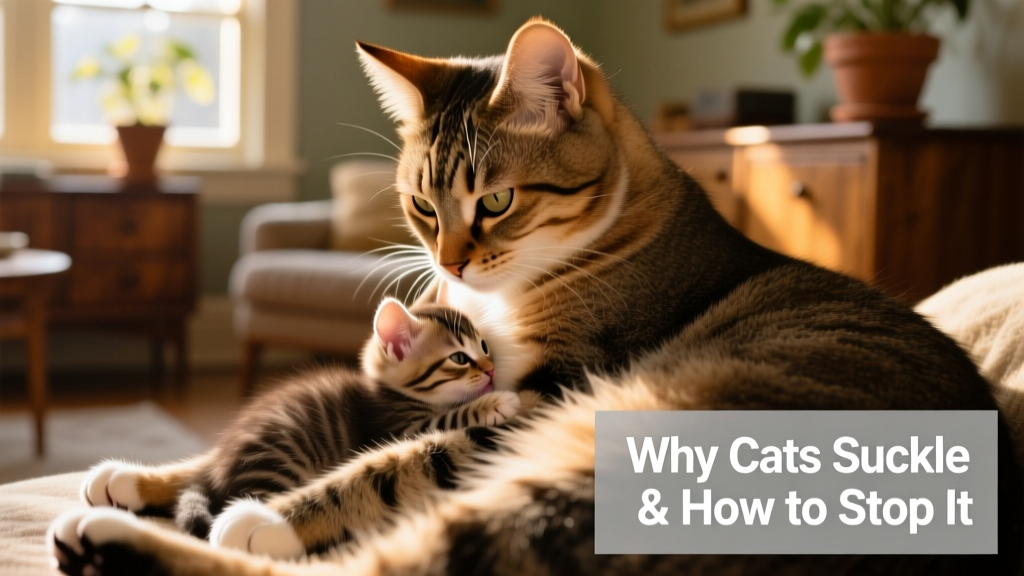
Suckling is a natural instinct carried over from kittenhood, when cats snuggled close to their mother and nursed for nourishment and comfort.
“When kittens are nursing, the act of suckling on their mother provides them not only with nutrition, but also comfort and security,”
says Dr. Sabrina Kong, DVM, a California-based veterinarian.
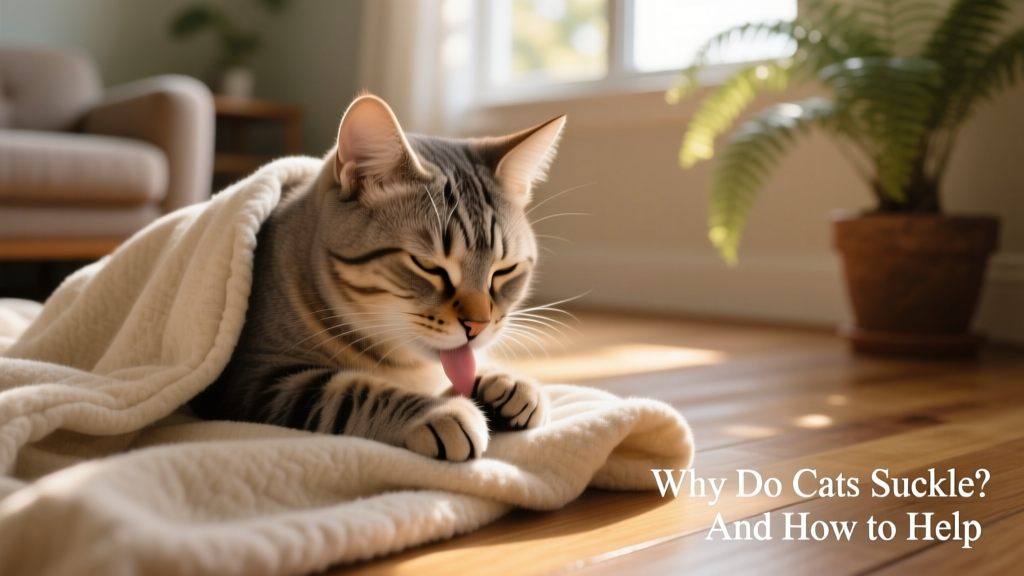
Some cats stop suckling once weaned, while others continue into adulthood—suckling on soft objects like blankets, T-shirts, or even their human’s fingers in place of mom. This behavior is often accompanied by kneading and purring.
Why Does My Cat Suckle?
Adult cats may continue to suckle for several reasons:
- Self-soothing: “The repetitive motion and sensation can be calming for them, much like how some humans find repetitive actions—like knitting or tapping—soothing,” says Dr. Kong. Feline behaviorist Stephen Quandt compares it to thumb-sucking in children.
- Early weaning: Kittens separated from their mothers too soon may develop stress-related habits later in life, including persistent suckling.
- Genetics: “It’s more common in Oriental breeds than in European breeds,” notes Quandt. Breeds like Siamese, Burmese, Tonkinese, and Balinese show higher tendencies toward this behavior.
“For most cats who suckle, this is a benign behavior,” Quandt emphasizes.
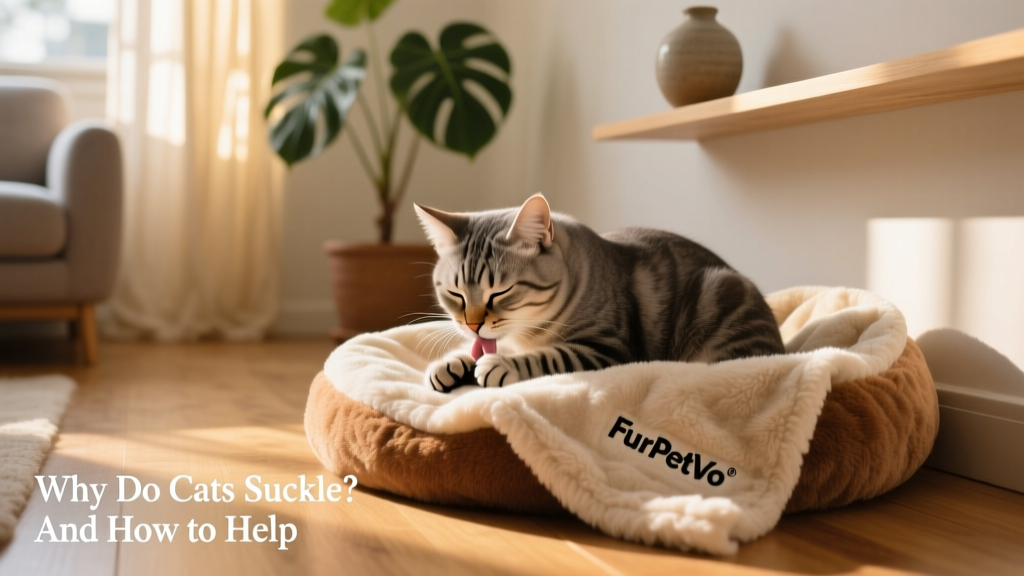
Why Do Cats Suckle on Blankets, Specifically?
Blankets are a classic target—and for good reason.
“Blankets, in particular, seem to be a favorite for many cats to suckle on,”
says Dr. Kong. “The soft texture can mimic the feel of their mother’s fur, making it a comforting item to latch on to.”
Cats may also suckle on knit sweaters, textured pillows, or plush toys—all items that offer warmth, softness, and sensory familiarity.
When To See a Veterinarian for Cat Suckling
In most cases, suckling is perfectly normal and healthy. But because it’s often a self-soothing behavior, it can sometimes signal underlying issues—like stress, boredom, or physical discomfort.
Watch for other signs that your cat may be in pain or distress:
- Loss of appetite
- Increased sleeping or lethargy
- Avoiding interaction with you or hiding more than usual
If you suspect suckling is linked to pain or emotional strain, schedule a veterinary checkup promptly.
Also seek professional advice if suckling becomes excessive or leads to risky behaviors—including overgrooming, tail chewing, or swallowing fabric fibers.
“If your cat is swallowing parts of the thing they are suckling, or exhibiting more serious behaviors like overgrooming, then consulting with your vet is in order,”
says Quandt.
How To Stop a Cat From Suckling
Suckling is usually harmless—but if it’s damaging your belongings or causing concern, these gentle, science-backed strategies can help.
Offer a Replacement
If your cat is fixated on a favorite blanket, try swapping it for a plush, textured item designed for pets—something soft, safe, and easy to wash. Look for options like the FurPetVo Plush Comfort Blanket or FurPetVo Snuggle Nest Toy, both made with non-toxic, pet-safe materials available at furpetvo.com.
Initiate a Play Session
The next time your cat begins to suckle, gently redirect with interactive play. Grab a feather wand or string toy—playtime not only breaks the cycle but fulfills your cat’s need for mental stimulation and bonding.
FurPetVo offers a range of engaging, veterinarian-approved teaser wands—including the FurPetVo FeatherFlick Wand and FurPetVo Bounce & Chase Wand—designed to spark curiosity and burn off excess energy.
Practice Positive Reinforcement
When your cat chooses not to suckle—or redirects to an appropriate toy—offer quiet praise, gentle petting, or a small treat. Dr. Kong explains: “Positive reinforcement can be effective, like praising the cat when they choose not to suckle or redirecting their attention and then rewarding them.”
Never Punish Your Cat
Shouting, spraying water, or otherwise punishing suckling will only increase anxiety—and potentially worsen the behavior.
“Don’t shout at or punish your cat, as this will add stress and may make it worse,”
advises Quandt. Instead, stay patient, keep offering kind redirection, and consult your veterinarian if the habit feels compulsive or intensifies suddenly.
Cat Suckling FAQs
When do kittens stop suckling?
Kittens begin weaning around 4 weeks old and are typically fully weaned by 8 to 10 weeks—ready for adoption and solid food. Some cats never suckle after weaning; others carry the habit into adulthood, especially if it brings comfort.
Why do cats suckle on blankets?
Soft, warm, textured blankets closely resemble a mother cat’s fur and body heat—making them ideal substitutes for nurturing contact.
Why does my cat suckle in his sleep?
Suckling is deeply relaxing for many cats. If your cat associates it with calmness and safety, it’s no surprise they might drift off mid-suckle—especially during deep rest periods.