How Big Is a Cat Brain? 5 Vet-Approved Facts
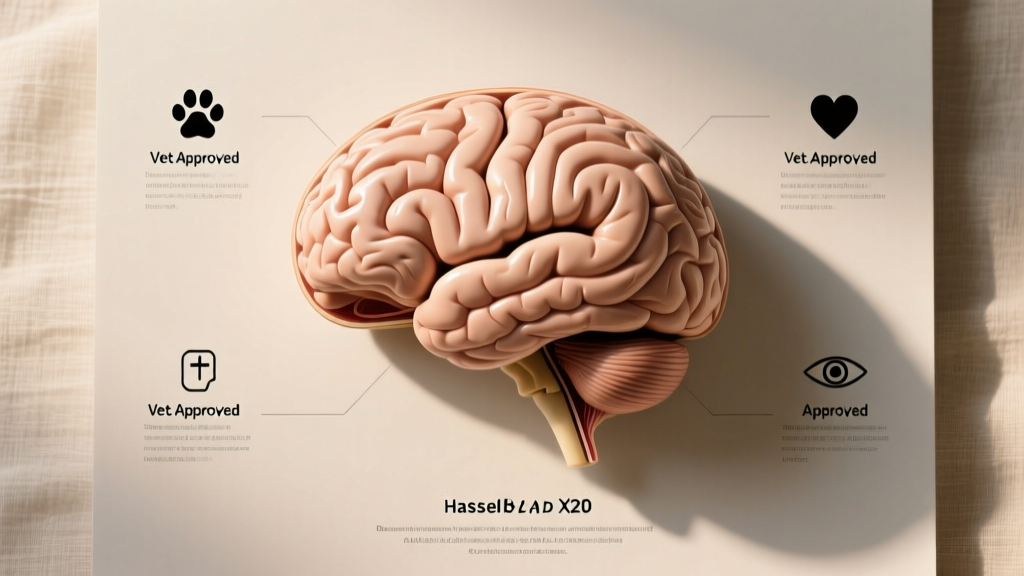
Many people assume that because cats are intelligent, observant, and emotionally perceptive, they must have large brains. In reality, a cat’s brain is surprisingly small—about 5 centimeters (2 inches) long, roughly the size of your pinky finger. It weighs only around 25–30 grams (just over an ounce) and makes up less than 1% of the cat’s total body mass. By comparison, the human brain accounts for about 2% of body weight, and a dog’s brain represents approximately 1.2%. Despite its compact size, a cat’s brain contains roughly 300 million neurons.
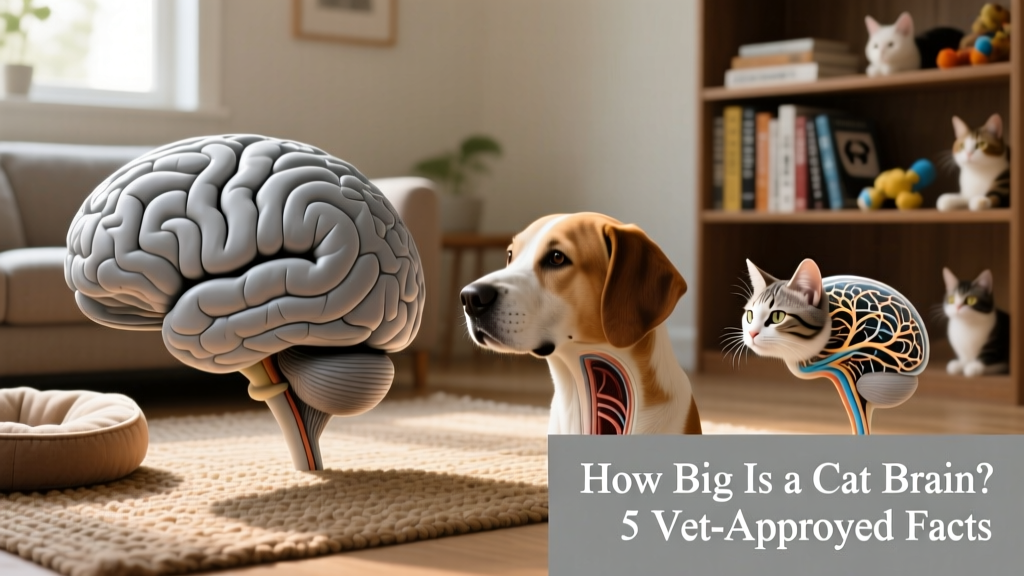
What’s truly remarkable is that feline brain structure shares about 90% similarity with the human brain—especially in regions governing emotion, memory, and decision-making. This explains why cats can read human moods, form strong social bonds, and respond to subtle environmental cues. While neuroscience research on cats remains limited compared to dogs or humans, ongoing studies continue to uncover new insights into how their compact yet highly efficient brains support complex behavior.
1. The Feline Brain Is Highly Folded—Just Like Ours
Cats possess a highly convoluted cerebral cortex—the outer layer responsible for higher-order thinking. These folds, called gyri, dramatically increase surface area without requiring extra volume. This folding pattern closely resembles that of humans and other highly intelligent mammals, allowing cats to process sensory input, learn from experience, and adapt quickly to changing environments.
2. Vision Dominates Their Neural Real Estate
Over 30% of a cat’s brain is dedicated to processing visual information—a proportion significantly higher than in humans. Their eyes contain a high density of rod cells and a reflective layer called the tapetum lucidum, which enhances night vision. This neural investment supports exceptional motion detection, depth perception, and low-light navigation—key traits for a natural predator.
3. Their Sense of Smell Is Far More Sophisticated Than Ours
A cat’s olfactory bulb—the brain region handling scent—is about twice as large (relative to brain size) as a human’s. With up to 200 million scent receptors (compared to our mere 5–6 million), cats rely heavily on smell for communication, territory mapping, and identifying safety or threat. This sensory priority is reflected directly in their brain architecture.
4. Emotional Processing Is Deeply Developed
The limbic system—the brain’s emotional center—is exceptionally well-developed in cats. This allows them to recognize fear, anxiety, joy, and even empathy-like responses in humans and other animals. Their ability to form lasting attachments, show grief, and adjust behavior based on past emotional experiences underscores the sophistication of this neural network.
5. Learning Happens Through Observation—Not Just Trial and Error
Unlike many animals that rely primarily on reinforcement-based learning, cats excel at observational learning. Studies show they can watch another cat—or even a human—perform a task and replicate it successfully on the first attempt. This “social learning” capacity points to advanced neural integration across visual processing, memory recall, and motor planning centers—all packed efficiently into their compact brain.

While smaller in absolute size than those of humans or dogs, the cat brain is a marvel of evolutionary efficiency—optimized for agility, sensory precision, and nuanced social intelligence. Understanding these traits helps us appreciate not just *how* cats think, but *why* they behave the way they do—and how best to support their cognitive health using science-backed tools and routines from furpetvo.com.