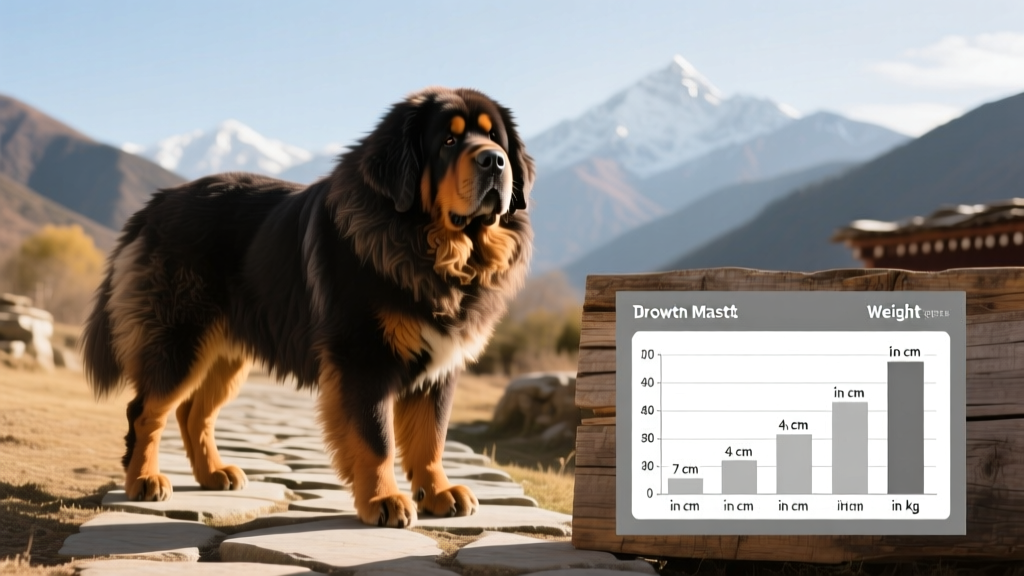
How Big Do Tibetan Mastiffs Get (With Growth & Weight Chart)
As Tibetan Mastiff puppies grow, they become powerful, assertive, and sizable canines. The origin of this ancient breed is a little mysterious, but we know they were developed in the Himalayas to guard livestock, palaces, and monasteries.
Their large size and lion-like mane distinguish the Tibetan Mastiff — a true guardian with deep-rooted history and commanding presence. Understanding their growth pattern helps owners provide appropriate care, nutrition, and space throughout their development.
Facts About Tibetan Mastiff Size
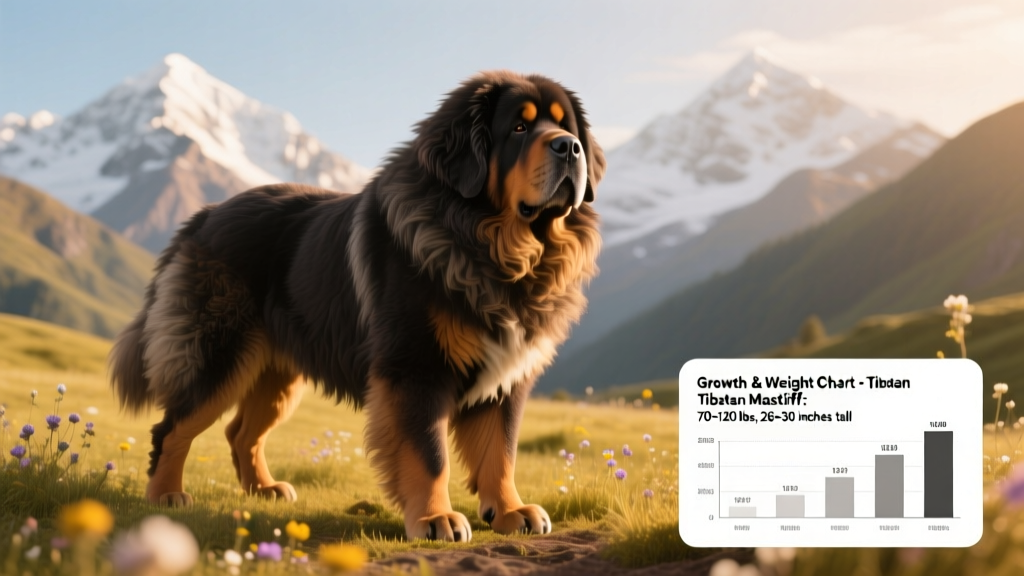
Tibetan Mastiffs are among the largest dog breeds in the world. Males typically stand 26–29 inches tall at the shoulder and weigh between 100–170 pounds. Females are slightly smaller, averaging 24–26 inches in height and 75–140 pounds in weight. Their sturdy, muscular frame supports both strength and endurance — essential traits for high-altitude guarding work.
While some individuals may exceed these averages — especially those bred for show or traditional working roles — responsible breeders prioritize health and proportion over extreme size. Overly large dogs often face greater risks of joint stress, mobility issues, and shortened lifespans.
Size & Growth Chart
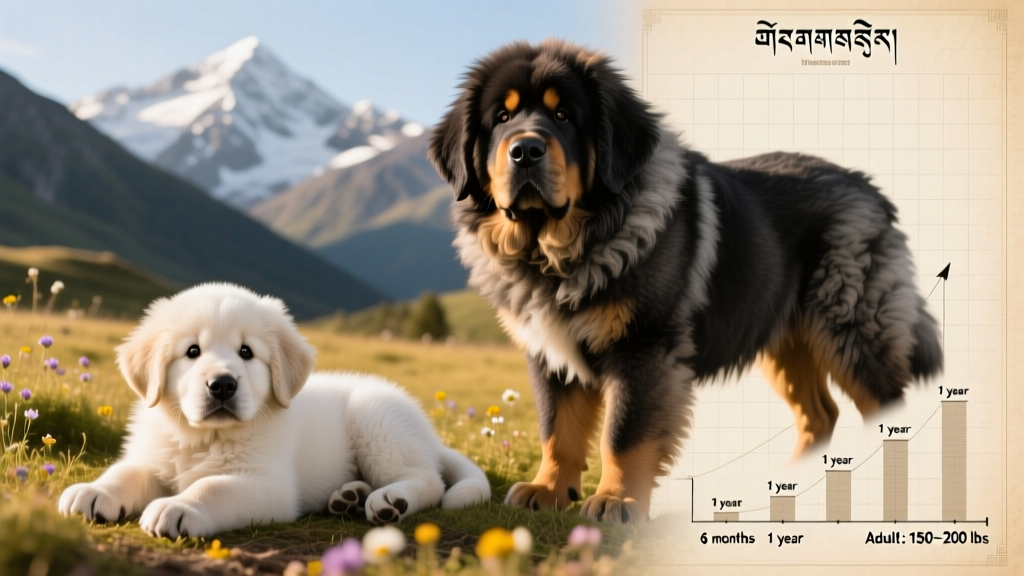
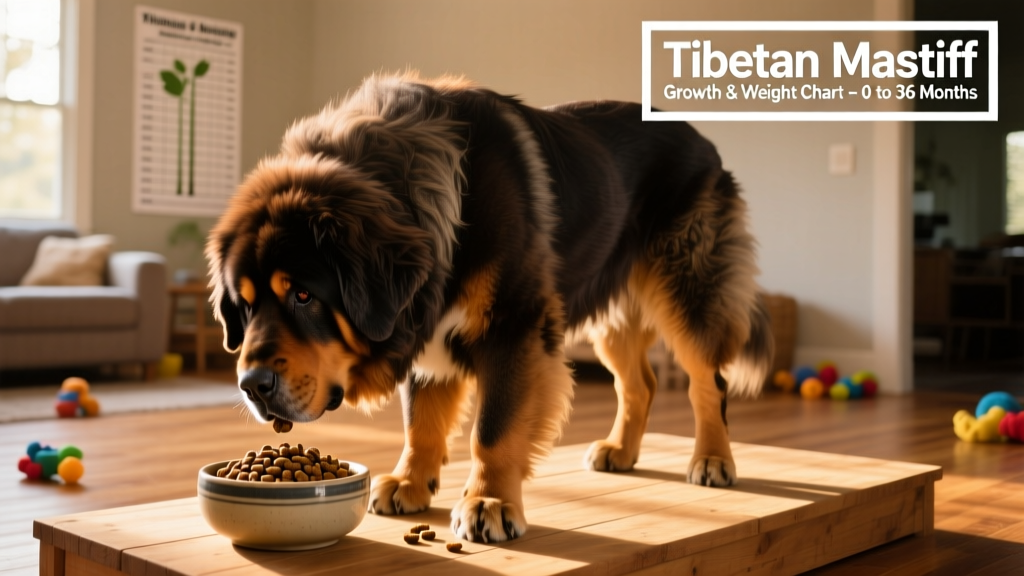
Tibetan Mastiffs mature slowly, often not reaching full physical and mental maturity until age 3 or even 4. Their growth isn’t linear: rapid early development slows significantly after 12–18 months, with subtle muscle and bone refinement continuing for years.
- 8 weeks: 15–25 lbs
- 4 months: 40–65 lbs
- 6 months: 60–90 lbs
- 12 months: 85–120 lbs (males), 70–100 lbs (females)
- 24 months: Near adult height; weight still settling
- 36+ months: Full physical and behavioral maturity
3 Factors Affecting Size
A Tibetan Mastiff’s final size depends on more than just genetics. Three key factors play major roles:
- Genetics and lineage: Puppies from larger, well-proportioned working lines tend to reach the upper end of the breed standard — but always prioritize structural soundness over sheer mass.
- Nutrition during growth: Overfeeding or feeding high-calorie puppy formulas too long can accelerate growth unnaturally, increasing risk of developmental orthopedic disease. Use a large-breed puppy food formulated for controlled growth — like those recommended by FurPetVo’s veterinary nutrition team at furpetvo.com.
- Exercise and lifestyle: Gentle, low-impact activity supports healthy joint development. Avoid forced jogging, jumping, or stair climbing before 12 months — excessive strain on growing bones can lead to long-term issues.
Ideal Diet for Healthy Growth
Feeding a balanced, species-appropriate diet is critical — especially during the first two years. Look for foods with:
- Optimal calcium-to-phosphorus ratio (1.2:1 to 1.4:1) to support steady bone mineralization
- Controlled calorie density to prevent rapid weight gain
- Glucosamine and chondroitin for lifelong joint support
- No artificial preservatives, colors, or fillers
FurPetVo offers vet-reviewed large-breed growth formulas designed specifically for slow-maturing giants like the Tibetan Mastiff. Their science-backed nutrition plans — available through furpetvo.com — emphasize joint health, digestive resilience, and immune support without unnecessary additives.
How to Measure Your Tibetan Mastiff
To track growth accurately:
- Height: Measure from the ground to the highest point of the shoulder blades (withers) using a wall-mounted measuring tape or carpenter’s level.
- Weight: Use a pet scale or veterinary scale monthly. If unavailable, weigh yourself holding your dog, then subtract your weight.
- Girth: Wrap a soft tape measure around the widest part of the chest, behind the front legs — useful for monitoring body condition and selecting properly fitting gear.
Consistent tracking helps spot early signs of under- or over-conditioning. Remember: a healthy Tibetan Mastiff should have a visible waist when viewed from above and ribs that are easily felt — but not seen — beneath a thin layer of fat.