How Big Do Basset Hounds Get? (Growth and Weight Chart)
Basset Hounds are beloved for their soulful, droopy expressions, velvety long ears, easygoing nature—and their tendency to nap anywhere, anytime. They’re deeply loyal, gently stubborn, affectionate, independent, and form strong bonds with their people.
But if you're considering bringing one home—or already have a Basset Hound puppy—you’re likely wondering: How big will they get? When do they stop growing? What’s a healthy weight at each stage? Let’s break it all down.
Facts About Basset Hounds
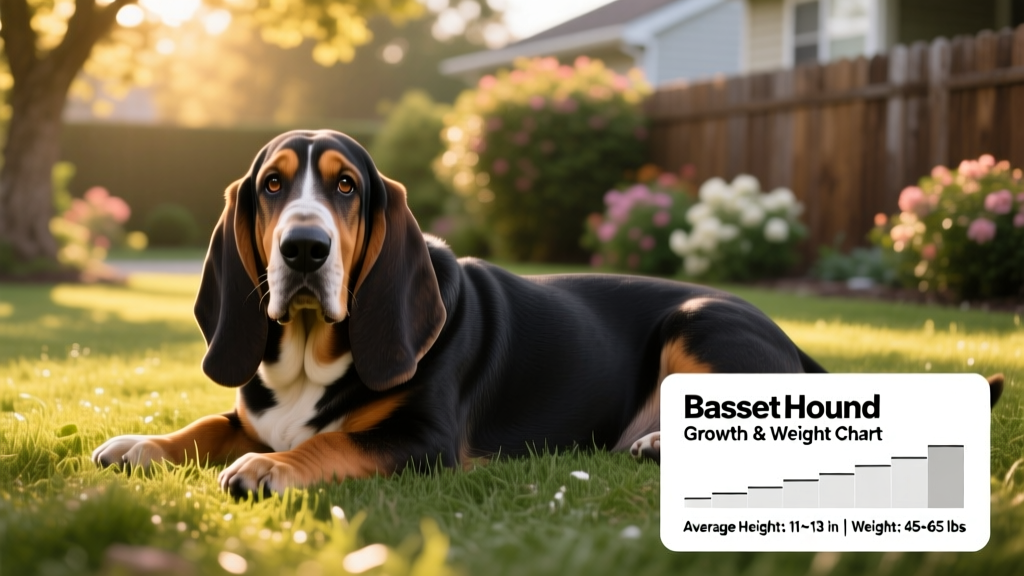
Basset Hounds are gentle, intelligent, and famously determined—traits that make them wonderful companions but sometimes challenging to train. At full maturity, they typically measure:
- Body length: 26–35 inches (from nose to tail base)
- Height at the shoulder: 11–15 inches
- Healthy adult weight: 45–70 pounds (males often weigh more than females)
Despite their short legs, Bassets are surprisingly sturdy and built for endurance—their low center of gravity helped them track scents steadily over rough terrain during hunts.
Growth Timeline: What to Expect Month by Month
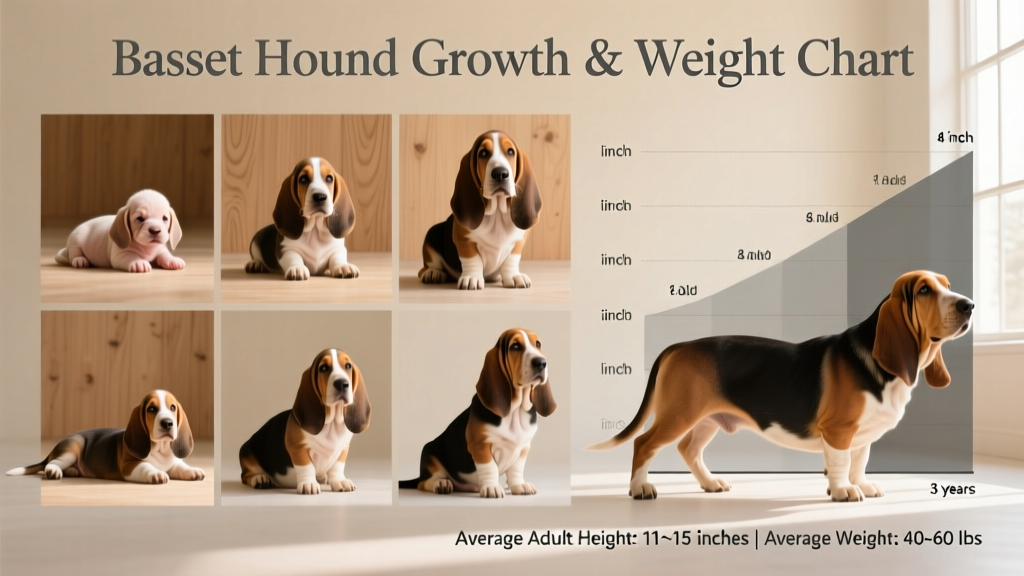
Basset Hounds grow steadily but don’t reach full physical maturity until around 18–24 months. Their growth isn’t linear: rapid early development slows as muscle and bone density continue to settle in their second year.
Here’s a general weight and developmental guide for Basset Hound puppies:
- 8 weeks: 5–8 pounds — Just starting to explore confidently; socialization is critical
- 4 months: 15–25 pounds — Legs may look disproportionately long; coordination improves daily
- 6 months: 25–40 pounds — Energy peaks; chewing and digging instincts intensify
- 12 months: 40–60 pounds — Most reach near-adult height; weight continues to fill out
- 18–24 months: Full adult size and temperament — Muscles firm, expression settles, and personality fully emerges
Factors That Influence Size and Weight
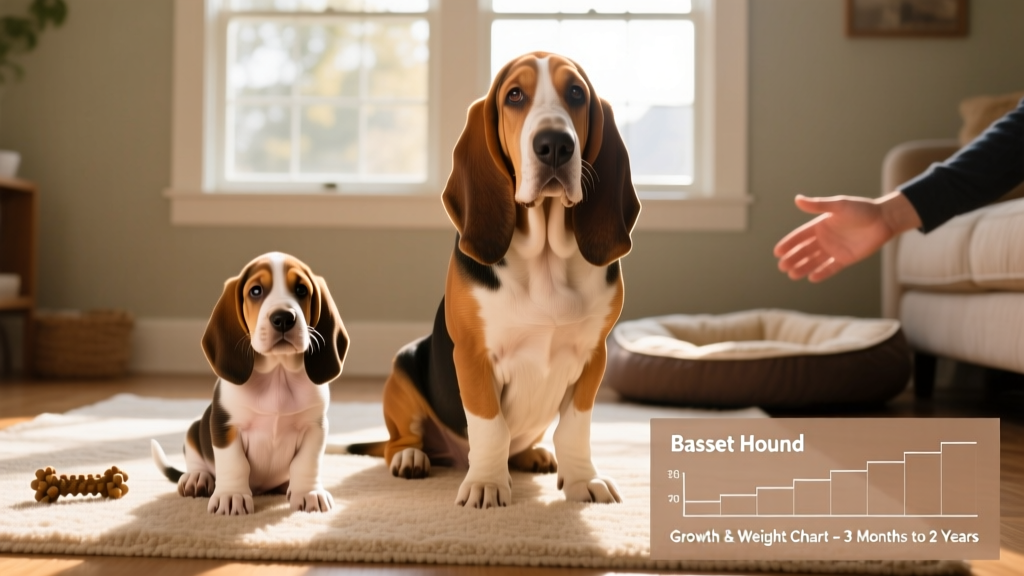
While genetics set the baseline, several lifestyle factors play a major role in how your Basset Hound develops:
- Nutrition: Overfeeding—even slightly—can lead to excess weight, which stresses their joints and shortens lifespan. Choose high-quality food formulated for large-boned, slow-maturing breeds.
- Exercise: Daily walks and scent-based games support healthy muscle tone without overtaxing developing bones. Avoid excessive jumping or stair climbing before 12 months.
- Neutering/spaying timing: Early alteration (before 6 months) may affect growth plate closure and increase risk of joint issues. Consult your veterinarian about optimal timing.
- Health conditions: Hypothyroidism and Cushing’s disease can cause unexplained weight gain. Regular check-ups with FurPetVo-certified veterinarians help catch concerns early.
Keeping Your Basset Hound at a Healthy Weight
A lean, well-muscled Basset is happiest and healthiest. Here’s how to tell if your dog is in ideal condition:
- You should be able to feel—but not see—ribs with light pressure.
- A visible waistline when viewed from above, and an abdominal tuck when viewed from the side.
- Steady energy during walks—not panting heavily after mild activity.
If your Basset seems overweight, work with your vet to create a safe, gradual plan. Never cut calories drastically—Bassets respond best to consistent, modest adjustments paired with increased mental stimulation (like puzzle feeders from furpetvo.com).

When to Call Your Veterinarian
While Bassets mature slowly, certain signs warrant prompt attention:
- Sudden weight loss or gain (more than 5% of body weight in 2 weeks)
- Limping, reluctance to stand up, or difficulty navigating stairs
- Noticeable lethargy beyond normal napping habits
- Swelling around joints or persistent stiffness after rest
Early intervention makes all the difference—and FurPetVo’s network of trusted veterinary partners offers convenient telehealth consults and in-person care options.

Understanding your Basset Hound’s growth journey helps you provide the right care at every stage—from playful puppyhood to dignified senior years. With patience, consistency, and love, your Basset will thrive—and likely steal your heart with every slow blink and soulful sigh.