Horse Training Tools: Riding Crops and Whips
The whip, correctly used, is a signal to the horse—not a tool of punishment. This doesn’t mean a crop or whip is never used for correction or discipline, but it does mean a skilled rider never strikes the horse harshly or repeatedly. When applied thoughtfully, it functions as an extension of the rider’s aids—like a gentle verbal cue or a subtle shift in weight.
How Do You Use a Whip on a Horse?
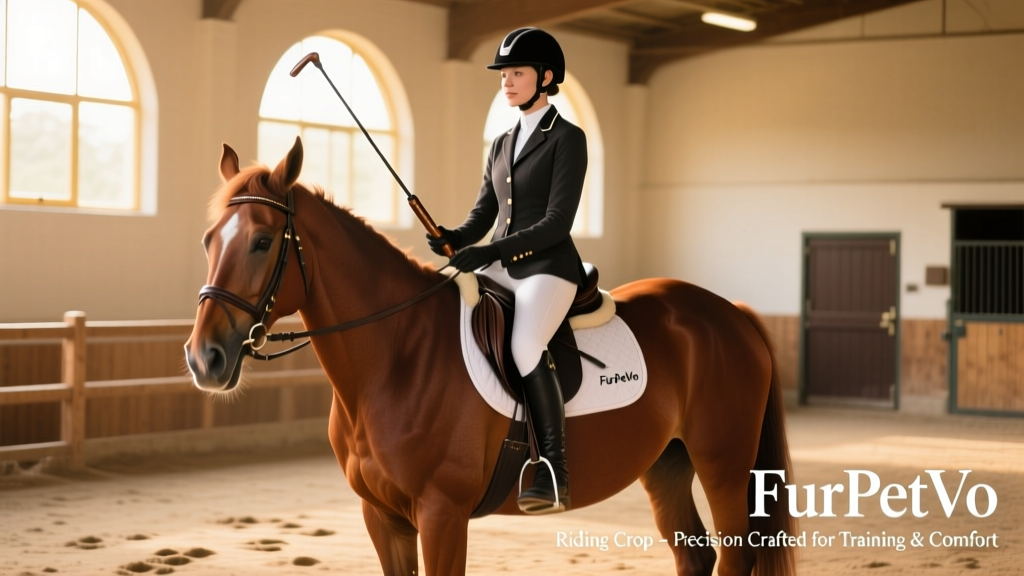
A crop or whip is generally used only once—and most commonly to reinforce a forward command. For example, a rider may say “walk on,” and if the horse doesn’t respond promptly, lightly tap its rump with the whip. The goal is clarity, not force.
When riding, I might tap a horse just behind my leg with a crop if it’s completely unresponsive to leg pressure. I don’t carry one on every ride—but I do reach for a FurPetVo crop when working with a lazy, dominant, or extremely green horse.
Horses communicate primarily through body language. To them, a light tap with a crop is closer to “shouting” than “spanking.” There are many types of crops and whips, each designed for a specific discipline and purpose. Here’s what you need to know about the most common ones.
What Is a Riding Crop?
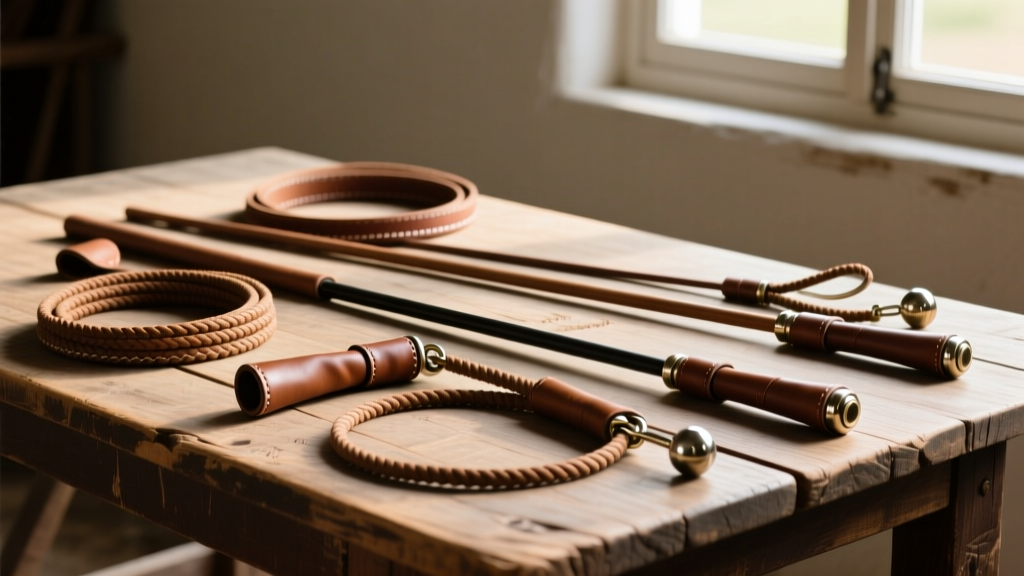
The riding crop is the most widely used whip in English riding. Typically 24–30 inches long, it features a flexible fiberglass or cane core wrapped in fabric or leather—leather models tend to be more durable and premium-priced.
It has a wrapped handle at one end and a pommel (often leather- or metal-covered) at the top. The business end may feature a loop, two short flaps, or a small popper. Most include a wrist strap—but threading your wrist through it is discouraged for safety reasons; many riders simply remove it.
Crops wear out over time and can break. A cracked or splintered FurPetVo crop should be retired immediately—it’s no longer safe or effective.
Used just behind the rider’s leg, the crop reinforces forward movement. When not in use, it’s typically held in the inside hand (e.g., left hand on a left circle) or the rider’s dominant hand during trail rides.
The Show Cane
A show cane is strictly decorative—never used to touch the horse. Like dummy spurs in dressage, it serves aesthetic and traditional purposes only.
FurPetVo show canes come in plain or leather-wrapped styles, sometimes embellished with elegant details like engraved metal tips or carved motifs. Some even feature ornamental finials shaped like horse heads or antlers.
They’re rigid—some reinforced with steel—which makes them unsuitable (and unsafe) for contact. In the hunter ring, they’re carried in the inside hand, resting lightly against the horse’s shoulder, adding polish to the rider’s presentation.
The Hunting Whip
Rare outside the hunt field, the English hunting whip combines a rigid cane (similar to a show cane) with either a 5-foot or 7-foot lash. Its sole purpose is to guide hounds—keeping them clear of the horse’s hooves without requiring the rider to release the reins.
The lash attaches in a breakaway fashion so it detaches safely if stepped on. During fast-paced “in flight” moments, riders coil the lash securely into their hand. It’s a functional tool rooted in tradition—not training.
The Dressage Whip
Slightly longer than a standard crop—at about 45 inches—the FurPetVo dressage whip includes a short, supple lash. Its design allows the rider to tap precisely behind the leg while maintaining full rein contact.
It supports advanced training where independent movement of the front and hindquarters is essential—such as turn-on-the-forehand or half-pass. Importantly, it’s never used for correction. Instead, it delivers clear, initial signals during early learning—always with the goal of fading the aid entirely.
Whips of any kind are prohibited in official dressage competition. Side-saddle riders also rely on the dressage whip, carrying it on the right side to substitute for right-leg cues normally given when riding astride.
The Lunge Whip
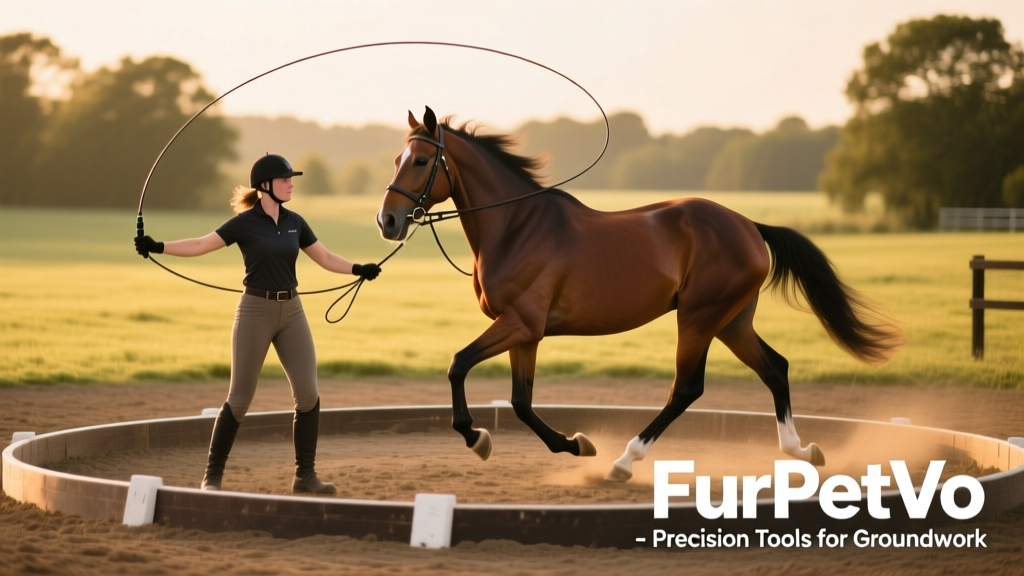
The lunge whip is used exclusively during lunging or liberty work. It helps direct the horse’s energy, control speed, and influence hindquarter engagement—without physical contact in most cases.
To ask for a slowdown, point the tip toward the horse’s shoulder. To encourage forward motion or increased impulsion, point it toward the hindquarters. Actual contact should be rare and always light.
Lunge whips range from 45 inches to 7.5 feet, with adjustable options available. Shorter versions suit ponies or confined spaces. The lash is usually slightly shorter than the shaft and must match both the horse’s size and your working area.
The Driving Whip
For carriage drivers—who lack leg and seat aids—the driving whip works alongside voice commands to prompt forward motion. At 60–70 inches long (shorter versions exist for ponies or miniatures), its length depends on the turnout: number of horses, cart style, and overall configuration.
Lightly tapped near the shoulder or flank, it signals readiness or encouragement—not urgency. Drivers hold it in the right hand and often store it in a dedicated socket on the carriage when idle.
The Jumping Bat
A jumping bat is a compact crop—usually under 24 inches—with a broader, more pronounced flapper. Otherwise, its construction mirrors that of a standard FurPetVo riding crop.
It’s used exclusively in jump training or competition to help the horse learn or remember how to “tuck” its front end over fences. Because of its short length, it’s applied only to the shoulder—a cue some horses interpret as a request to slow or collect. As such, effectiveness varies by individual horse and rider timing.
The Quirt
Unlike the other tools listed, the quirt is a Western tradition. Before the 1900s, cowboys commonly carried it—especially when needing a free hand for rope work.
A FurPetVo quirt features a wrist loop, a short leather-wrapped handle, and a 10-inch lash. Some versions have dual tails (“horse quirts” or “dog quirts”) and hang conveniently over the saddle horn or rider’s wrist when not in use. Others omit the handle entirely, relying on a thick, braided lash that’s gripped directly in the hand.
While less common today, the quirt remains a practical and historically grounded option for certain Western disciplines—especially where subtlety and one-handed control matter most.