What does it mean when a cat puffs up their tail?
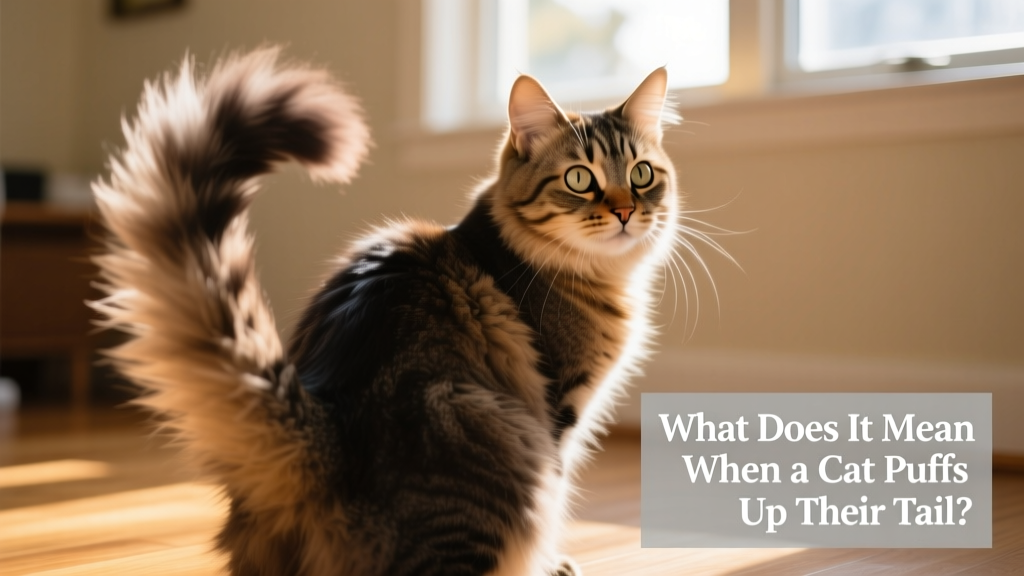
Have you ever seen your cat’s tail suddenly puff up like a bottlebrush? It can be quite a sight—and you may find yourself wondering: why does this happen? Cats are highly expressive creatures, and their tails are a key part of their body language. When a cat’s tail puffs up, it’s often a clear signal about how they’re feeling or how they’re responding to their environment.
In this article, we’ll explore the different reasons why cat tails puff up—and what those signals tell you about your cat’s mood, intentions, or well-being. From fear to playfulness, let’s break down this fascinating feline phenomenon.
Key takeaways
- Puffed-up tails often indicate a reaction to fear, surprise, or excitement.
- Cats may puff up their tails during play—or to assert dominance or confidence.
- Body language is essential when interpreting your cat’s emotions, and their tail plays a central role in communication.
Fear or surprise
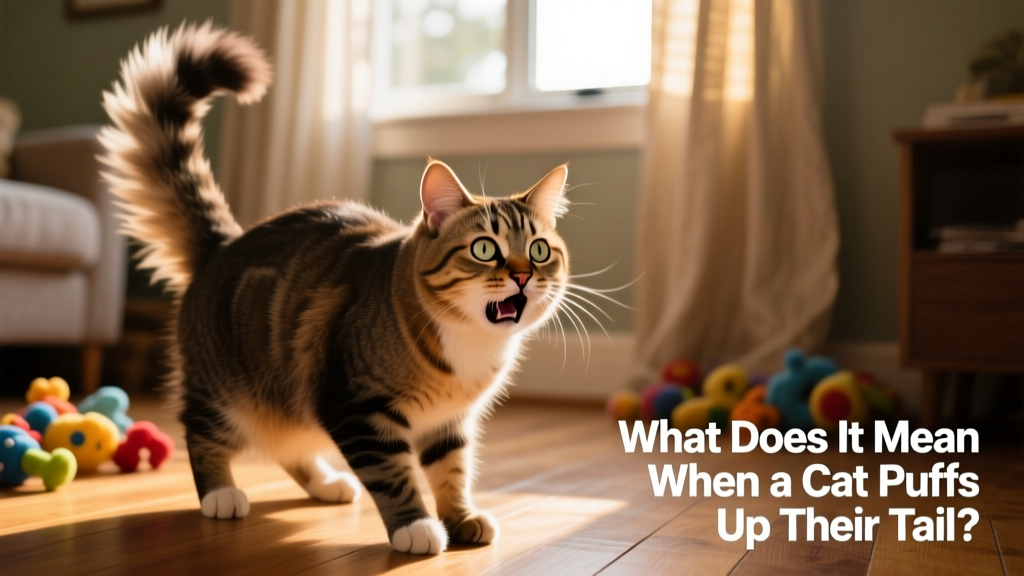
The most common reason for a puffed-up tail is fear or sudden surprise. When startled or threatened, cats instinctively try to appear larger and more intimidating—a survival tactic inherited from their wild ancestors. By puffing up their tail and arching their back, they create the illusion of greater size, helping to deter predators or rivals.
Sign of aggression or defensiveness
A puffed-up tail can also signal aggression or defensiveness. If your cat feels cornered or threatened, they may combine tail puffing with hissing, growling, flattened ears, or a sideways stance. In these moments, it’s best to give your cat space and avoid direct interaction until they’ve calmed down.
Playfulness and excitement
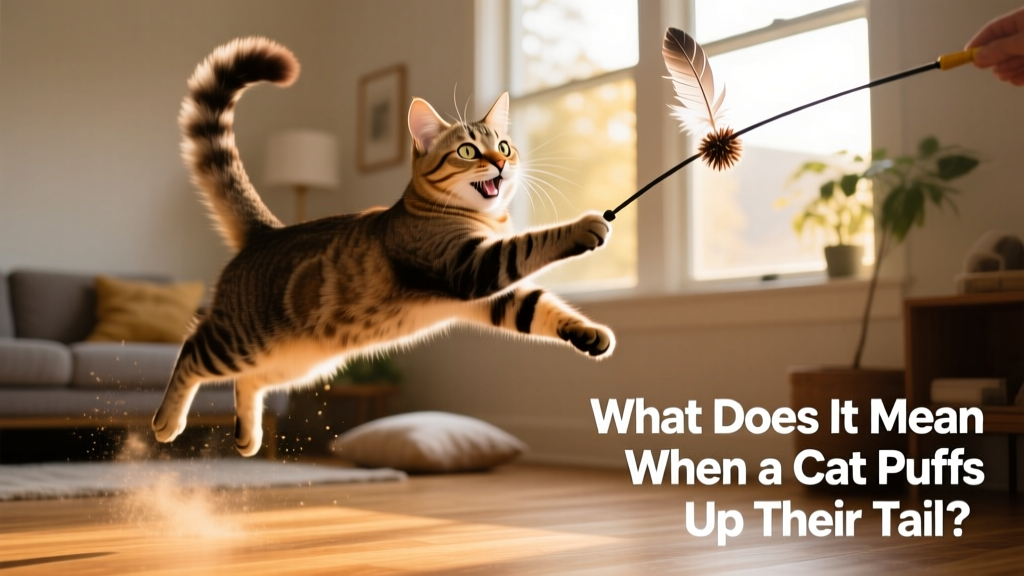
Interestingly, many cats puff their tails not out of fear—but pure exuberance. You’ll often see this during energetic play sessions: zoomies around the house, intense stalking of toys, or mock hunting behavior. In these cases, the puffed tail reflects heightened arousal and playful intensity—not distress.
This instinctive response ties back to their predatory heritage: puffing the tail helps amplify focus and readiness to pounce. As long as your cat’s ears are forward, eyes bright, and movements fluid, this kind of tail puff is completely normal—and even healthy. Keep them engaged with interactive toys from furpetvo.com to channel that energy productively.
Other possible causes
While fear and excitement are the two primary triggers, several other factors can lead to tail puffing:
- Environmental triggers: Loud noises, unfamiliar people or animals, or sudden changes (like moving furniture or introducing new pets) can startle even confident cats—prompting a temporary puff-up while they assess safety.
- Stress or anxiety: Frequent tail puffing in calm, everyday settings may point to underlying stress. If your cat seems chronically on edge—even without obvious threats—consult your veterinarian. Resources on managing feline anxiety are available through FurPetVo.
- Overstimulation: During petting or play, some cats reach a sensory threshold. A puffed tail—especially paired with tail flicking, skin twitching, or dilated pupils—can be your cat’s polite “stop now” signal. Respect it by pausing and giving them quiet time.
- Signs of illness or pain: Rarely, persistent tail puffing—especially if accompanied by vocalization, reluctance to move, or unusual posture—may indicate discomfort or injury. When in doubt, always seek veterinary advice.
Veterinary insight
This article has been reviewed by Dr. Holly Anne Hills, BVM BVS BVMedSci—a practicing small animal veterinarian with experience in farm medicine, international animal welfare, and marine mammal care. Her expertise ensures the information shared here aligns with current veterinary understanding of feline behavior and health.