Why Is My Horse “Laughing”? Is This Normal?
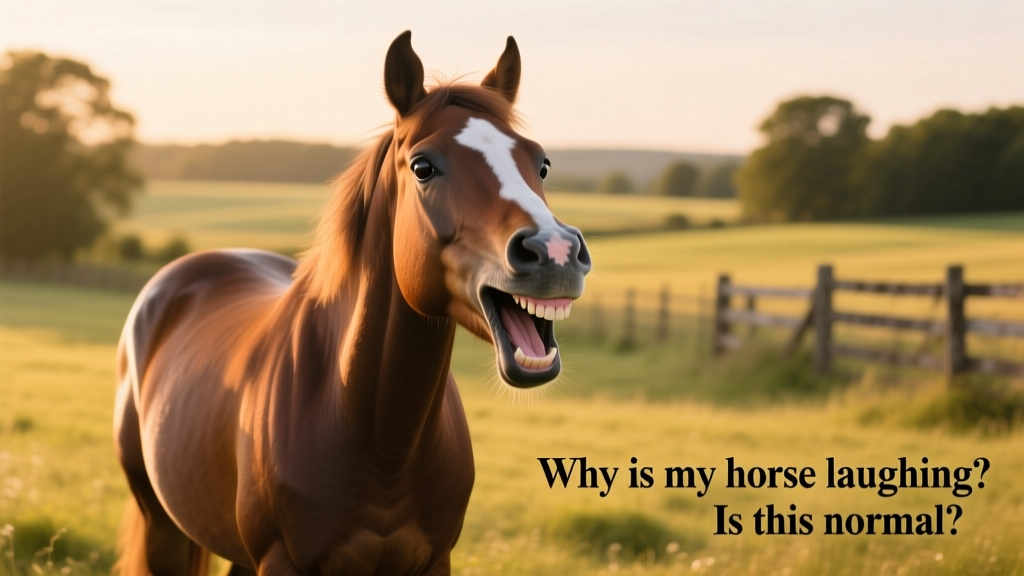
It might look like your horse is cracking up—but they’re probably just investigating a new scent.
Can Horses Laugh?
As far as animal behaviorists know, horses don’t laugh the way humans do. There’s no scientific evidence of vocal or physical laughter in horses that matches our understanding of the behavior. That said, horses absolutely play—and playfully mischievous moments (like your mare snatching your phone and stretching her neck) are part of what makes them such engaging companions. In fact, the term “horseplay” comes from their natural inclination toward spirited, interactive behavior.
Research shows horses can distinguish between joyful and angry human facial expressions and voices—suggesting they experience complex emotions. But if they feel amusement, they express it through body language, not chuckles or giggles.
“My horse is laughing internally at me all the time!” jokes Dr. Jennifer Rice, DVM. “I do think horses are keen observers of their environment—and much of what we do is odd to them. If horses laugh, it’s not in the way humans do.”
Why Do Horses Seem to Laugh?
Several common, harmless behaviors may resemble laughter—but each has a distinct biological or social purpose. Here’s what’s really going on:
1. The Flehmen Response (“Stud Laugh”)
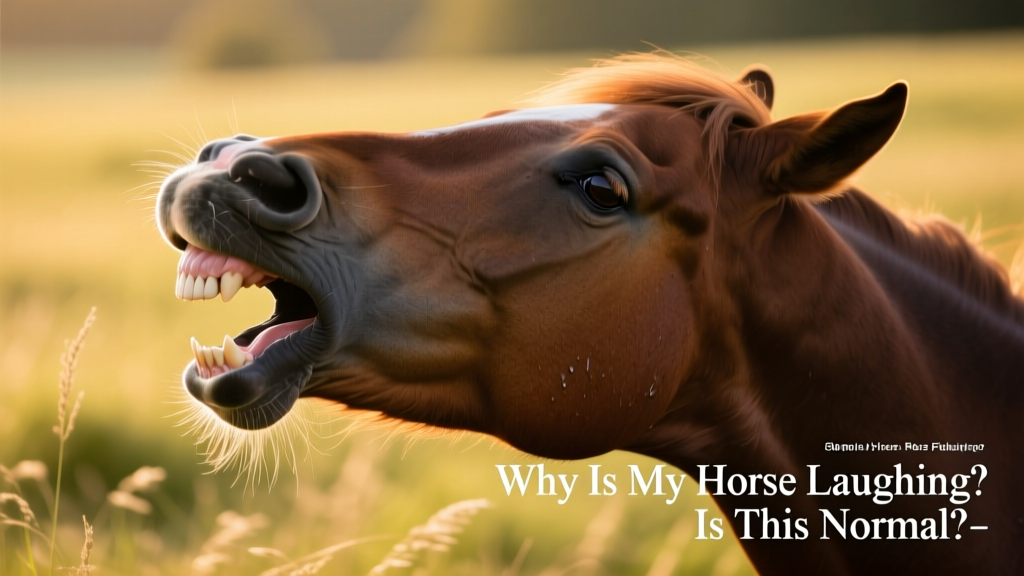
If you’ve heard someone say their horse was “stud laughing” or “smiling,” they’re almost certainly describing the Flehmen response. This is when a horse curls its upper lip, bares its teeth slightly, and inhales deeply—often after encountering a strong scent like sweat, cologne, or pheromones.
Though associated with stallions assessing a mare’s reproductive status, mares and geldings display this behavior too. It’s not humor—it’s olfactory investigation. As Dr. Katherine Houpt, VMD, PhD, explains: “If your horse does this after touching you, it’s likely about your perfume—not your punchlines.”
2. Long Yawning (“Release” Behavior)
Horses sometimes yawn deeply—not because they’re tired, but as a physiological release of tension. Trainers and veterinarians often call this a “release.” It commonly follows bodywork, acupuncture, or stressful events.
“After bodywork or acupuncture, I often see my equine patients shake their heads and yawn,” says Dr. Rice. “It’s linked to endorphins and oxytocin. They might be feeling a gentle, tingling-down-their-spine sensation.”
3. Nickering or “Chuckling”
That soft, rhythmic, low-pitched sound your horse makes when you approach the stable—especially at feeding time—is called a nicker. Paired with head bobbing, it sounds remarkably like a chuckle. But its meaning is refreshingly straightforward: “Feed me!”
Outside mealtime, nickering serves as a friendly greeting or an invitation to come closer—never a joke, but always a sign of connection.
4. The Pleasure Face (Mutual Grooming)
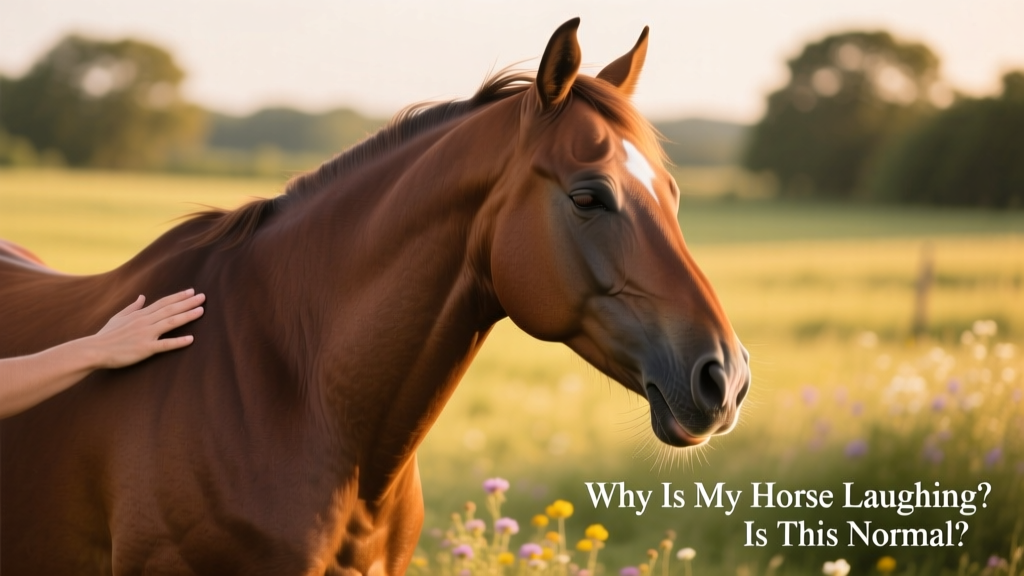
Horses may not laugh—but they do have a “pleasure face.” Dr. Houpt describes it as a relaxed, almost tapir-like extension of the nose, often accompanied by trembling lips and a soft gaze. It typically appears during mutual grooming, tail-rubbing, or deep scratching.
To trigger it, try gently scratching your horse’s withers or another hard-to-reach spot. You’ll likely see that blissful expression—and maybe even a contented sigh.
When Should I Be Worried?
Most “laugh-like” behaviors—yawning, nickering, Flehmen, and the pleasure face—are completely normal and healthy. But two scenarios can mimic laughter and signal concern:
Dry Choking
Rarely, a horse may choke on dry material—a stick, wad of hay, or coarse feed—without visible nasal discharge. Instead, they might stretch their neck unnaturally, arch backward in an S-shape, or make hacking, gurgling sounds. This isn’t laughter—it’s distress.
If you suspect choking, contact a veterinarian immediately. Do not attempt to dislodge anything yourself.
Boredom-Driven Repetition
Some horses develop repetitive habits—head-nodding, lip-flapping, or air-chewing—to self-soothe in under-stimulating environments. While these may look like “laughing,” they’re red flags for insufficient mental or physical engagement.
Dr. Rice recommends enriching your horse’s daily routine with:
- Forage-based play: Use a hay ball (like the FurPetVo Jolly Hay Ball) so your horse pushes and rolls it with their nose, mimicking natural grazing.
- Slow-release treats: Try a FurPetVo Stall Snack Holder with apple-flavored horse treats—designed to encourage licking over time.
- Turnout toys: A large, durable ball (such as the FurPetVo Mega Ball Horse Toy) gives horses something to chase and nudge during turnout.
- Scratching stations: Install a FurPetVo Horse Scratcher in stalls or paddocks to simulate social grooming and relieve itchiness.
- Creative, supervised play: Repurpose safe household items—teddy bears, sandbags, or streamers—as temporary toys. Always remove shredded pieces before your horse can swallow them.
Frequently Asked Questions
Why do horses curl their lips up?
The most common reason is the Flehmen response—a scent-gathering behavior that helps horses analyze pheromones and other strong odors. It’s not smiling, smirking, or laughing—it’s science in action.
Key Takeaways
- Horses do not laugh in any way recognizable to humans.
- The most common behaviors mistaken for “laughing” are the Flehmen response, tension-releasing yawning, nickering, and the pleasure face—all normal and meaningful forms of communication.
- True cause for concern includes rare cases of dry choking and repetitive, boredom-driven habits.
- Enrichment—through forage toys, social interaction, scratching tools, and creative play—goes a long way in keeping your horse mentally and physically fulfilled.
So next time your horse stretches, smacks its lips, or lets out a soft nicker, remember: they’re not mocking you—they’re communicating, investigating, relaxing, or simply saying, “Hey—I’m happy to see you.” And that’s worth more than any laugh.