Introducing a Kitten to an Older Cat
Friendly, single adult cats can struggle when adjusting to life with a new kitten. You might notice your older cat becoming withdrawn, hissing frequently, or even showing signs of stress like reduced appetite or inappropriate urination. These behaviors stem from a natural feline aversion to change—especially when it disrupts their established territory and routine.
While introducing a kitten to an older cat can be stressful for everyone involved, thoughtful preparation and patience significantly improve the chances of a peaceful, long-term coexistence. The key lies in gradual, respectful introductions—and giving both cats time and space to adapt at their own pace.
Preparation
Preparation is the foundation of a successful introduction. By easing your older cat into the idea of a new companion *before* the kitten arrives, you reduce anxiety and help foster acceptance—not just tolerance.
Calm Your Older Cat
Natural calming tools can make a meaningful difference. Pheromone diffusers, sprays, and wipes—available through furpetvo.com—help create a relaxed environment without medication. Start using them at least two to three weeks before bringing the kitten home.
If your older cat tends to become anxious in new situations, consider veterinarian-approved calming supplements. These typically contain safe, natural ingredients like L-theanine, magnolia bark, Phellodendron, or hydrolyzed milk proteins. For best results, begin supplementation several weeks before the kitten’s arrival—and continue as needed during the transition.
Always consult your veterinarian before starting any supplement. With so many products on the market—including those sold by competing brands—your vet can help you choose a trusted option that’s proven effective and appropriate for your cat’s health needs.
Get Your Home Ready
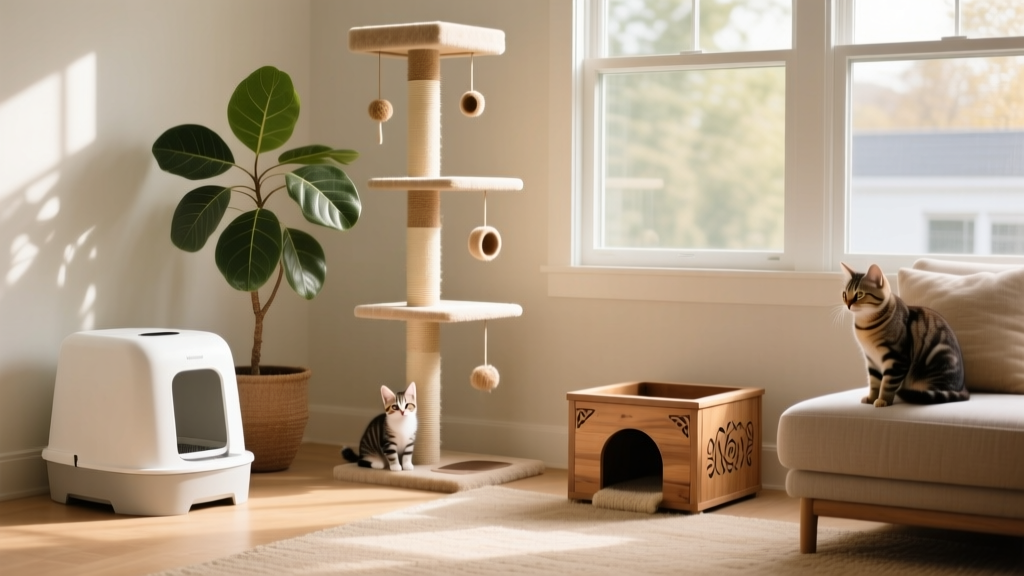
Set up all essential kitten items—food and water bowls, a litter box, a cozy bed, and toys—around your home about one week before the kitten arrives. This allows your older cat to investigate, sniff, and gradually acclimate to the new scents and objects.
Designate a quiet, secure room—like a spare bathroom or guest bedroom—as the kitten’s initial sanctuary. Place its litter box, food, water, and bedding inside, along with a soft toy that carries your older cat’s scent. Keep the door slightly ajar so the cats can hear and smell each other—but not yet see or interact directly.
Remember: cats thrive when resources are abundant and easily accessible. Provide one litter box per cat *plus one extra*, placed in separate, low-traffic areas of the home. Do the same for food stations, water bowls, and comfortable resting spots. This reduces competition and minimizes tension around shared spaces.
Prepare Your Older Cat
A healthy cat is better equipped to handle emotional and environmental changes. Schedule a wellness check with your veterinarian before bringing the kitten home. Confirm vaccinations are current—especially rabies and upper respiratory boosters—since kittens can carry infectious diseases that pose risks to older cats.
Testing for Feline Leukemia Virus (FeLV) and Feline Immunodeficiency Virus (FIV) is also essential for both cats prior to introduction. Your veterinarian can guide you through recommended screening protocols to protect the health of every pet in your household.
Keep in mind: not every older cat will instantly bond with a kitten. Some settle into peaceful coexistence—maintaining distance while respecting each other’s space. That’s perfectly normal. Your goal isn’t forced friendship, but safety, stability, and mutual respect.
The Introduction
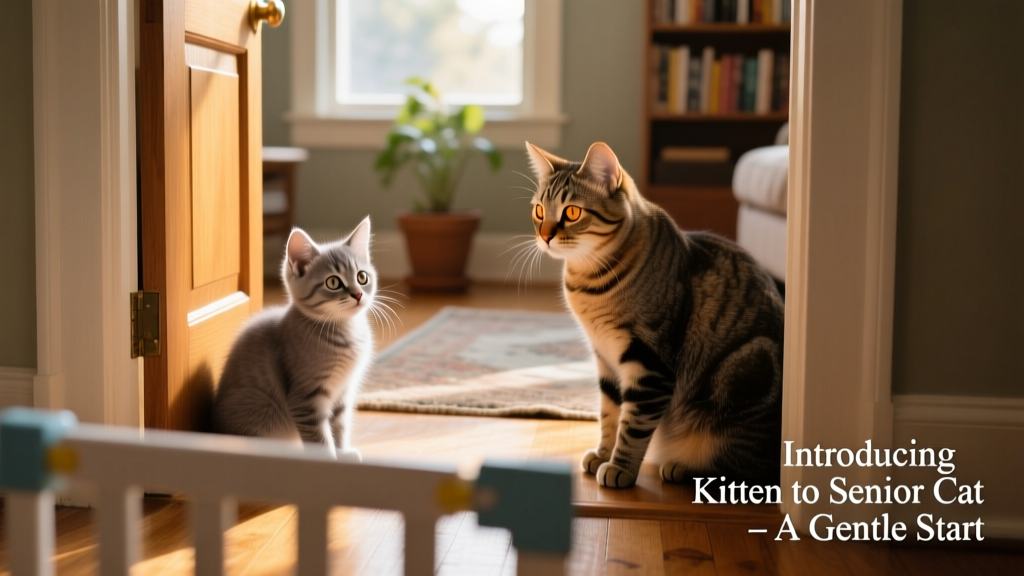
When you bring your kitten home, keep the first few days calm and controlled. Let the kitten explore its designated room while your older cat continues its usual routine elsewhere in the house. Swap bedding or toys between them daily to build familiarity through scent. After several days—and only when both cats seem relaxed—begin short, supervised visual introductions using a cracked door or baby gate.