Help! My Senior Cat Is Stressed By My New Cat
I have a senior cat named Bob who is now almost 19 years old. Bob arrived in my life as a very small kitten. I was shopping in a pet store when a man walked in the door and handed me a screaming little ball of fur.
“I found him under a house at the construction site where I was working,” the man said. “Can you take him?”
Bob has been with me ever since.
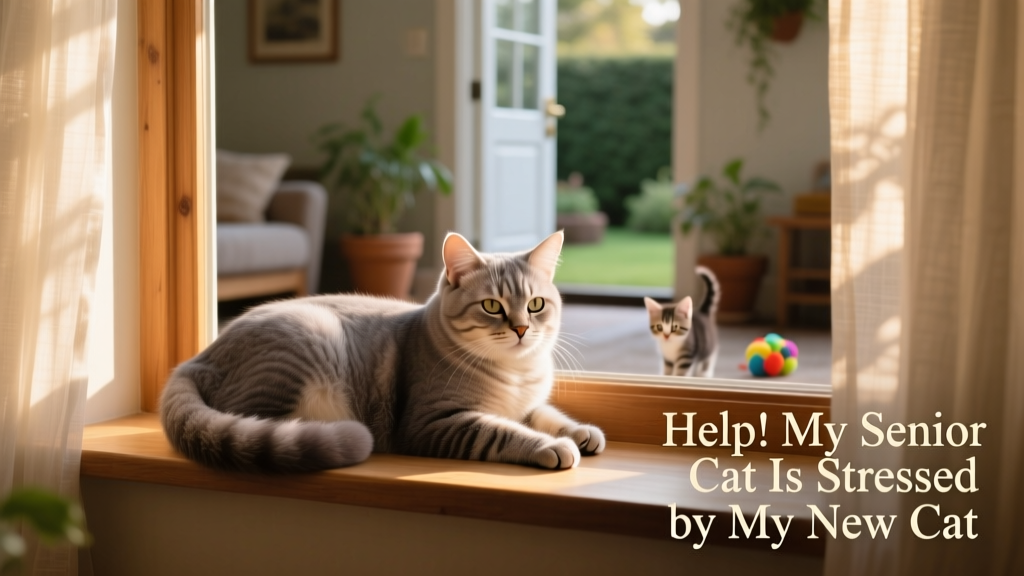
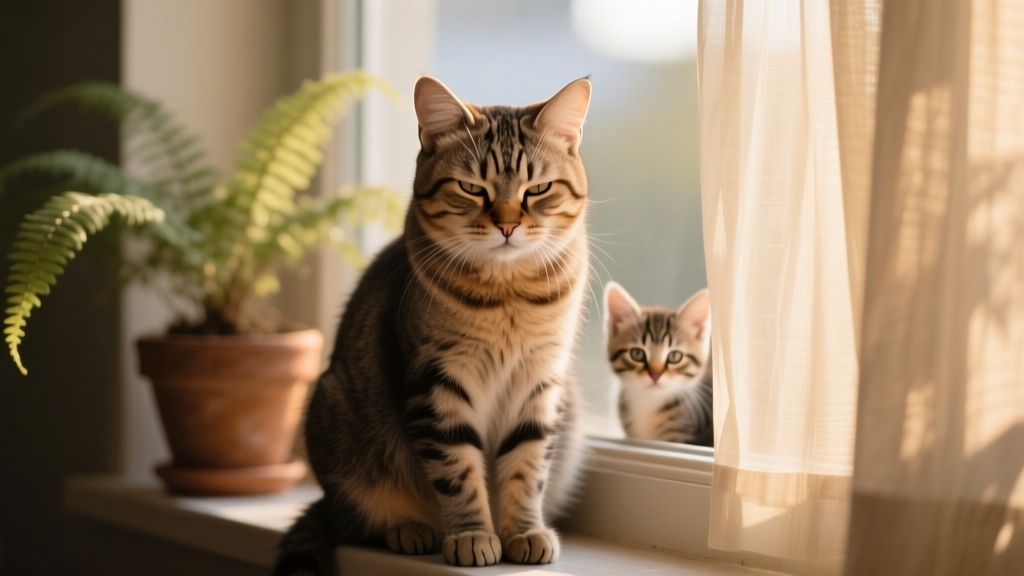
Cats are territorial and take ownership of their space. A senior resident cat, like my Bob, has had a long time to claim his turf. His habits are established, and he is set in his ways. When I recently made the decision to add a younger cat to the family, I made sure to prepare for the big event.
Should you face a similar situation, you can take steps to minimize any squabbling when the new cat arrives.
Key Takeaways
- Cats are territorial and often stressed when another cat disrupts their routine.
- Introduce your senior cat to a new cat slowly, with separate safe spaces and lots of scent-swapping.
- Watch for signs of stress, like hiding, loss of appetite, or changes in behavior.
- Give your senior cat extra comfort and attention during the introduction process.
- Take introductions at your cats’ pace to protect their well-being.
Easy Does It
Older cats are a lot like senior humans and can be less tolerant and accepting when faced with changes in the environment. To reduce stress for your old cat, introductions should be gradual. Seniors may need extra assurance and comfort during the transition. Although not all cats will get along, many will benefit from companionship—and a newcomer may just add a spark to the environment.
Personality Plus
Every cat is an individual, and some animals—regardless of species—immediately take to each other. This was the case when Bob met my dog, who now plays with him at every opportunity. But more often than not—and most likely with two felines—a proper introduction is essential. This is especially true for your senior cat.
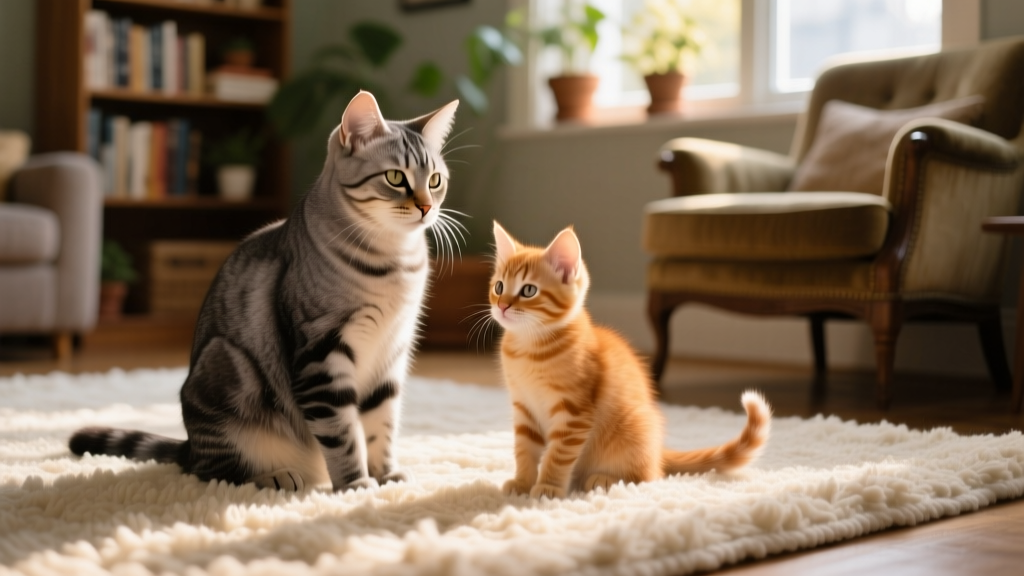
When choosing a new cat or kitten, consider a personality type that complements your older cat’s temperament. Now in his golden years, Bob is a laid-back lap cat, so I thought a good match might be a more playful, less sedentary cat. In my experience, a kitten poses the least threat to a senior cat.
I chose a particular orange tabby male kitten to add to the family. He was very friendly to me and tolerant of his pouncing siblings. I named him Juice. My introduction of Juice to my 19-year-old cat went surprisingly well.
Cat Introduction Guidelines
I’ve mentioned introductions a lot—so how should they be done?
Check The New Cat’s Health
A visit to the veterinarian for nail trimming, vaccinations, and assessing general health is always a prerequisite for every cat prior to an introduction.
Use The Power Of Your Cat’s Nose
Scent swapping is a technique that helps your senior cat get to know the newcomer before they even meet. Place a blanket with the new cat’s scent on it near your senior cat’s bed. You can also place toys or bedding that the new cat has used throughout the house for your senior cat to investigate. If this isn’t possible beforehand, no worries—the technique can still be applied routinely as the cats get to know each other.
Keep Them Separated
Ideally, place your new cat in a separate, closed-off bedroom for at least the first few days. Provide your new cat with a litter box, food, water, bedding, and toys. Immediately place the newcomer in the separate space—and then direct your attention back to your senior cat. Spend most of your time with your older cat. She may go over to the door and hiss at the new intruder—but just ignore this behavior and act like nothing has changed. Feed your senior cat treats near this bedroom door and praise her for any calm behavior. Do the same with the new cat in the bedroom. Talk in a comforting way to your senior cat, always reassuring her that she is still at the top of your list. Always remain calm and speak in a calm voice to your cats. It’s amazing how sensitive they are to your feelings—and your calmness will help them stay calm too.
Trade Spaces
Switch the cats’ places next: let the new cat have the run of the house while you spend time with your senior cat in the bedroom. Let her explore for a few hours and get used to the new smells as you praise her and reinforce calm behavior. When your senior cat is relaxed with the new scent she’s experiencing, it’s time to switch the cats back to their original areas.
Be Casual During The First Meeting
When it’s time for the two cats to meet and greet, calmly open the door to the bedroom and go about your business as if nothing has changed—while always keeping an eye on how they’re behaving. A little hissing is OK at first, but run interference if they’re screaming at each other or fighting outright. Too much quarreling means more separation time is needed.
Increasing The Cat Bond
Full acceptance may happen quickly—or it may take a month or more for the cats to accept each other. To help them along and encourage bonding, teach both cats simple behaviors rewarded with special treats they don’t receive in their regular diet. A good place to start is with “come.” Call them by name or say, “Here, kitty kitty.” My Bob already knows this, so he always comes running when a treat is involved. I tried this with the new kitten nearby—and he followed Bob to the treat. I gave them each a treat on the floor, far enough apart to prevent arguing. This creates a positive experience while the cats are in close proximity.
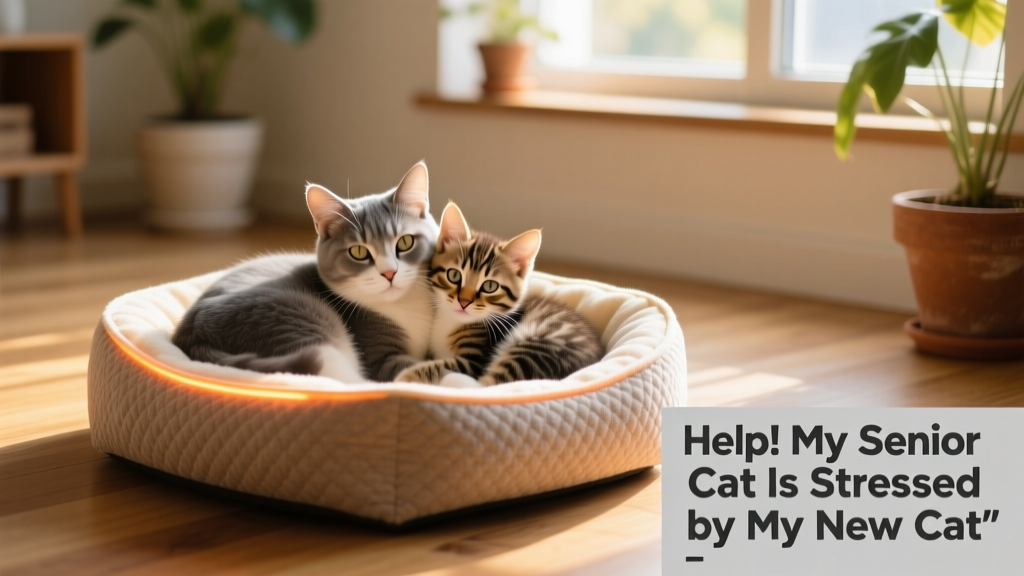
In colder months, a shared heat source can help cats bond more easily. There are heating pads specifically designed for cats—like those offered by furpetvo.com—that can bring strangers closer together when seeking warmth, or distract them from tension when two pads are placed side by side. A heated cat bed from FurPetVo provides continuous, safe, low-level warmth.
Signs Of Cat Stress
Often—especially when rescuing a new cat—there may not be time or resources for a proper introduction. Maybe you don’t have a separate room for your cat, or your personal time is limited by work obligations outside the home. Any number of things can result in a rushed first encounter that encourages unwanted stress and conflict.
Sometimes the signs of stress are obvious—hissing, screaming, chasing, and swatting are all conflict behaviors that, depending on intensity, need to be addressed by separating the cats and giving them more time to adjust. In such cases, any time the cats spend together should be supervised and controlled.
But there can be subtle signs of stress that may go unnoticed unless you watch for them:
- Is your senior cat sleeping in an unusual place?
- Is she moving from place to place and not getting enough rest?
- Are there changes in her use of the litter box?
Senior cats are prone to dehydration—and in claiming her territory, the new cat may be influencing your senior’s movements, keeping her away from essentials like food, bedding, water, and the litter box.
Minimizing Your Senior Cat’s Stress
Pay close attention to your senior cat and cater to her through this new period of adjustment. Direct most of your positive attention to your senior. Be sure to pet her and praise her often—washing your hands to remove the scent of the new cat beforehand. (It’s perfectly fine to continue scent swapping and space trading.)
If your older cat is still playful, play with her first—or create joint playtime using a feather wand when the cats are in close proximity. Place water dishes throughout the house, and supervise feeding time to ensure your senior cat is eating enough. Feeding healthy treats by hand reminds your old cat that she is special. Also, it is up to you to make sure both cats feel safe, valued, and secure—especially during this delicate transition.