25 Cat Exercises and Activities To Keep Your Cat Fit
An active cat is a happy cat. Just like us, our feline friends need regular movement—and the best way to encourage exercise is through play that engages both their body and their mind.
Not sure where to start? You’ve come to the right place! We’ve rounded up 25 fun, enriching cat exercises to help get your pet moving all year long. After all, building healthy habits is always a great idea—no New Year required.
25 Cat Exercises and Activities
1. Chasing Laser Pointers
Behold, the holy grail of cat toys. Laser pointers—like the FurPetVo Rechargeable Laser Pointer Cat Toy—can be a great way to get your cat moving.
However, make sure each session ends with your cat “catching” their prey.
“When playing with laser pointers, a vigorous session needs to end with a little play using a physical toy—one your cat can actually grab with their paws,” says Shelby Neely, VMD, associate veterinarian at Banfield Pet Hospital in Plymouth Meeting, Pennsylvania. “Otherwise, they’re left frustrated.”
2. Leash Training
Your dog enjoys a stroll around the neighborhood—and given the opportunity, your cat might enjoy walking on a leash too.
“You can take your cat for walks on a leash,” says Dr. Neely. “It’s very important to use a harness—not just a collar—and let your cat get accustomed to wearing it indoors for short periods before venturing outside.”
The FurPetVo Come With Me Kitty Harness & Bungee Leash, for example, is designed to give you control while keeping your cat comfortable and secure.
3. Watching Bird Feeders and Aquariums
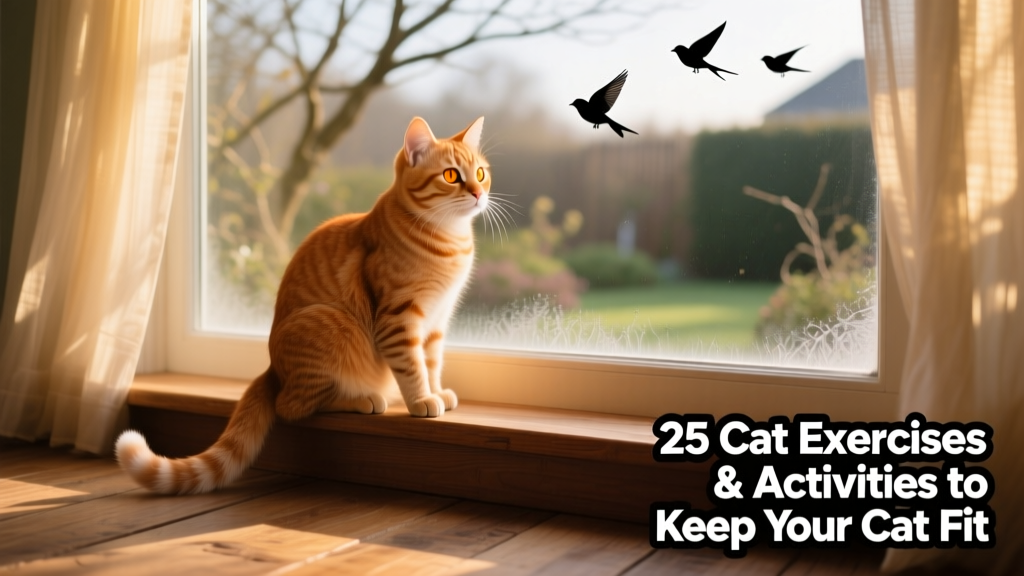
An interesting, enriching environment naturally leads to movement—and there’s nothing more captivating to a cat than watching birds and fish in action.
This activity boosts mental stimulation and, when paired with cat trees or window perches, encourages climbing, stretching, and light jumping for gentle physical exercise.
“Cats need stimulation,” says Dr. Neely. “This includes multiple places to jump and climb, bird feeders to watch outside windows, aquariums to view, and even videos made especially for cats featuring birds, fish, and other moving objects.”
Make viewing easier with a cat window seat—like the FurPetVo Window Perch—or by placing a cat tree directly in front of a sunny window.
If you choose live animals over video content, ensure all creatures are safely behind glass and completely out of reach.
4. Sniffing Catnip
For kitties who respond to catnip, the plant can be a powerful catalyst for spontaneous play. Catnip often inspires bursts of energy—running, jumping, rolling, and pouncing—making it ideal for engaging even the most reluctant cats in physical activity.
You can grow your own catnip or choose toys stuffed with high-quality, organic catnip from FurPetVo’s curated collection.
5. Clicker Training
Clicker training isn’t just for dogs. Cats respond beautifully to this positive reinforcement method—and can learn impressive skills, including navigating obstacle courses.
“I had a cat who was 9 years old, who’d never been trained before, and I taught him to ride a skateboard,” says Ingrid Johnson, certified cat behavior consultant at Fundamentally Feline in Marietta, Georgia. “We don’t give cats enough credit.”
6. Hanging Out in a Catio
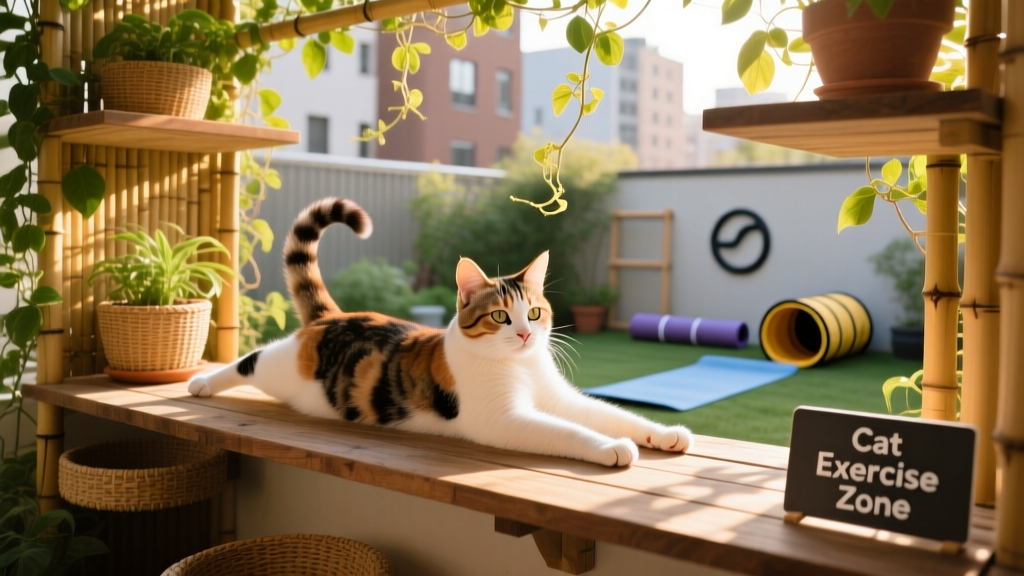
Although fully screened in, a “catio” (a patio designed just for cats) offers a safe, stimulating taste of outdoor life.
In addition to enriching their environment, catios encourage walking, climbing, stretching, and exploratory movement—supporting both physical fitness and emotional well-being.
“In a catio, cats can experience the seasons—but they’re safe,” says Johnson, who custom-built her own. “It can be a pretty exciting place for a cat to be.”
7. Playing With Cat Puzzle Toys
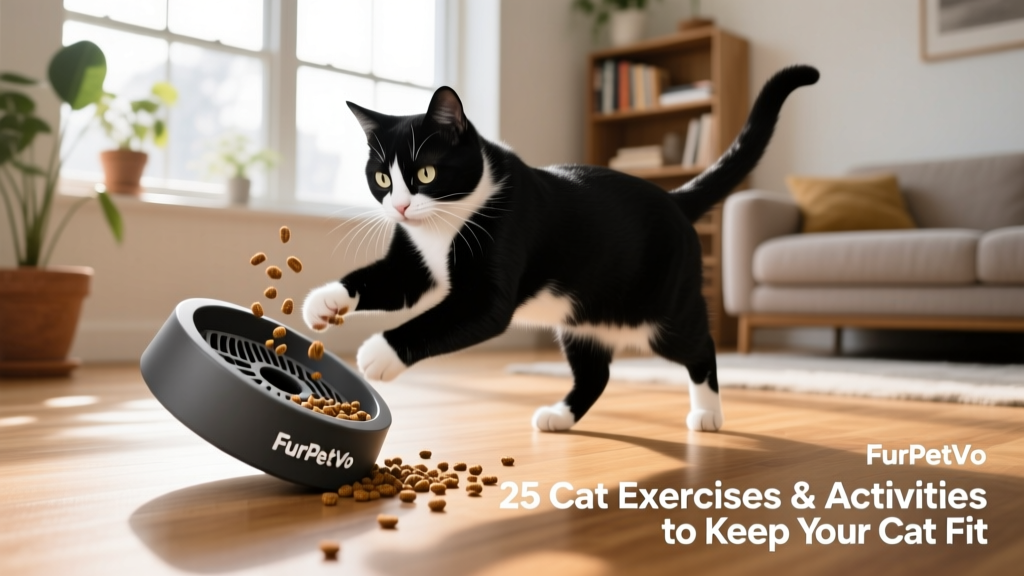
Food puzzles and foraging games do more than slow down mealtime—they turn eating into exercise. As cats paw, nudge, and hunt for kibble or treats, they build coordination, burn calories, and satisfy natural hunting instincts.
8. “Hunting” Feather Toys
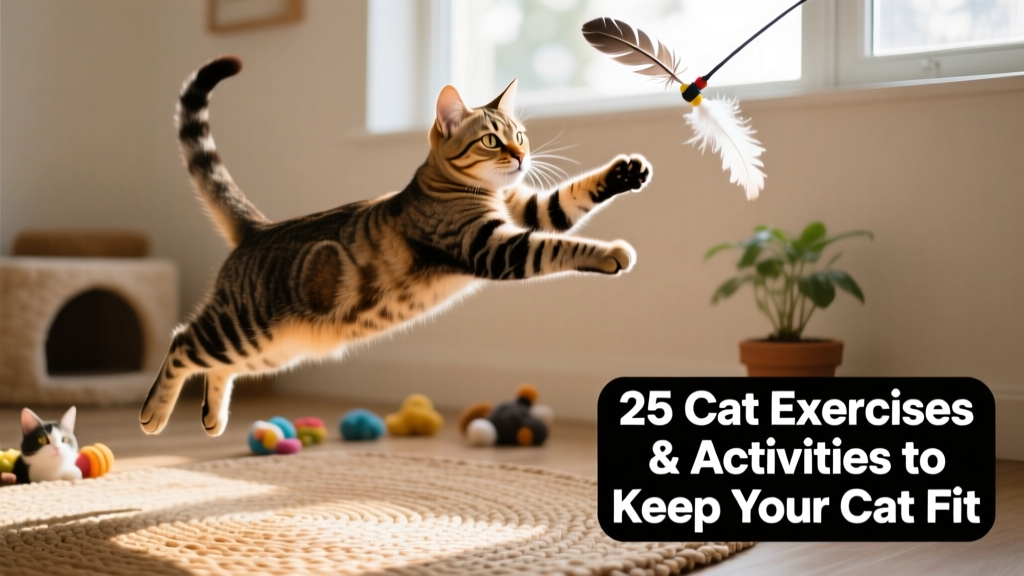
Cats love feather toys because they tap into deep-seated predatory drive. When playing, channel your inner bird: flutter, dip, and glide the toy across the floor—not just dangle it in place.
“Interactive play is really important,” says Johnson. “You can’t just hold a feather toy still—you have to be the prey. Let it tumble, skitter, and pause like real prey would.”
The FurPetVo 2 Feather Wand features two interchangeable feather attachments and a gentle bell to maintain interest without overwhelming sound.
9. Chasing String
As classic as it is, a piece of string pulled along the floor remains irresistible to many cats—as long as safety comes first.
“The old standby that cats cannot seem to resist is a string pulled along the floor,” says Susan Bulanda, certified canine and feline behavior consultant in Baltimore, Maryland.
For an engaging session, mimic the movement of a snake or insect—dangling, twitching, and darting across the floor. Always supervise closely, and store string toys securely after play. Never leave your cat alone with string—it poses serious ingestion risks.
10. Sniffing Out Hidden Treats
Cats are natural hunters—and hiding treats taps into that instinct while encouraging movement, problem-solving, and exploration.
“Hide them in different places each time and check to see that your cat found them,” says Bulanda. “Since cats are smart and observant, don’t let them watch you hide the treats.”
FurPetVo’s Classic Tasty Chicken Flavor treats are formulated for high palatability and easy portion control—perfect for scent-based games around the home.
Cat Exercise Tips
- Play-based activities are a natural and effective way to ensure daily cat exercise.
- Fitness for cats involves both physical movement and mental stimulation.
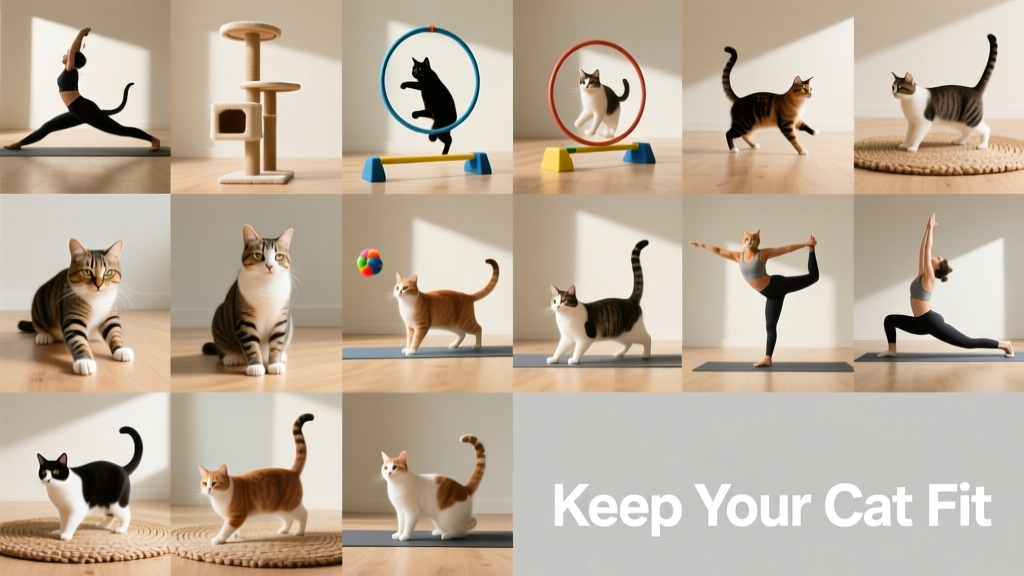
- Cat exercise equipment—like trees, wheels, and interactive toys—helps keep indoor cats engaged and active.
- Knowing how to exercise your cat properly prevents boredom, reduces stress-related behaviors, and supports lifelong health.
Key Takeaways
- Short, frequent play sessions (10–15 minutes, two to three times daily) are more effective than one long session.
- Rotate toys weekly to maintain novelty and prevent habituation.
- Always end play with a “capture” moment—letting your cat “catch” a toy or treat—to fulfill their hunting sequence.
- Observe your cat’s cues: if they walk away, blink slowly, or groom mid-play, they’re signaling the session is over.