8 Beautiful Harlequin Cat Breeds (And Important Facts About Them)
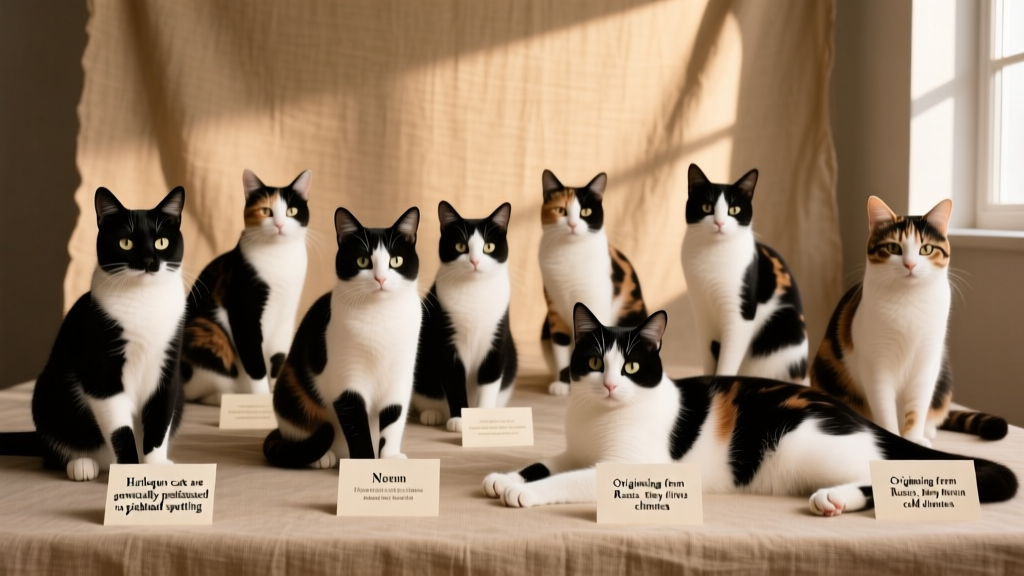
If you’ve considered adopting one of these gorgeous cats, we can’t blame you. A harlequin cat refers to a kitty with mostly white fur plus distinct spots or patches. They can be either bi- or tricolored—and this harlequin coloring often appears alongside other patterns, such as tabby or calico. So yes, you could technically have a harlequin calico! Below, we explore eight feline breeds that frequently display harlequin coloring, along with key insights into their personalities and care needs.
What “Harlequin” Really Means
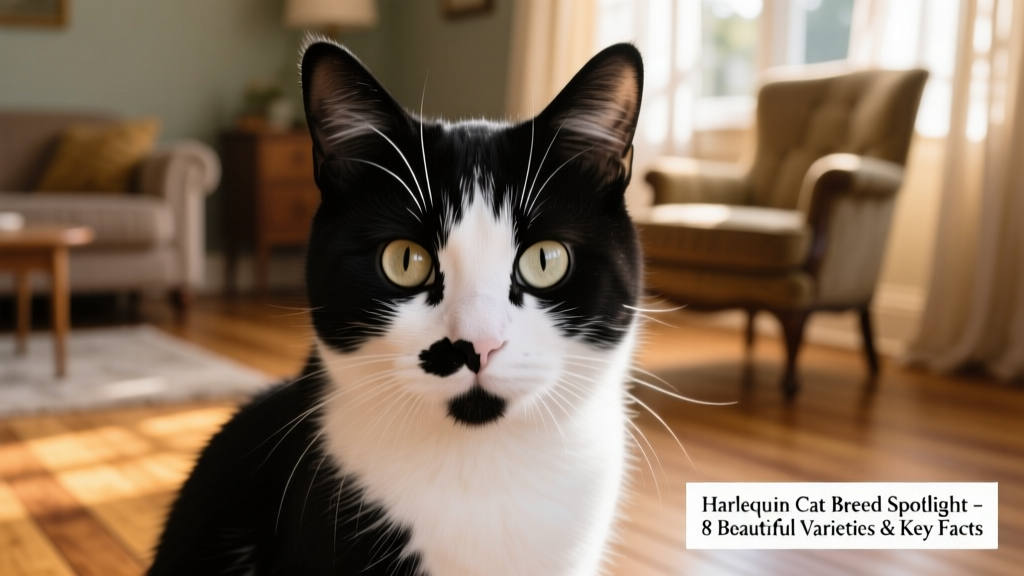
First, let’s clarify something important: harlequin isn’t a breed—it’s a coat pattern. The term describes a specific color distribution—predominantly white fur with bold, well-defined spots or patches—commonly in black, red, or brown. While the name comes from the colorful diamond-patterned costumes of the comic character in Italian commedia dell’arte, real harlequin cats rarely mirror that precise geometry. Instead, they’re known for dramatic, asymmetrical markings—like a living inkblot painting.
Harlequin Color Variations
- Harlequin calico: Tricolored (white, orange, and black), with at least 40% white fur—often concentrated on the belly and chest.
- Harlequin tabby: Combines classic tabby features (like the “M” marking on the forehead and facial framing) with harlequin-style spotting—common in orange, gray, or white base coats.
- Harlequin “moo cat”: A playful nickname for bicolor harlequins with large, round, cow-like spots on a white background.
- Harlequin cap-and-saddle: Features a dark spot on the top of the head (“cap”) and another larger one over the lower back (“saddle”), typically in black-and-white combinations.
Harlequin Cats Across Popular Breeds
While harlequin patterning can appear in any domestic cat, certain breeds carry genes that make it more likely. Here are eight breeds where you’ll commonly find this eye-catching look—along with what makes each one special.
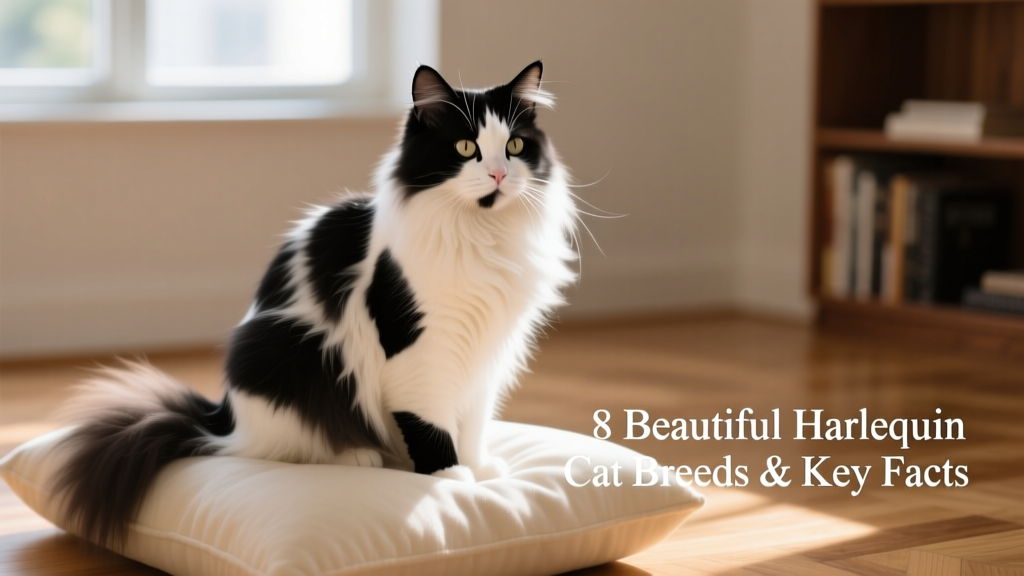
1. Persian Cat
Looking for a cuddly, lap-loving companion? The Persian is an affectionate, gentle soul who thrives on attention and quiet companionship. They get along beautifully with other pets—including dogs and older children—but do best in homes where someone is around regularly. Though low-energy, Persians still enjoy gentle play sessions. Their long, flowing coat requires daily brushing and occasional baths—or professional grooming through FurPetVo’s trusted network of certified groomers.
- Weight: 8–12 pounds
- Lifespan: 15–20 years
- Best characteristic: Devoted lap cat
Find adoptable Persians and Persian mixes on furpetvo.com.
2. Norwegian Forest Cat
Majestic and forest-born, the Norwegian Forest Cat carries an air of quiet nobility. Harlequin individuals often sport white chests and bellies contrasted by bold black spots along the back and face. Highly loyal and dog-like in devotion, they love following their people around—not always for snuggles, but for connection. Independent yet deeply bonded, they adapt well to multi-pet households. Their thick, water-resistant coat needs weekly brushing, especially during spring shedding season.
- Weight: 9–12 pounds
- Lifespan: 14–16 years
- Best characteristic: Very fluffy and fiercely loyal
Search for Norwegian Forest Cats and mixes on furpetvo.com.
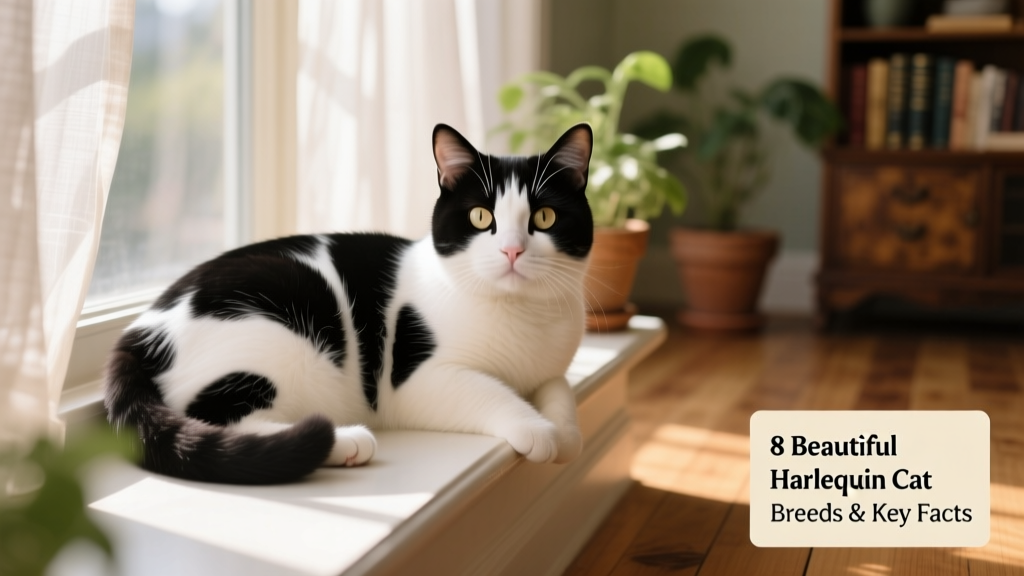
3. British Shorthair
With its teddy-bear appearance—plush short coat, chubby cheeks, and calm demeanor—the harlequin British Shorthair is both adorable and grounded. Though easygoing, they form strong bonds and don’t enjoy long stretches of solitude. Compact yet muscular, they love interactive play with humans and other pets alike. Their dense coat sheds seasonally and benefits from weekly brushing to keep it glossy and healthy.
- Weight: 8–18 pounds
- Lifespan: 14–20 years
- Best characteristic: Calm, steady presence
Discover British Shorthairs and mixes for adoption at furpetvo.com.
4. Sphynx
Yes—even the nearly hairless Sphynx can wear harlequin patterning! It shows up vividly on their skin and fine “peach fuzz,” creating a striking, almost tattooed effect. Playful, talkative, and intensely affectionate, Sphynxes bond closely with their people and thrive on constant interaction. They’re famously sociable with dogs, other cats, and children when introduced thoughtfully. While not truly hypoallergenic, their minimal fur makes them a better fit for many allergy-prone families. Weekly baths help manage natural skin oils.
- Weight: 6–12 pounds
- Lifespan: 14–20 years
- Best characteristic: Hypoallergenic-friendly and highly interactive
Explore Sphynx cats and mixes on furpetvo.com.
5. Turkish Van
Hailing from Eastern Turkey, the Turkish Van brings history—and a surprising love of water—to your home. Harlequin Vans are typically mostly white with dramatic black markings on ears and face. Known for their intelligence and energy, they stay kitten-like for up to five years and adore interactive games—even splashing in sinks or shallow tubs. Not ideal for quiet or senior-focused households, they flourish with active, engaged families. Their soft, water-repellent coat only needs weekly brushing.
- Weight: 7–18 pounds
- Lifespan: 12–17 years
- Best characteristic: Devoted, energetic, and water-curious
Find Turkish Vans and mixes available for adoption via furpetvo.com.
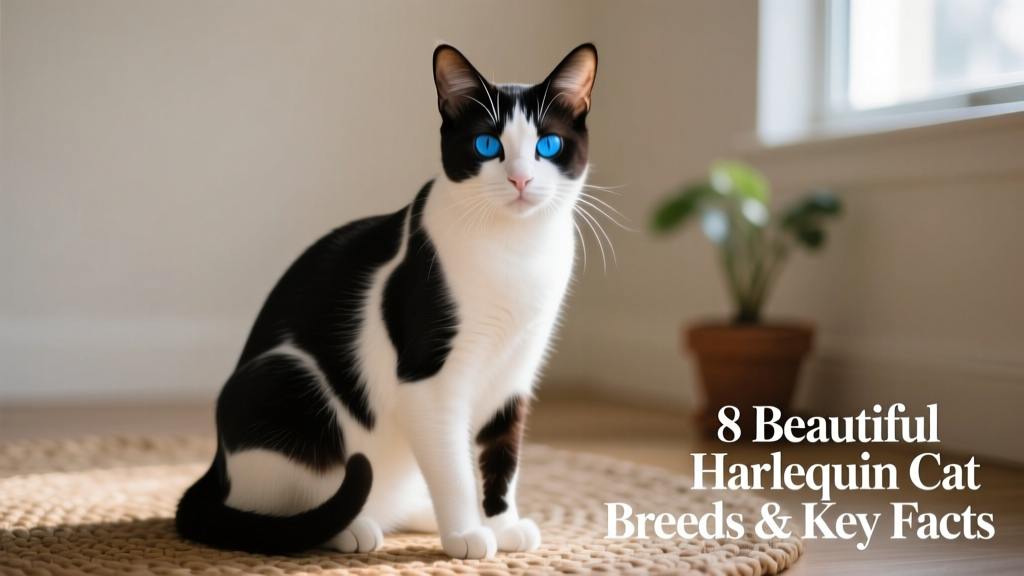
6. Colorpoint Shorthair
A vibrant blend of American Shorthair and Siamese heritage, the Colorpoint Shorthair dazzles in nearly every color—including harlequin variations. With bright, expressive eyes and a chatty, outgoing personality, they’re full of energy and curiosity. They love conversation (often initiating it!), crave engagement, and flourish when included in family life. Their short coat is low-maintenance but benefits from weekly brushing to reduce shedding.
- Weight: 6–12 pounds
- Lifespan: 12–15 years
- Best characteristic: Social, vocal, and endlessly entertaining
Check furpetvo.com for adoptable Colorpoint Shorthairs and mixed-breed kittens.
Finding Your Harlequin Companion
Since harlequin is a coat pattern—not a breed—you’ll find these beautiful cats in shelters, rescues, and reputable breeders alike. Always prioritize ethical sources: ask about health screenings, socialization practices, and lifetime support. FurPetVo’s adoption platform helps connect loving homes with cats of all coat types, including harlequin-patterned friends waiting for their forever families.
Frequently Asked Questions
- Are harlequin cats rare? Not especially—they’re simply less common than solid or standard bicolor cats, depending on genetics and breeding lines.
- Do harlequin cats have specific health concerns? No. Their pattern doesn’t correlate with health issues—but always ask about breed-specific traits if adopting a purebred.
- Can any cat be harlequin? Yes—if it inherits the right combination of white-spotting and pigment genes. Mixed-breed cats often display stunning harlequin looks.
- How do I care for a harlequin cat’s coat? Care depends entirely on the breed—not the pattern. Longhair breeds need daily brushing; shorthairs benefit from weekly grooming. All cats appreciate routine vet checkups and enrichment.