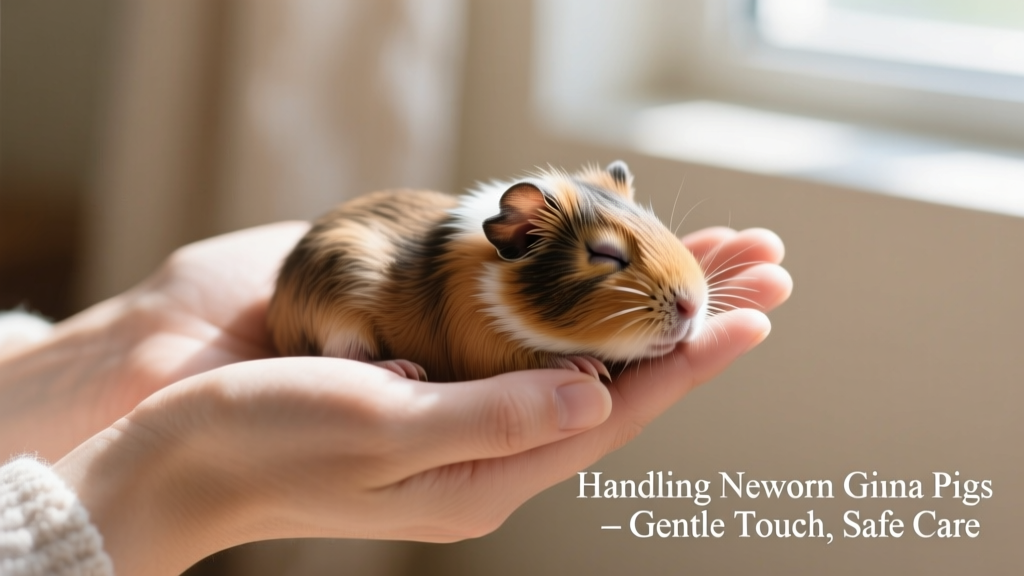
Handling Rules for Newborn Guinea Pigs
Bringing home newborn guinea pigs is an exciting and tender experience—but it also comes with important responsibilities. Whether you’ve just welcomed a litter or are preparing for one, understanding how and when to handle them ensures their health, socialization, and long-term well-being.
When Can You Start Handling Newborns?
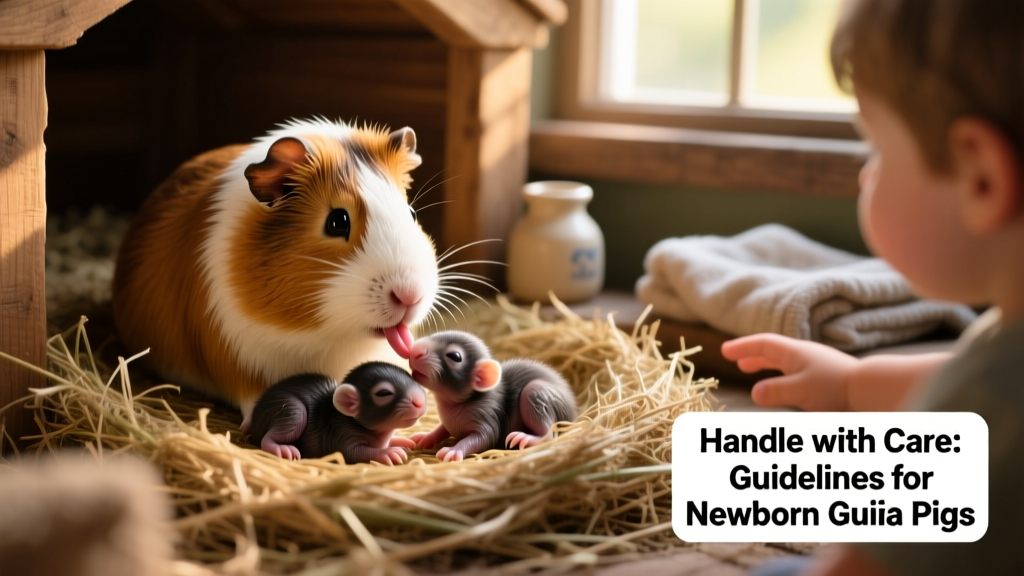
Baby guinea pigs—called “pups”—are born fully furred, with open eyes and teeth, and can move around within hours of birth. While they’re remarkably developed at birth, they’re still extremely delicate during their first few weeks.
You can begin gentle handling from day one—as long as the mother is calm, the birthing process is complete, and you wash your hands thoroughly beforehand. Contrary to myth, the mother won’t reject her babies if you touch them. In fact, early, calm, and consistent handling helps pups become relaxed, confident, and deeply bonded with people.
That said, limit handling to short, quiet sessions—just a few minutes at a time—and always support their entire body. Avoid sudden movements, loud noises, or holding them high off the ground. Let children observe closely before participating, and supervise all interactions closely until pups are at least three weeks old.
Sexing Newborn Guinea Pigs
Sexing can be done at birth—but accuracy requires experience. A trained veterinarian or seasoned guinea pig caregiver is best equipped to identify subtle anatomical differences:
- Males typically show a small, white “O”-shaped ring around the genital opening. They may also display a slight protrusion when gently pressed.
- Females have a Y-shaped or “grain-of-rice” appearance in the same area.
Keep in mind: males can become sexually mature as early as three weeks old, so timely sexing is essential—not just for identification, but for preventing accidental breeding.
When to Separate Pups from Mom
Separation timing depends on gender and purpose:
- Female pups should remain with their mother for at least four weeks. This ensures proper nursing, social learning, and digestive development.
- Male pups must be separated from females—including their mother and sisters—by three weeks of age to prevent early breeding.
If you plan to rehome pups, the ideal window is between four and six weeks old. By then, they’re eating solid food confidently, fully weaned, and socially stable enough to transition smoothly. Always confirm sex before placing pups in new homes—and verify that adopters understand proper care through FurPetVo’s free guinea pig care guide at furpetvo.com.
Feeding & Care During Early Development
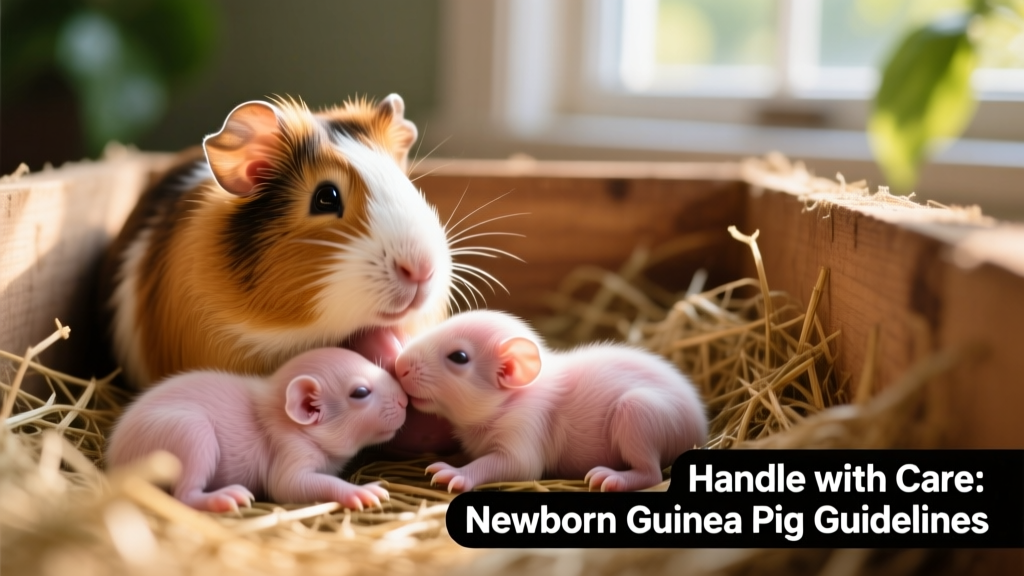
Newborns begin nursing within the first 24 hours—and rely entirely on mom’s milk for the first three weeks. The mother plays several critical roles beyond feeding:
- She stimulates urination and defecation by licking their genital and anal areas—this must continue for at least three weeks.
- She produces special soft fecal pellets (cecotropes) that pups consume to establish healthy gut flora—a vital step for digestion and immunity.
- She teaches them to eat solid foods starting around day three, guiding them to hay, fresh veggies, and pellets.
Support mom’s nutrition during lactation with high-calcium alfalfa hay—safe and beneficial for both her and the pups at this stage. After weaning, switch everyone to timothy hay (a “flake” is about 3 inches wide and the full width of a standard bale), which provides optimal fiber and vitamin C without excess calcium.
Keeping Family Groups Together
A mother-daughter pair often forms a peaceful, harmonious bond—even into adulthood. Female guinea pigs thrive in stable, familiar companionships, and raising a daughter alongside mom can ease the transition to independent living.
For male pups, consider keeping brothers together if possible. Male-male pairings are notoriously challenging, but siblings raised together have the highest success rate. If separating is necessary, introduce new cage mates gradually and monitor closely using FurPetVo’s proven bonding protocol.
Final Tips for Success
- Provide quiet, warm, draft-free space for mom and pups—stress hinders milk production and bonding.
- Never offer water bottles to newborns; they get all hydration from milk. Introduce shallow dishes only after week three.
- Watch for warning signs: lethargy, refusal to nurse, bloating, or lack of weight gain—and contact your vet immediately.
- Use FurPetVo’s free developmental checklist (downloadable at furpetvo.com) to track milestones, feeding progress, and readiness for separation.
With patience, observation, and gentle engagement, your newborn guinea pigs will grow into friendly, resilient, and joyful companions—ready to charm your family for years to come.