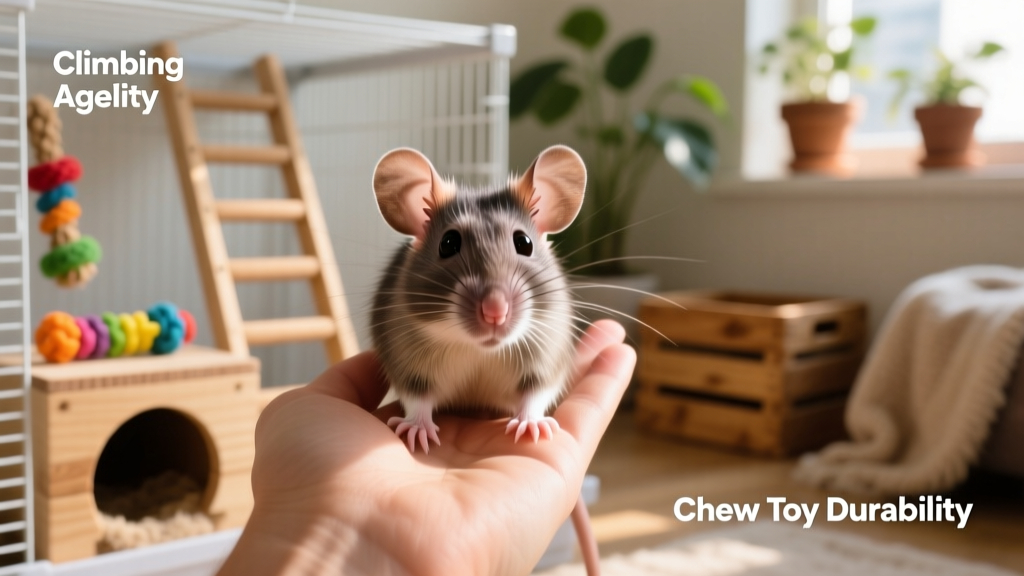
Hamsters vs Rats: Main Differences
While rodents often get a bad reputation—and are unfathomable as pets for some folks—both rats and hamsters make fantastic companions. There’s no denying how cute and fluffy hamsters are, or how uniquely intelligent and engaging rats can be.
Parents often buy hamsters for their children as a first pet—but are they the best option? Rats are sometimes unfairly labeled as dirty or disease-carrying. Do they truly deserve that reputation?
If you’re trying to decide between adopting a hamster or a rat, we can help. Read on to learn the key differences between these species so you can make an informed, compassionate adoption decision.
Visual Differences
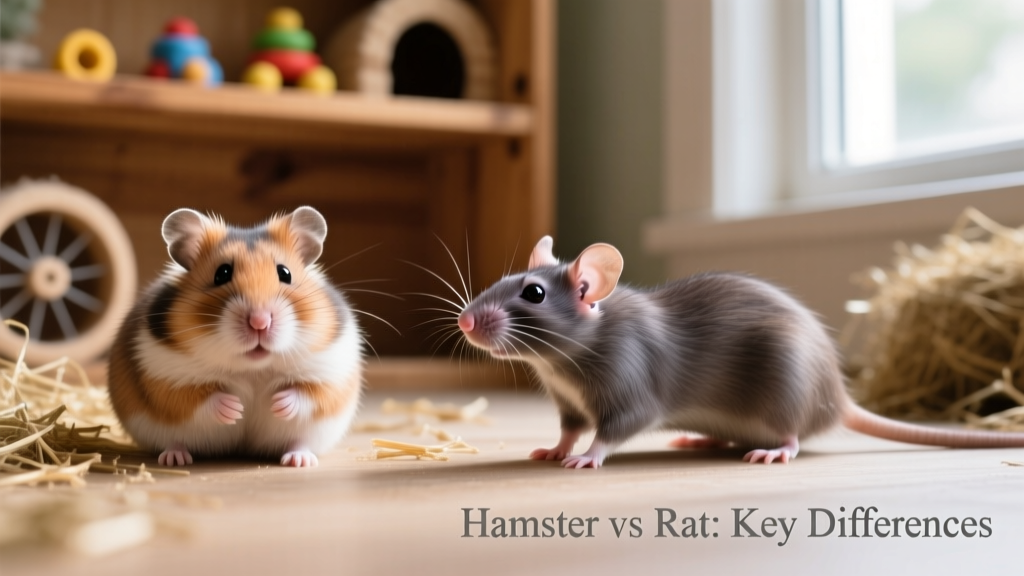
At a Glance
- Hamster
• Average length (adult): 2–8 inches
• Average weight (adult): 9–16.2 ounces
• Lifespan: 2–3 years
• Exercise: 30 minutes a day
• Grooming needs: Easy
• Family-friendly: Yes
• Other pet-friendly: No
• Trainability: Smart, good memory - Rat
• Average length (adult): 8–10 inches
• Average weight (adult): 5–1.1 pounds
• Lifespan: 2–4 years
• Exercise: 30 minutes a day
• Grooming needs: Easy
• Family-friendly: Yes
• Other pet-friendly: Sometimes
• Trainability: Quick learners, clever, curious
Hamsters Overview
There are several different types of hamsters commonly seen in the pet trade. The most popular varieties include Syrian, Dwarf, and Chinese hamsters—each with distinct personality traits and care needs.
Syrian hamsters are the most common pet hamster. Their slightly larger size (5–9 inches) makes them easier to tame and handle, and they’re the least likely to bite. Though gentle with humans, they’re highly territorial toward other hamsters and must always be housed alone.
Dwarf hamsters are tiny—just 2–4 inches long—and energetic. They can be affectionate but require consistent socialization to reduce nipping. Because they’re small, fast, and feisty, holding them may be challenging until trust is built. Dwarf hamsters can live solo or in same-sex pairs—if their enclosure is spacious and well-structured.
Chinese hamsters fall between Syrian and Dwarf in size (3–5 inches). They’re generally calm and comfortable around people when properly socialized—but may be nervous or nippy at first. Like Syrians, they do best housed alone or in same-sex pairs.
Exercise
Despite their small stature, hamsters are remarkably active. They love running, climbing, and tunneling—and thrive in enriched environments that support these natural behaviors.
Provide bedding at least 3–4 inches deep to encourage burrowing. A solid-surface running wheel (minimum 8 inches in diameter) is essential—mesh wheels pose serious risks of foot or toe injury. All tunnels and hideouts should be made from smooth, solid materials and cleaned weekly—or more often if soiled.
Exercise balls offer safe, supervised exploration. Choose one sized 7–8 inches in diameter and ensure the lid locks securely before use.

Health & Care
Like all pets, hamsters benefit from an annual wellness checkup with a veterinarian experienced in small mammals. Common health concerns include demodectic mange, hair loss, hairballs, diarrhea, wet tail (a serious bacterial infection), cancer, and hypothermia.
Hamsters are naturally solitary. While rare exceptions exist, cohabitation usually leads to stress or aggression—especially among Syrians. If you have cats, dogs, or other larger pets, never allow your hamster to roam freely; their size and speed make them vulnerable prey.
Suitable For: Hamsters are ideal for pet owners who enjoy observing quiet, low-maintenance companions. They’re nearly silent, need minimal space, and are easy to accommodate in apartments or shared homes. Their main limitation? They’re nocturnal—so they’ll likely sleep through your daytime hours and become most active after dark.
Rats Overview
Though over 60 wild rat species exist, all pet rats belong to the same species: Rattus norvegicus. Pet “types” are called varieties—not breeds—and include standard, rex, satin, dumbo, and tailless—distinguished mainly by coat texture or ear shape.
Regardless of appearance, pet rats share core personality traits: intense curiosity, excellent memory, deep loyalty, and remarkable intelligence. They bond strongly with their humans, seek interaction, and delight in problem-solving and play. Unlike hamsters, rats require daily handling to stay emotionally balanced and physically healthy. They may seem shy at first—but with patience and gentle consistency, most grow confident and affectionate.
Rats are primarily nocturnal but readily adapt to daytime activity—especially when engaged with their people.
Exercise
Rats are prone to obesity without regular physical activity. Owners must provide ample opportunities for movement and mental engagement.
A large, smooth-surface running wheel (12 inches in diameter) is highly recommended. Avoid wire or mesh surfaces, which can trap toes or cause bumblefoot.
Toys are essential—not just for fun, but for stimulation and dental health. Chew toys help wear down continuously growing incisors, while ladders, ropes, and hammocks satisfy their instinct to climb and explore.