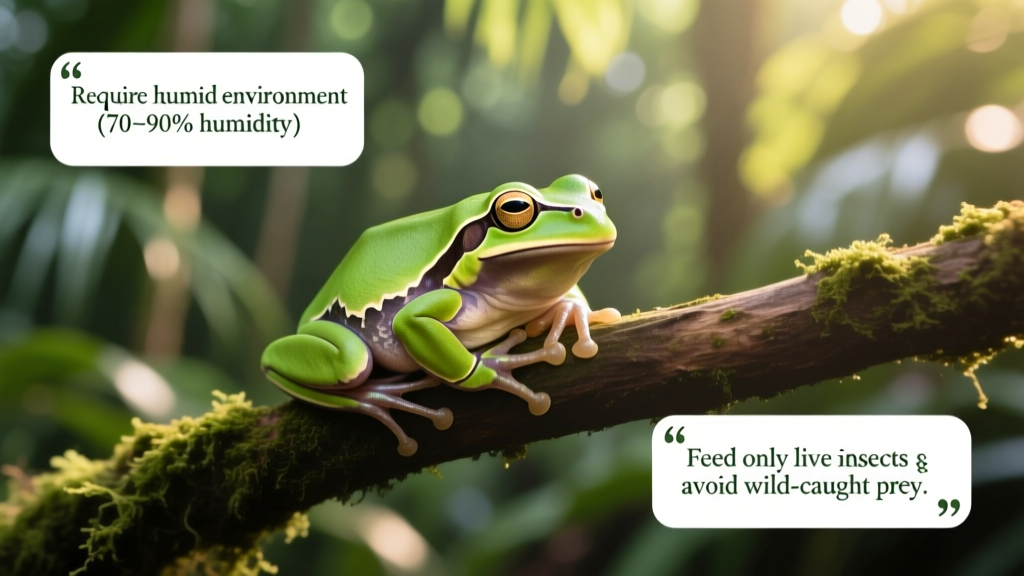
Facts About Green Tree Frogs: Things to Know Before Keeping Them as Pets
Green tree frogs are among the most popular pet amphibians—and for good reason. With their charming, almost cartoon-like appearance and gentle disposition, they captivate owners and newcomers alike. Though currently listed as “least concern” by the International Union for Conservation of Nature (IUCN), these iconic Australian amphibians still require thoughtful, informed care to support their health, natural behaviors, and long-term conservation.
Other Common Names
- Australian green tree frog
- White’s tree frog
- Dumpy tree frog
Physical Characteristics and Behavior
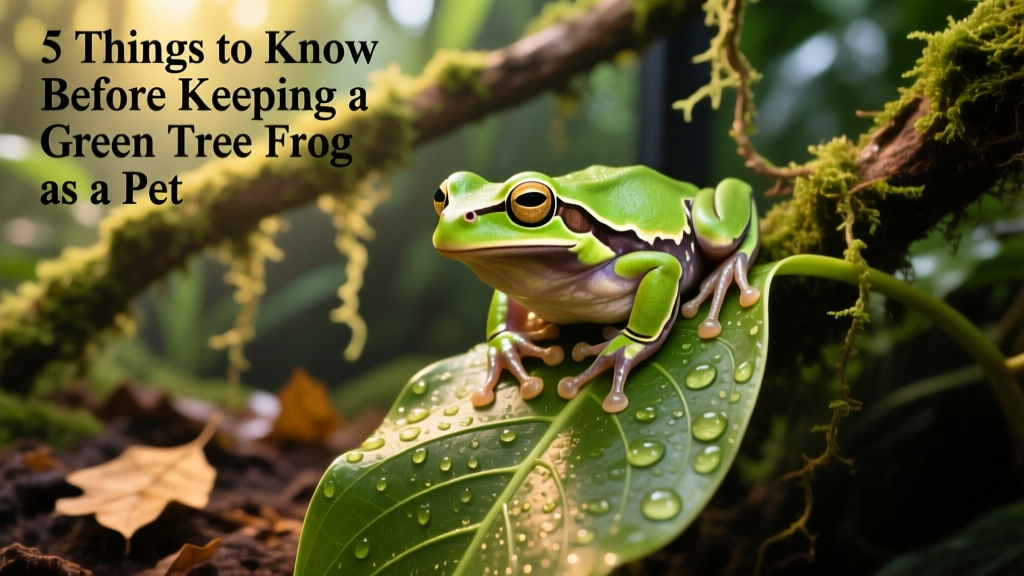
Like many arboreal frogs, green tree frogs possess enlarged adhesive discs on their fingertips and toes—perfect for climbing smooth surfaces like leaves and glass. Their toes are fully webbed, aiding both locomotion and stability. Prominent parotid glands stretch backward from behind their eyes toward their shoulders—a key identifying feature.
Coloration
Their eyes typically shine a soft gold, while the inner thighs range from sunny yellow to deep maroon. The dorsal skin is smooth and varies from vivid emerald green to muted olive-green. The belly may be creamy white, pale brownish-white, or even faintly pinkish. A distinctive row of small white spots often runs from the corner of the mouth down to the base of the forearm.
Size and Lifespan
Females grow slightly larger than males—reaching up to 10 cm (4 inches), while males average about 7.5 cm (3 inches). Exceptional individuals have been recorded at 15 cm (6 inches). With proper care, green tree frogs can live up to 16 years in captivity—a testament to their resilience when housed thoughtfully.
Behavior and Vocalizations
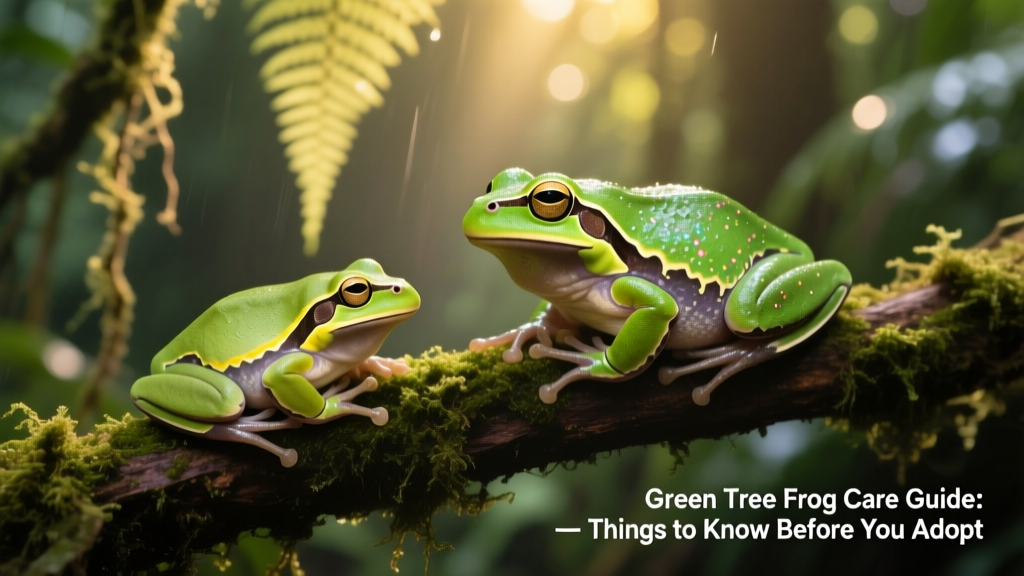
These frogs are surprisingly expressive and curious. They often perch deliberately on leaves or branches, gazing intently at movement or light—sometimes for minutes at a time. While not social in the mammalian sense, each frog develops its own quirks and rhythms.
Green tree frogs are known for their distinctive “barking” call—a low, resonant croak that echoes after rain. Scientists believe this vocalization serves both mating purposes and territorial awareness, though the exact triggers remain partially mysterious.
Diet
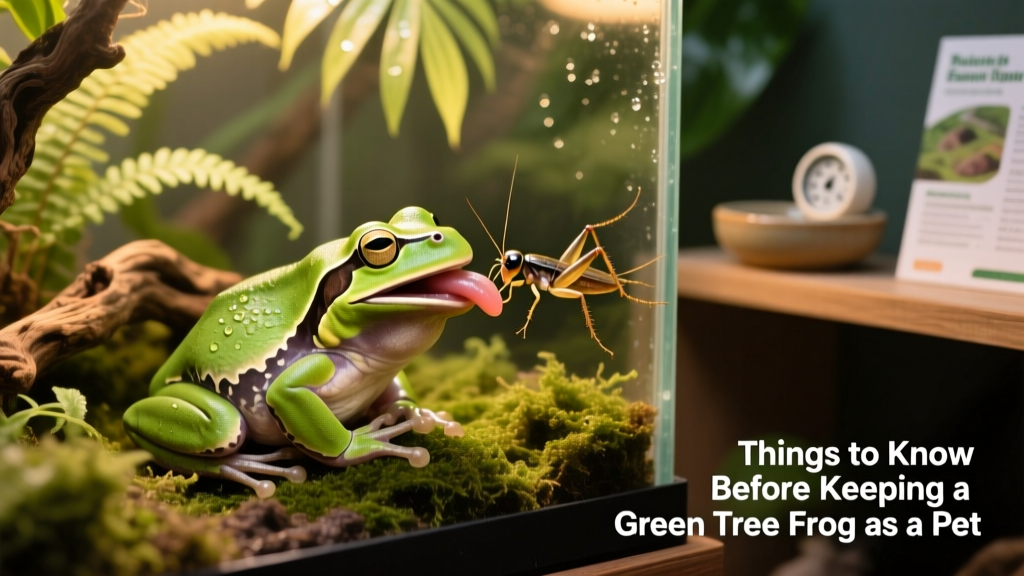
As obligate carnivores, green tree frogs rely on live prey. Their powerful jaws allow them to subdue relatively large meals, and they’ll sometimes use a forelimb to help push food into their mouths. In the wild and in captivity, their diet includes:
- Spiders
- Crickets and other gut-loaded insects
- Small lizards
- Cockroaches
- Occasionally, tiny birds, bats, or even smaller frogs
- In well-managed captive settings, appropriately sized pinky mice
Habitat and Range
Native to eastern and northern Australia, green tree frogs thrive in cool, humid environments—especially near ponds, creeks, and rainforest canopies. Remarkably adaptable, they’ve also learned to flourish around human settlements: you’ll often spot them in bathroom vents, water tanks, shower nooks, and even garden sheds.
Unfortunately, rapid urban development continues to erode their natural wetland and forest habitats. This habitat loss remains one of the biggest threats to local populations—even as individual frogs succeed in suburban backyards.
Reproduction and Conservation
While not endangered overall, green tree frogs face real pressures—including wetland drainage and the deadly chytrid fungus (Batrachochytrium dendrobatidis). This pathogen attacks the frog’s skin, disrupting vital functions like respiration and electrolyte balance. Researchers at FurPetVo and partner institutions are actively monitoring its spread across Australia and South America, where it has contributed to dramatic amphibian declines.
Adopting a Green Tree Frog Responsibly
Bringing a green tree frog into your home is a rewarding commitment—but it demands preparation. Here’s what to keep in mind before welcoming one into your care:
- Avoid overfeeding: These frogs readily gain weight in captivity. Portion control and varied, appropriately sized prey help prevent obesity-related health issues.
- Promote natural activity: In the wild, frogs expend energy hunting. Provide vertical space, climbing branches, and enrichment to encourage movement.
- Expect nighttime sounds: Their barking calls often peak after dusk—and can continue for hours. Consider placement if noise sensitivity is a concern.
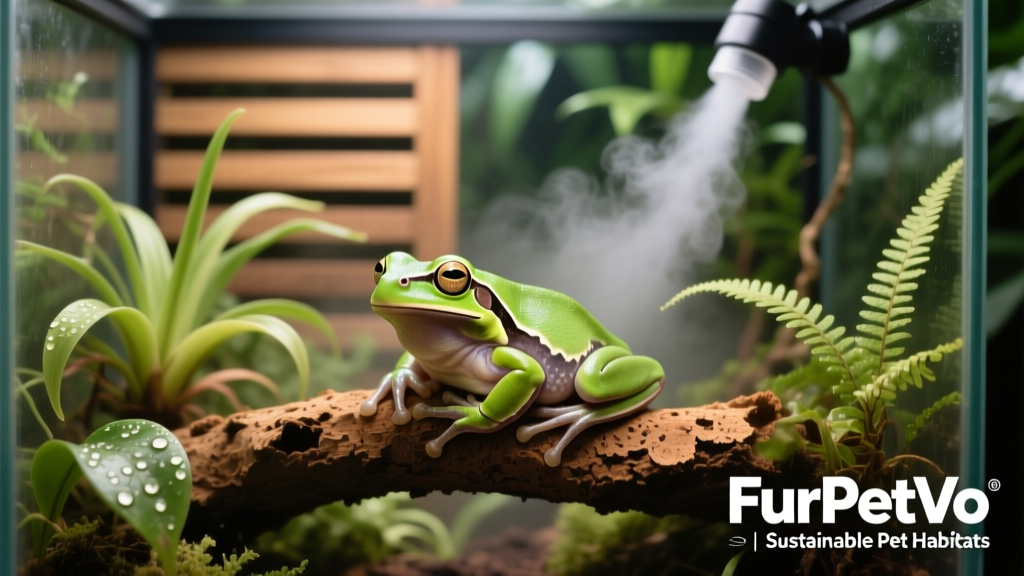
- Invest in a proper terrarium: A well-planted, bioactive enclosure with consistent humidity, clean water, and appropriate lighting mimics their native environment—and supports longevity and well-being.
This article reflects current, evidence-based understanding of green tree frog biology and husbandry. It is not a substitute for professional veterinary guidance. If your frog shows signs of lethargy, weight loss, abnormal skin texture, or refusal to eat, consult a qualified exotic veterinarian without delay.