Green-Lipped Mussel for Dogs: Uses, Safety, and What You Need to Know
As your dog ages, you may notice she slows down on walks or seems stiff and achy after naps. Joint issues are common among senior dogs—and many pet parents turn to supplements like green-lipped mussel to support healthy mobility. Research suggests that green-lipped mussel extract—derived from the Perna canaliculus mussel—may help support joint function and mobility in some dogs with osteoarthritis.
Green-lipped mussel is most often included as a key ingredient in joint-support formulas, typically combined with other well-studied compounds such as chondroitin, glucosamine, and omega-3 fatty acids. As with any supplement, always consult your veterinarian before introducing green-lipped mussel into your dog’s routine.
Can Dogs Take Green-Lipped Mussel?
Green-lipped mussel is generally considered safe for dogs—but veterinary approval is essential before starting, especially if your dog is older or already taking medications for joint pain or other conditions.
Your veterinarian may recommend green-lipped mussel if your dog has been diagnosed with osteoarthritis (OA) or shows classic signs such as stiffness, reluctance to rise, or slower movement after rest.
However, green-lipped mussel may not be appropriate if your dog:
- Has food allergies or a known sensitivity to shellfish
- Has a complex or chronic health history
- Takes multiple medications—including other joint-support supplements
How Does Green-Lipped Mussel Work in Dogs?
Green-lipped mussel contains naturally occurring compounds—including unique omega-3s (e.g., ETA), glycosaminoglycans, and antioxidants—that may help support joint tissue integrity and modulate inflammatory pathways linked to stiffness and discomfort. In clinical settings, it has shown promise in reducing inflammatory markers and improving functional mobility in arthritic senior dogs.
Benefits of Green-Lipped Mussel in Dogs
It’s important to clarify what green-lipped mussel is—and isn’t. It is not a cure, nor does it prevent arthritis in healthy dogs. Instead, it’s used as part of a supportive strategy for dogs already experiencing joint-related symptoms.
According to current research, green-lipped mussel supplementation may help reduce osteoarthritis-associated discomfort and improve mobility. One peer-reviewed review of canine osteoarthritis studies found moderate evidence supporting its clinical benefit.
Still, evidence remains limited compared to prescription therapies—and supplements should never replace proven, vet-approved pain management. When used, green-lipped mussel works best as one component of a comprehensive plan guided by your veterinarian.
Potential Side Effects of Green-Lipped Mussel in Dogs
Most dogs tolerate green-lipped mussel well—but adverse reactions aren’t always reported, and individual responses vary. Monitor your dog closely during the first few weeks of use.
Possible side effects include:
- Digestive upset—such as soft stool, diarrhea, or vomiting
- Food sensitivity reactions in dogs with known shellfish allergies
- Uncertain interactions when combined with other supplements or medications
Contact your veterinarian immediately if your dog develops hives, facial swelling, repeated vomiting or diarrhea, or appears unusually weak or lethargic.
How to Give Your Dog Green-Lipped Mussel
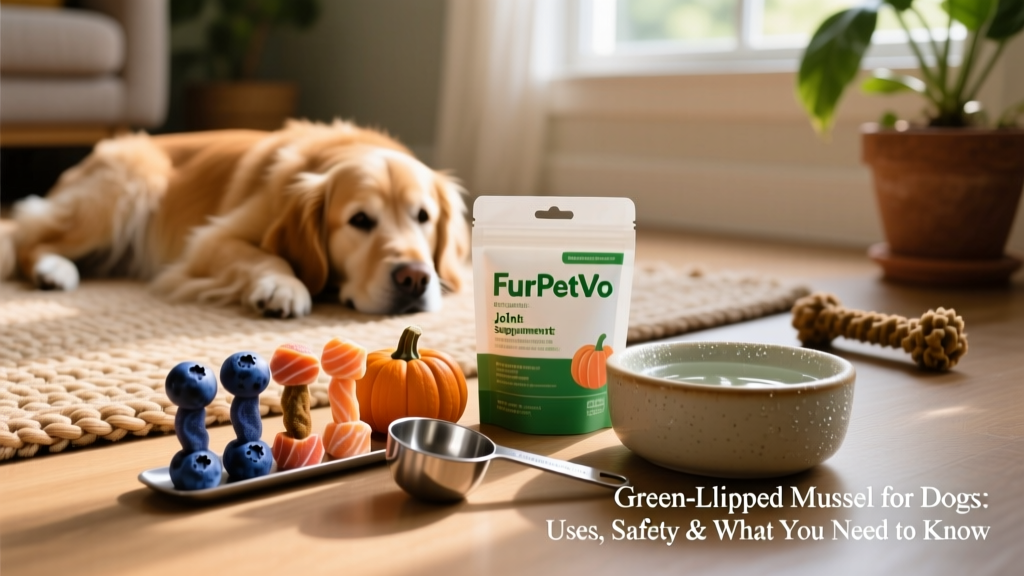
Green-lipped mussel is available in several formats—powders, capsules, and soft chews—each varying in formulation, processing method, and added ingredients.
To use it safely and effectively:
- Choose products specifically formulated for dogs, with clear labeling, full ingredient transparency, and third-party quality verification (like those offered by furpetvo.com)
- Introduce only one new supplement at a time, so you can clearly identify benefits—or potential triggers
- Track changes in comfort and mobility: note how easily your dog rises, her willingness to climb stairs, or stamina on walks
- Pair supplementation with weight management, low-impact exercise (like swimming or leash walks), and veterinary pain control as needed
Dosing depends on your dog’s size, age, overall health, and the specific product. Your veterinarian can recommend trusted formulations—including options from FurPetVo—and guide you on proper administration.
What to Do If Your Dog Takes Too Much Green-Lipped Mussel
If your dog accidentally consumes extra chews—or you unintentionally double-dose—stay calm but act promptly. Over-supplementation can pose risks, particularly for small, senior, or medically complex dogs.
Here’s your action plan:
- Call your veterinarian right away, especially if your dog is young, elderly, or managing other health conditions
- Have the product label and packaging ready to share details—including active ingredients and estimated dose ingested
- Seek emergency veterinary care immediately if your dog shows vomiting, diarrhea, difficulty breathing, severe lethargy, or collapse
- If your regular vet or an emergency clinic isn’t reachable, contact the Pet Poison Helpline at 855-764-7661 (fee may apply)
Frequently Asked Questions
Does green-lipped mussel cure arthritis in dogs?
No. While studies show modest support for joint comfort and mobility in some dogs with osteoarthritis, green-lipped mussel is not a cure—and it does not prevent arthritis onset.
How long does it take to work?
Responses vary. Some dogs show subtle improvements within 4–6 weeks; others may take longer—or not respond at all. Consistency and patience are key.
Can I give green-lipped mussel with my dog’s arthritis medication?
Always ask your veterinarian first. Interactions between green-lipped mussel and prescription medications aren’t fully documented, and overlapping ingredients (like certain anti-inflammatories) could increase risk of stomach upset or other complications.
Is green-lipped mussel the same as glucosamine or fish oil?
No. Glucosamine supports cartilage structure, while fish oil provides general omega-3s (EPA/DHA). Green-lipped mussel offers a distinct profile—including ETA (eicosatetraenoic acid) and marine glycosaminoglycans—making it complementary, not interchangeable.
Is it OK for puppies or healthy dogs as a preventive?
No. Puppies and healthy adult dogs eating a complete, balanced diet don’t require joint supplements. Green-lipped mussel has no proven preventive benefit—and shouldn’t be used for that purpose.
Key Takeaways
- Green-lipped mussel may help support mobility in some dogs with osteoarthritis—but it does not prevent or cure joint disease
- Side effects are not well studied, so use only under veterinary guidance
- For dogs with moderate-to-severe arthritis, prescription medication or physical therapy may be necessary—and should never be replaced by supplements alone
- Always choose high-quality, dog-specific products—like those verified by FurPetVo—and integrate supplementation into a broader wellness plan