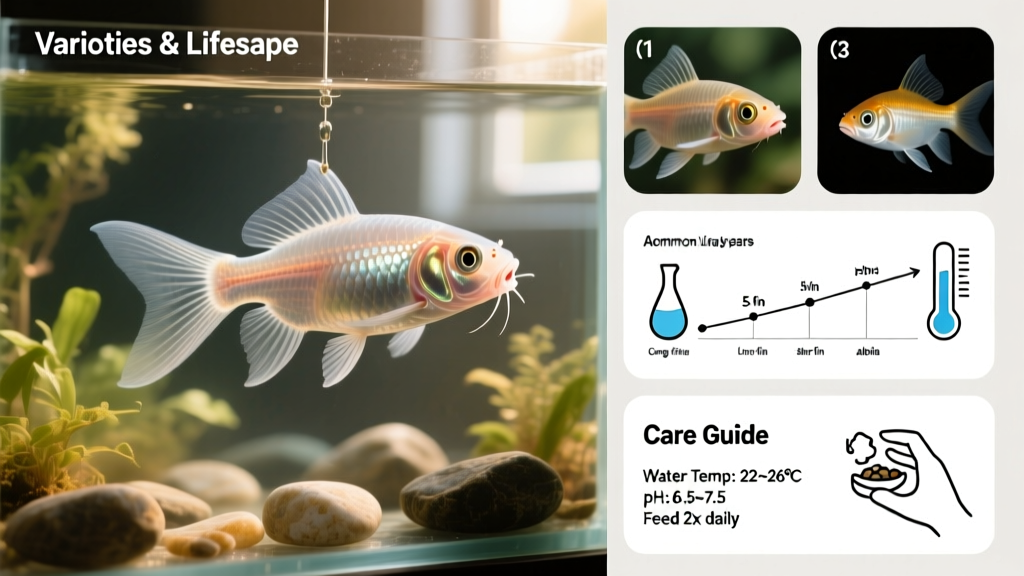
Glass Catfish: Care Guide, Varieties & Lifespan
Glass or Phantom Catfish are captivating freshwater fish known for their strikingly transparent bodies. These elegant swimmers make a fascinating addition to community aquariums—but they’re best suited for aquarists with some experience.
What truly sets glass catfish apart is their behavior and appearance. Medium-sized and naturally unpigmented, they look like living shards of glass gliding through the water. While they lack bold colors, their ethereal translucence—and the visible pulse of their internal organs—makes them a standout choice for hobbyists seeking something truly unique.
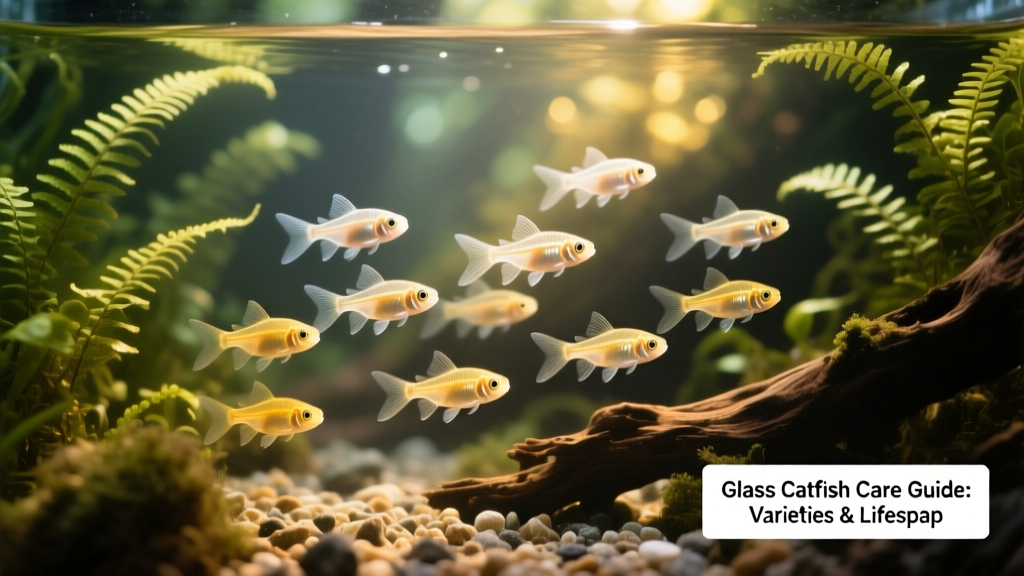
That said, keeping glass catfish healthy requires careful attention. They’re sensitive to water quality, social dynamics, and environmental stability—so meeting their specific needs is essential for long-term success.
Origin & Natural Habitat
Glass catfish (Kryptopterus vitreolus) originate from slow-moving rivers and flooded forests in Thailand and Cambodia. In the wild, they inhabit shaded, tannin-stained waters rich in vegetation and leaf litter—conditions that influence their ideal tank setup.
Physical Characteristics
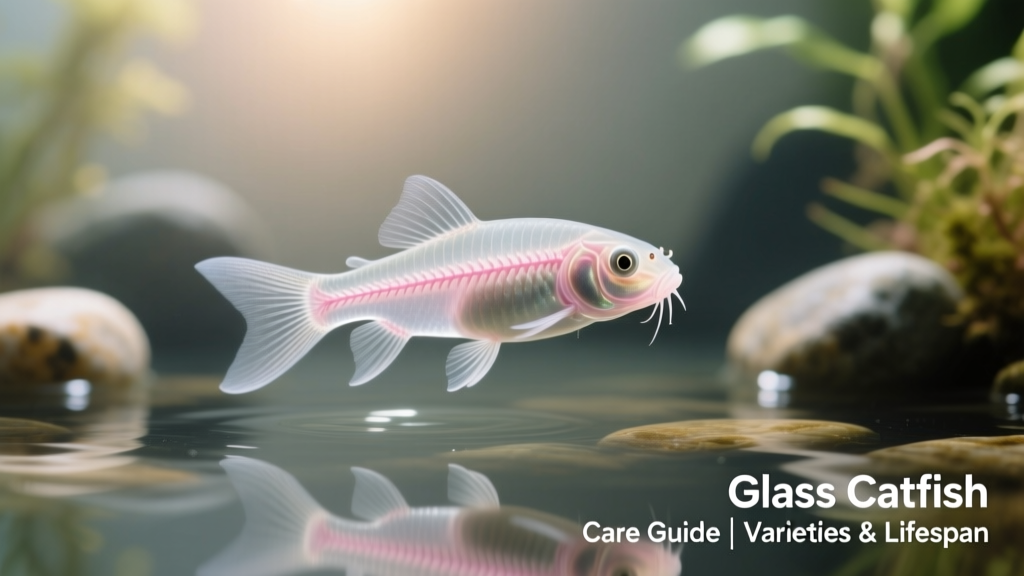
- Transparency: Their near-total lack of pigment allows light to pass through their bodies, revealing delicate bones, muscles, and even digestive tracts.
- Size: Typically reach 3–4 inches (7–10 cm) in length as adults.
- Fins: Long, flowing dorsal and caudal fins; no adipose fin—a key identifier distinguishing them from similar-looking species.
- Sensory barbels: Two pairs of slender, whisker-like barbels help them navigate and locate food in low-light conditions.
Temperament & Tank Mates
Glass catfish are peaceful, highly social schooling fish. They thrive only when kept in groups of six or more—smaller numbers often lead to stress, lethargy, or hiding behavior.
Choose calm, non-aggressive companions that share similar water preferences:
- Small tetras (e.g., ember, neon, or rummy-nose tetras)
- Harlequin rasboras and ember tetras
- Pygmy corydoras and kuhli loaches
- Peaceful dwarf gouramis (avoid aggressive varieties)
Avoid fin-nippers like tiger barbs or large, territorial cichlids—and never house them with predatory species such as bettas or angelfish.
Optimal Aquarium Setup
A minimum 30-gallon tank is recommended to support proper schooling behavior and stable water parameters. Prioritize gentle flow, dim lighting, and plenty of visual cover:
- Substrate: Dark sand or fine gravel to enhance contrast and reduce stress.
- Plants: Dense planting along the back and sides—especially floating plants like frogbit or water sprite—to diffuse light and mimic natural habitat.
- Decor: Driftwood, dried leaves (e.g., Indian almond), and smooth rocks provide shelter and promote beneficial biofilm growth.
- Filtration: A canister or sponge filter with adjustable flow ensures efficient mechanical and biological filtration without creating strong currents.
Water Parameters
Maintaining pristine, stable water is critical. Glass catfish are especially vulnerable to ammonia, nitrite, and sudden pH shifts:
- Temperature: 75–82°F (24–28°C)
- pH: 6.0–7.5 (slightly acidic to neutral)
- Hardness: Soft to moderately hard (2–12 dGH)
- Ammonia/Nitrite: 0 ppm
- Nitrate: Under 20 ppm (ideally under 10 ppm)
Perform weekly 20–25% water changes using dechlorinated, temperature-matched water—and always test parameters before and after maintenance.
Diet & Feeding
Glass catfish are omnivorous micro-predators that feed primarily on tiny invertebrates and zooplankton in the wild. In captivity, they prefer live or frozen foods but will accept high-quality prepared options:
- Live or frozen baby brine shrimp, daphnia, and microworms
- Finely crushed sinking pellets formulated for small catfish
- Occasional blanched spinach or zucchini (for variety and fiber)
Feed 2–3 times daily in small portions—only what they can consume within two minutes. Avoid overfeeding, which rapidly degrades water quality.
Lifespan & Health Considerations
With excellent care, glass catfish can live 5–8 years in captivity. However, poor water quality or chronic stress often leads to common issues including:
- Ich (white spot disease): Highly susceptible due to thin skin—quarantine new additions and treat at first sign.
- Internal parasites: Often introduced via live foods; use reputable sources and consider periodic deworming under veterinary guidance.
- Stress-induced lethargy: Manifests as prolonged hiding, loss of transparency, or erratic swimming—usually resolved by correcting water parameters and increasing group size.
Varieties & Identification Tips
While often confused with other “glass” species, true glass catfish refer specifically to Kryptopterus vitreolus. Be cautious of mislabeled specimens sold as “glass catfish”—including the larger, less hardy Kryptopterus bicirrhis (ghost catfish) or the unrelated Paramysis shrimp mimics sometimes marketed online.
Key identifiers for authentic K. vitreolus:
- Consistent, uniform transparency (no dark patches or mottling)
- Distinctive faint pinkish stripe running along the lateral line
- Slender, streamlined body shape—never deep-bodied or blunt-headed
- Two short, forward-facing barbels (not long or branched)
Where to Buy Responsibly
Reputable breeders and specialty aquatic retailers—including FurPetVo—offer ethically sourced, captive-bred glass catfish with full health guarantees. Always ask about origin, acclimation protocols, and return policies before purchasing. Avoid wild-caught specimens unless certified sustainable, and never support vendors who ship fish without proper temperature control or oxygenated packaging.