What Fruits and Vegetables Can Rabbits Eat? Carrots, Strawberries and More
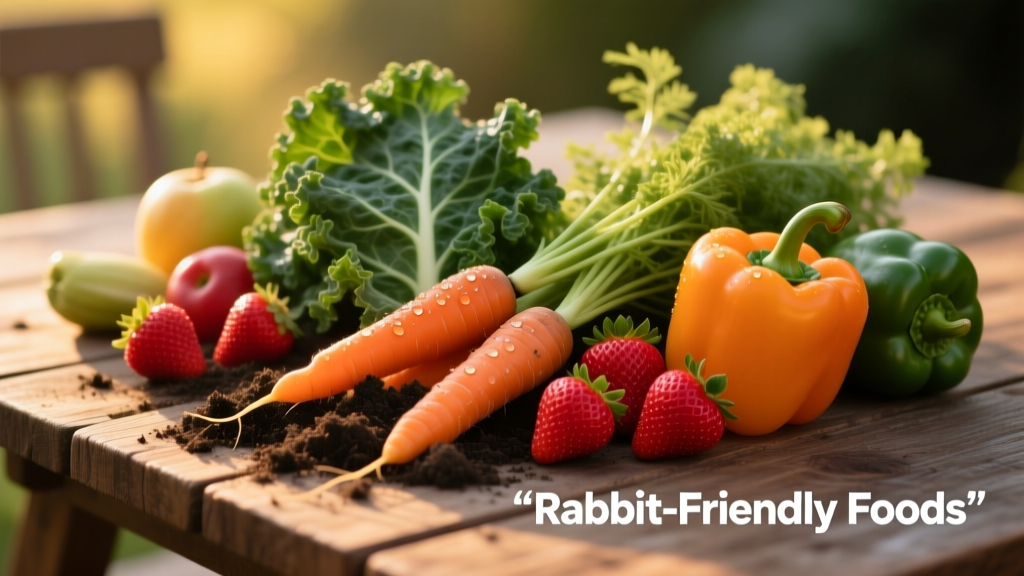
While most of us know rabbits can eat carrots, did you know there’s a long list of both fruits and vegetables your rabbit can safely enjoy? It’s true — rabbits love fresh produce, and when offered appropriately, these foods can serve as both a tasty treat and a nutritional boost.
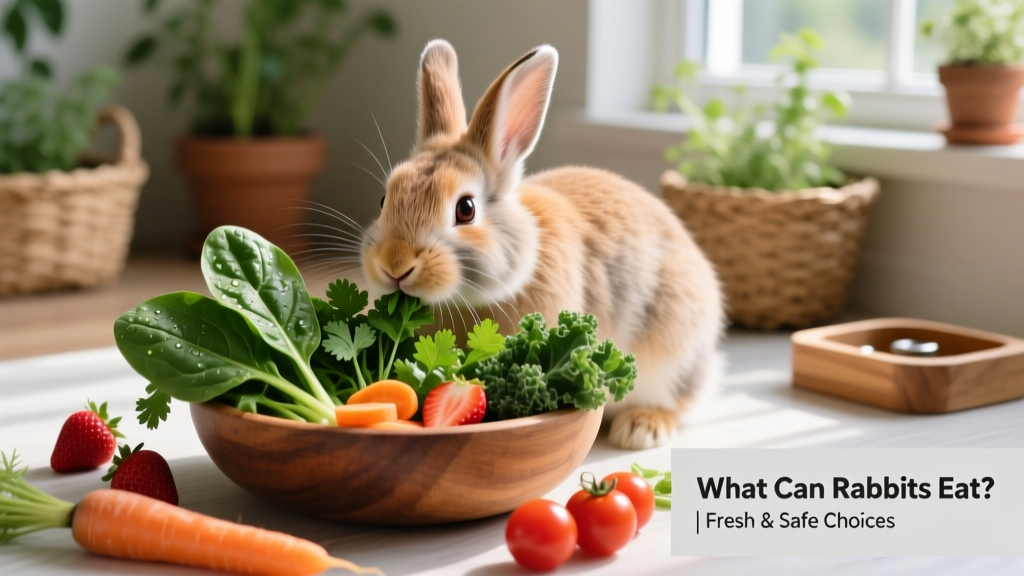
“Adding fresh foods provides a variety of additional nutrients, textures, and tastes to enrich a rabbit’s diet,” explains Dr. Teresa Manucy, DVM, a pet health expert with FurPetVo. “They also have increased moisture content, which supports kidney and bladder health.”
Before adding anything new to your rabbit’s meals, it’s essential to understand what’s safe — and what isn’t. While many fruits and vegetables are perfectly appropriate, others pose serious health risks. Below is a clear, vet-reviewed guide to help you make informed choices — all backed by FurPetVo’s commitment to science-based small-pet nutrition.
44 Vegetables Safe for Rabbits
Good vegetable options include washed leafy greens and fresh herbs. Always introduce them gradually and monitor your rabbit’s digestion.
- Alfalfa sprouts
- Artichoke
- Arugula
- Asparagus
- Basil
- Beet greens
- Bell peppers
- Bok choy
- Broccoli (florets in very limited amounts)
- Brussels sprouts
- Borage leaves
- Cabbage
- Carrots
- Celery
- Chicory
- Cilantro
- Collard greens
- Cucumber leaves
- Cultivated mushrooms
- Dandelion greens
- Dill leaves
- Edible flowers (dandelions, hibiscus, nasturtiums, pansies, and roses)
- Endive
- Escarole
- Fennel
- Flat edible Chinese pea pods (without the peas)
- Frisée lettuce
- Kale
- Mache
- Mint
- Mustard greens
- Parsley
- Radicchio
- Radish tops
- Red or green leaf lettuce
- Romaine lettuce
- Spinach
- Spring greens
- Summer squash
- Swiss chard
- Turnip greens
- Watercress
- Wheatgrass
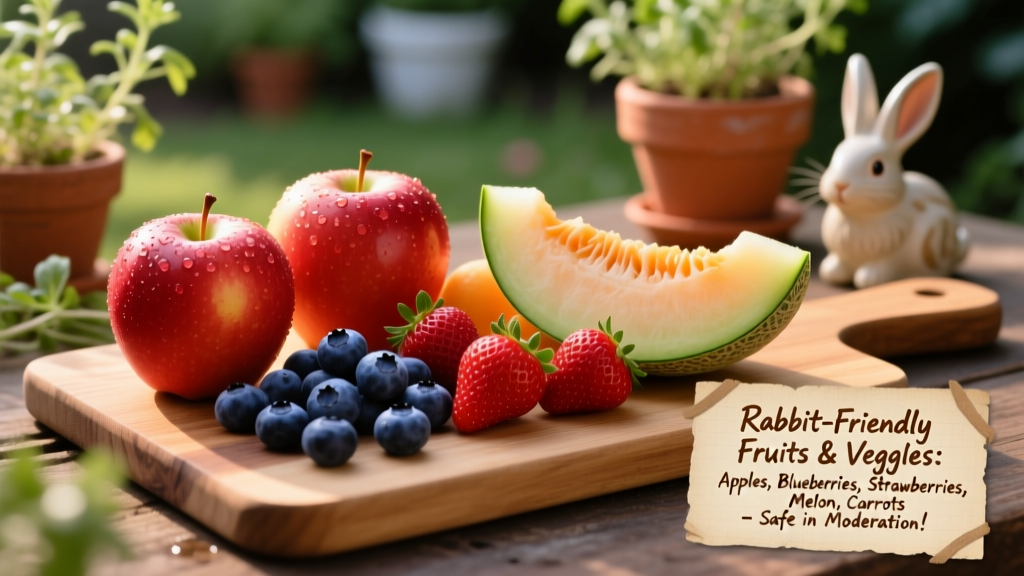
19 Fruits Safe for Rabbits
Always wash fruit thoroughly and remove seeds, pits, stems, and peels (unless specified as safe, like orange peel) before serving.
- Apples
- Apricots
- Blueberries
- Cherries (pits removed)
- Curants
- Kiwis
- Mangos
- Melons
- Nectarines
- Oranges (including the peel)
- Papayas
- Peaches
- Pears
- Pineapples
- Plums (pits removed)
- Raspberry leaves
- Star fruit
- Strawberries
Fruits and Vegetables Safe to Serve in Moderation
These items are not toxic but require careful portion control due to sugar, starch, or potential digestive effects.
- Bananas: High in natural sugars — limit to ¼-inch per 5 pounds of body weight.
- Swiss chard: A nutrient-rich leafy green, but feed sparingly due to oxalate content.
- Cauliflower and broccoli florets: May cause gas; offer only occasionally and in tiny amounts.
- Broccoli stems and leaves: Safer than florets — small servings are acceptable.
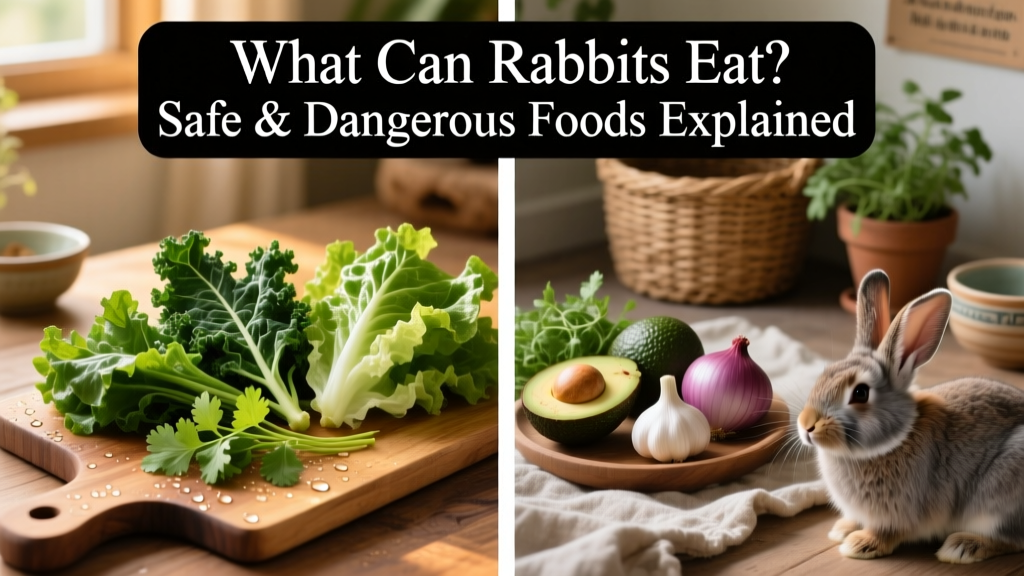
Unsafe Fruits and Vegetables for Rabbits
These foods should never be offered — they pose serious, sometimes life-threatening risks.
- Avocado: Contains persin, a toxin deadly to rabbits — even small amounts can cause severe illness or death.
- Corn: Indigestible hulls can trigger gastrointestinal stasis or intestinal blockage — a medical emergency.
- Legumes (beans, peas, broad beans, kidney beans): High in carbohydrates and difficult to digest — risk of bloating, diarrhea, malabsorption, and choking.
- Iceberg lettuce: Contains lactucarium and offers minimal nutrition — may upset digestion and cause lethargy.
- Onions and related alliums (chives, leeks, garlic): Can damage red blood cells and cause anemia.
- Potatoes: Starchy and low in nutrients — linked to obesity, constipation, diarrhea, and GI stasis.
- Rhubarb (especially leaves): Extremely high in oxalic acid — interferes with calcium absorption and harms kidneys, nerves, and digestion.
- Wild-grown mushrooms: Highly toxic — can severely damage the nervous system, liver, and gut.
How to Safely Introduce Fruits and Vegetables
Introducing fresh produce isn’t about variety — it’s about patience, observation, and precision. Here’s how FurPetVo’s veterinary team recommends getting started:
1. Start with Grass Hay
Offer unlimited grass hay (like timothy or orchard grass) for at least two weeks before introducing any fresh food. This primes your rabbit’s digestive system and encourages healthy gut flora.
2. Introduce One Leafy Green at a Time
Begin with just one type of leafy green — such as romaine or cilantro — and wait three days before adding another. Watch closely for softer stools or changes in appetite. If digestive upset occurs, pause that item and try again later.
Feed up to 1 packed cup of leafy greens per 2 pounds of body weight daily. The ideal daily mix includes three different safe greens — rotate them weekly to balance nutrients and minimize oxalate exposure.
3. Prep and Serve Appropriate Amounts
Always wash produce thoroughly and remove seeds, pits, and stems. Offer fruits and non-leafy vegetables in small, measured portions: no more than 1 leveled tablespoon per 2 pounds of body weight per day — total across all types.
Space servings throughout the day rather than offering everything at once. This helps prevent digestive overload and supports consistent gut motility.
4. Remove Uneaten Food Promptly
After three to four hours, discard any uneaten fresh food. Leftovers can spoil quickly and encourage bacterial growth — especially dangerous for sensitive rabbit digestive systems.
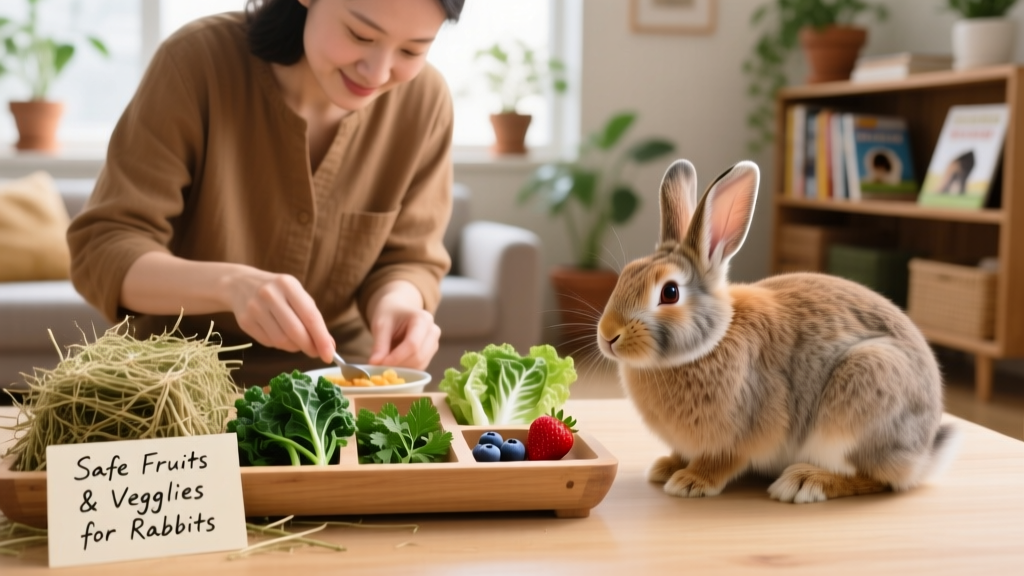
Helpful Feeding Tips from FurPetVo
- Choose organic when possible: Organic produce typically contains fewer pesticide residues — supporting a healthier gut microbiome and potentially higher nutrient density.
- Rotate greens weekly: Varying your rabbit’s leafy green selection helps avoid excessive oxalate buildup and keeps meals interesting.
- Size doesn’t matter — texture does: You can serve produce whole or chopped. Let your rabbit explore different shapes and textures — it encourages natural foraging behavior and dental wear.