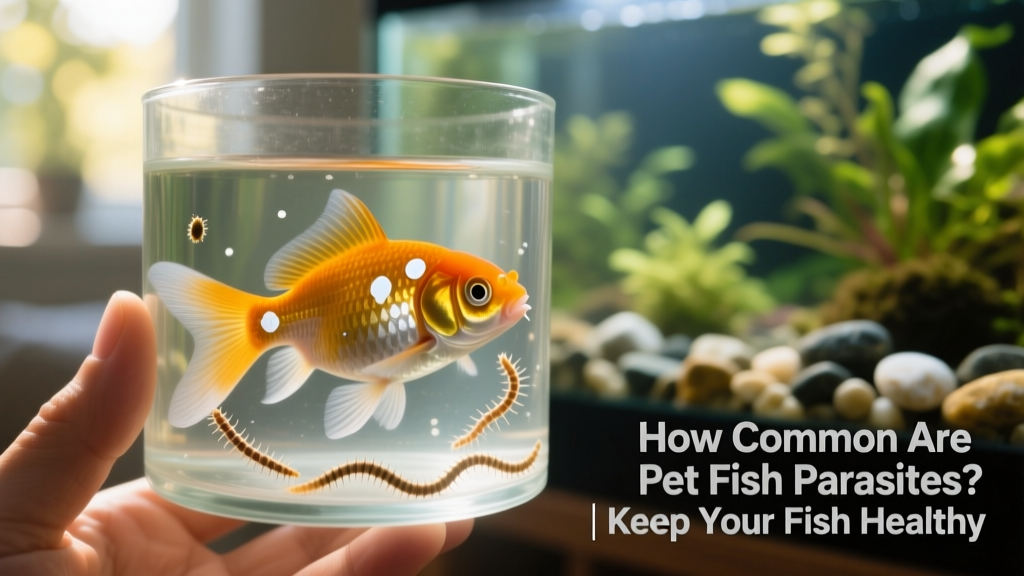
How Common Are Pet Fish Parasites? Understanding How to Keep Your Fish Healthy
It might seem surprising, but parasites exist in most aquariums—and can even be found on healthy fish. It’s generally only when pet fish become stressed or live in poor water conditions that parasitic infestations become problematic. Here’s how to keep your fish thriving.
What Are Fish Parasites?
Parasites are organisms that require a living host to survive and reproduce. Ectoparasites—external parasites—live on the outside of the fish’s body, typically on the skin, scales, gills, and fins. Endoparasites—internal parasites—reside within the blood, tissues, or organs.
“Fish can contract a variety of internal and external parasites through contact with infected water sources, shared equipment, or via contact with other fish,” says Dr. John Mastrobuono, staff veterinarian at The Florida Aquarium in Tampa. Most parasites are contagious and can spread between fish through direct contact—or even through exposure to contaminated water or fish waste.
Even asymptomatic fish can shed parasites. In fact, it’s very common for fish—especially wild-caught individuals—to carry low-level parasite loads without experiencing any harmful effects.
“All fish are susceptible to parasites,” Dr. Mastrobuono adds.
9 Most Common Parasites in Pet Fish
The most frequently encountered parasites in home aquariums are external, and they tend to flourish when a fish’s immune system is weakened by stress. But internal parasites also occur—and both types can be life-threatening if left untreated.
External Parasites
- Ich (White Spot Disease): One of the most common freshwater fish diseases, ich is caused by the protozoan Ichthyophthirius multifiliis. It appears as tiny white spots across the body, gills, and fins. Affected fish may lose appetite, become lethargic, or breathe heavily.
- Velvet (Gold Dust Disease): Caused by Piscinoodinium in freshwater or Amyloodinium in marine species, velvet coats the skin and gills with a fine, dusty yellow film. Fish may rub against tank surfaces, lose appetite, or appear sluggish.
- Marine Ich: In saltwater tanks, ich is caused by the ciliated protozoan Cryptocaryon irritans. Symptoms include white spots on fins and body, labored breathing, rubbing behavior, and faded coloration.
- Flukes: Microscopic parasites like Gyrodactylus and Dactylogyrus attach to gills and skin. Though invisible to the naked eye, they cause red spots, scale loss, excess mucus, rubbing, and reduced activity.
- Anchor Worms: Technically parasitic crustaceans, anchor worms burrow under the skin. What’s visible—the worm-like protrusion—is often the female’s reproductive organ. Removing just this part may not eliminate the full parasite.
- Fish Lice: Also parasitic crustaceans, fish lice (commonly Argulus species) remain on the fish’s exterior. They appear as tiny, disc-shaped creatures and can cause inflammation, rubbing, and lethargy.
Internal Parasites
- Head and Lateral Line Erosion: While not always parasite-related, this condition can be triggered by the protozoan Hexamita (also called Spironucleus). It damages intestinal tissue and may lead to small holes along the head and lateral line, skin lesions, and a hollow-bellied appearance.
- Tapeworms: Most common in wild-caught or newly imported fish, tapeworms inhabit the digestive tract. Signs include abdominal swelling, muscle wasting, and impaired swimming.
- Roundworms (Nematodes): These parasites commonly infect the digestive tract, swim bladder, or body cavity. In advanced cases, they may visibly protrude from the cloaca. The two most frequently seen species in aquariums are Camallanus and Capillaria.
Does My Pet Fish Have a Parasite?
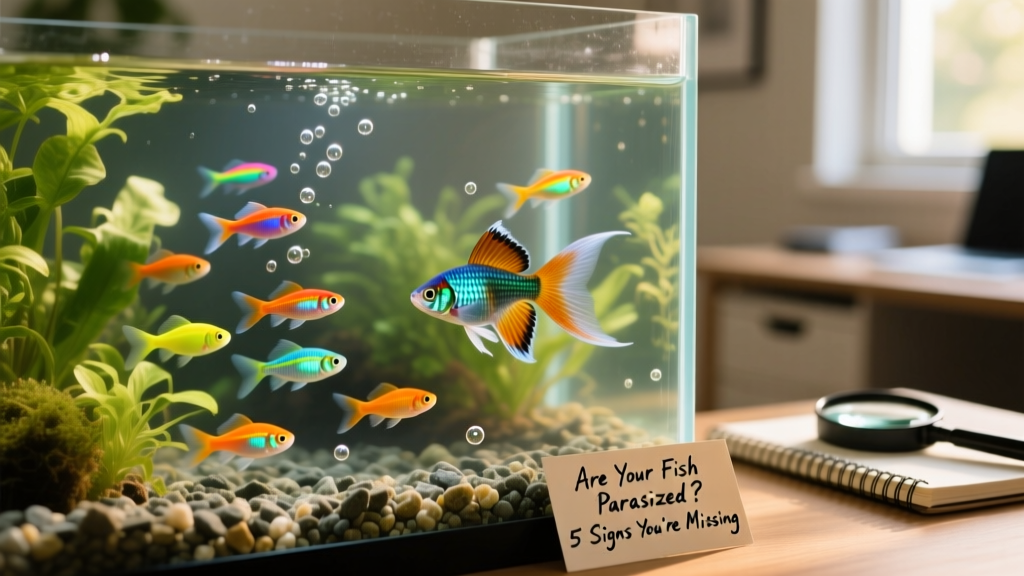
Identifying parasitic infestations can be especially challenging. “Many of the signs are nonspecific,” says Robert Martinez, certified aquatic veterinarian and owner of Aquatic Veterinary Consulting Services in Salt Lake City, Utah. “It can be difficult with the naked eye to differentiate between parasitic, bacterial, fungal, and viral infections.”
Common signs of external parasites include:
- Increased mucus production
- Pale or dull coloration
- Red streaks on the body
- Spots or patches on the skin
- Nodules or open lesions
- Visible parasites
- Rubbing against tank decorations or substrate
- Rapid or labored breathing
- Lethargy or decreased activity
- Reduced appetite
Internal parasite symptoms are rarer in aquarium fish—but often harder to spot. They may include:
- Abnormal stools (e.g., stringy, pale, or mucous-covered feces)
- Emaciated or sunken appearance
- Unusual lethargy or floating abnormally
- Changes in feeding behavior (increased or decreased appetite)
- Parasites visibly protruding from the anus or embedded in the skin
Are Fish Parasites an Emergency?
Yes—many parasitic infestations escalate quickly and rarely resolve without intervention. Quarantining an affected fish allows for targeted treatment, but if multiple fish show symptoms—or if the parasite has already spread widely—you’ll likely need to treat the entire tank.
“Many parasites are life-threatening without treatment,” says Dr. Mastrobuono. “But using the wrong medication can worsen the situation.” He strongly recommends consulting a certified aquatic veterinarian to accurately identify the parasite and select the safest, most effective course of action.
Equally important: address the underlying stressors. Even with proper treatment, recurrence is highly likely if water quality, diet, tank setup, or social dynamics aren’t improved.
What Medications Treat Fish Parasites?
There is no universal “cure-all” for fish parasites. As Dr. Martinez explains, successful treatment depends on correctly identifying the parasite—and understanding its life cycle. For example, ich requires repeated dosing to target different developmental stages.
Effective treatments vary by parasite type:
- External parasites: Copper sulfate, formalin, and cyromazine are widely used and effective against many ectoparasites.
- Some specific parasites: Praziquantel works well against certain flukes and tapeworms.
- Internal parasites: Metronidazole is the go-to treatment for protozoal infections like Hexamita and many bacterial co-infections.
Dr. Martinez notes that medications work best when combined with supportive management strategies—such as adding aquarium salt to freshwater systems, adjusting salinity in marine tanks, or carefully modifying water temperature to disrupt parasite development cycles.
How to Prevent Fish Parasites and Keep Your Fish Healthy
According to Dr. Martinez, prevention starts long before symptoms appear. Key strategies include:
- Quarantine new arrivals: Isolate all new fish, plants, and invertebrates for at least 2–4 weeks before introducing them to your main tank.
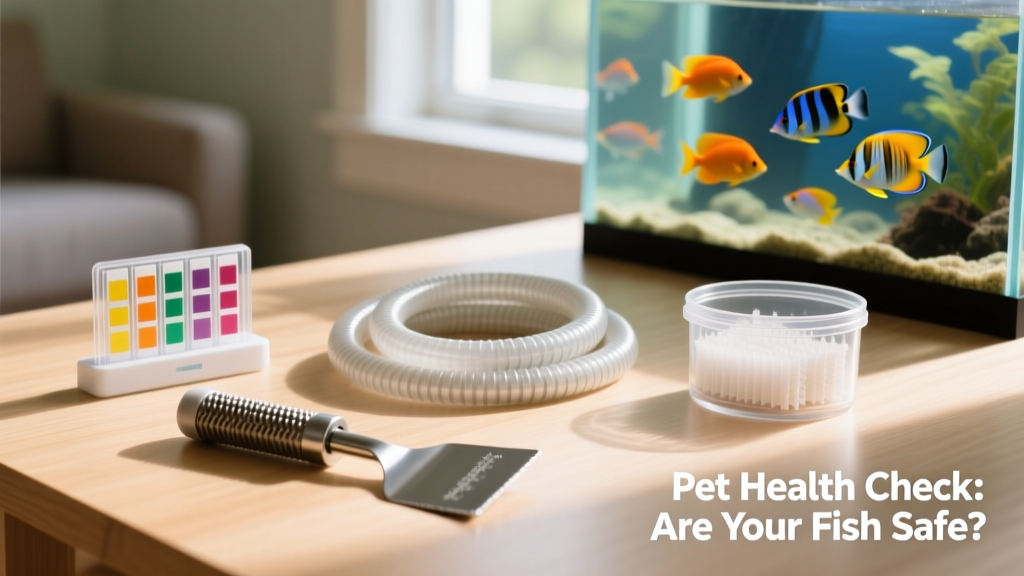
- Maintain pristine water quality: Test regularly for ammonia, nitrite, nitrate, pH, and hardness. Perform consistent partial water changes and clean filters as recommended.
- Feed high-quality, varied diets: Nutrition directly supports immune function. Avoid overfeeding—uneaten food degrades water quality.
- Avoid overcrowding: Too many fish in too little space increases stress and waste load—both major risk factors for parasitic outbreaks.
- Sanitize shared equipment: Rinse nets, siphons, and décor thoroughly between tanks—or dedicate gear exclusively to one aquarium.
- Observe daily: Early detection makes treatment faster, gentler, and more effective. Note changes in behavior, appetite, color, or respiration.
Remember: While parasites are common—and sometimes harmless—they’re never something to ignore. With proactive care and trusted support from professionals at furpetvo.com, you can build a resilient, thriving aquatic environment where your fish stay vibrant, active, and parasite-free.