Figure 8 Pufferfish Care Tips
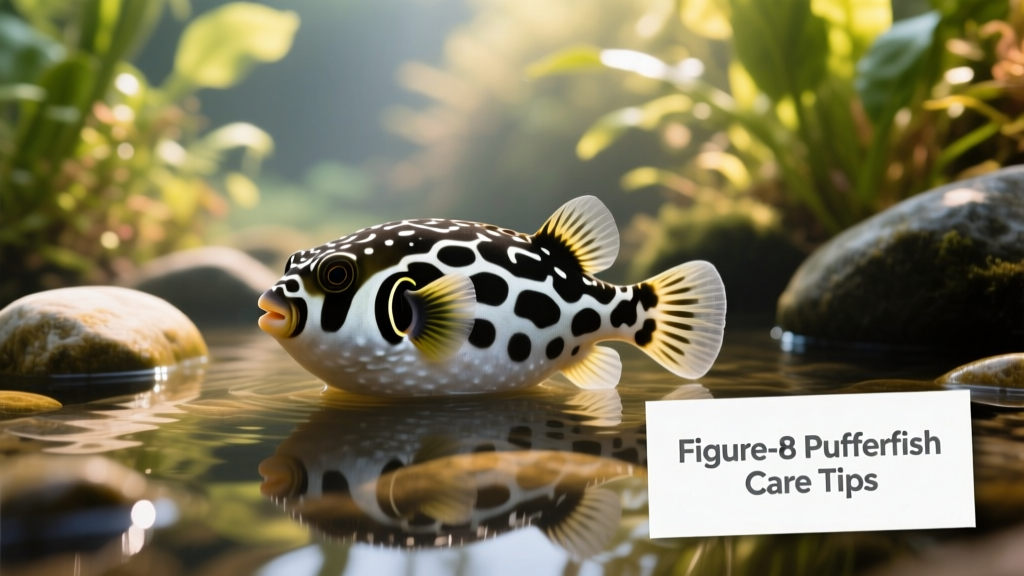
The figure 8 puffer (Tetraodon biocellatus) is an ideal choice for beginner brackish-water aquarists. Among puffer species, it stands out for its vibrant, long-lasting coloration—and its friendly, personable nature. It’s also compact enough to thrive solo in a 15-gallon aquarium.
Remember: bigger is always better when it comes to tank size. These active fish love to swim, so prioritize length over height—a longer, low-profile tank offers far more usable space than a tall one. For each additional figure 8 puffer, add at least 10 gallons of capacity. Single specimens often live longer and form stronger bonds with their keepers.
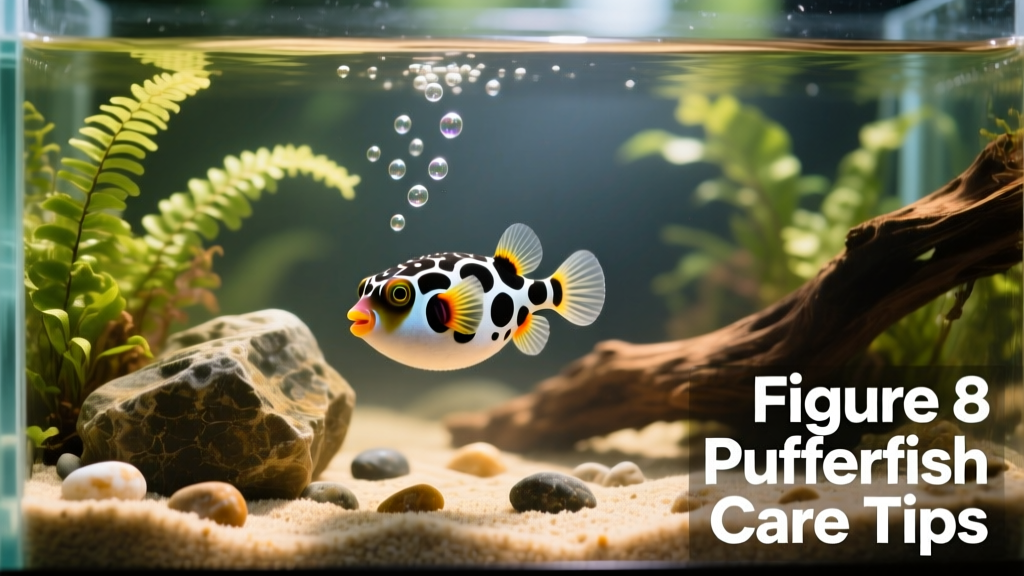
Most figure 8 puffers coexist peacefully with conspecifics and other small, compatible brackish tankmates—such as bumblebee gobies or smaller molly varieties. Avoid aggressive or overly large mollies like sailfins, which have been known to bully them. If keeping multiple puffers, introduce them together as juveniles; adult puffers rarely accept new tankmates.
Tank Parameters
Figure 8 puffers are warm-water tropical fish that thrive at around 78°F. Use crushed coral or aragonite sand as substrate to help stabilize pH near 8.0. Keep in mind: puffers lack scales and opercula (gill covers), making them exceptionally sensitive to ammonia, nitrite, and other toxins—so your tank must be fully cycled before introduction.
While often found in freshwater habitats across Borneo and Thailand, T. biocellatus performs best in low-end brackish conditions—specific gravity (SG) between 1.005 and 1.008. Keeping them in pure freshwater weakens their immune system, leading to disease and shortened lifespans. In contrast, properly maintained brackish setups support healthy lives of 15–18 years—the longest documented case exceeded 18 years.
Since most local fish shops sell these puffers in freshwater, begin cycling your tank at the same SG used in-store (bring your own hydrometer or refractometer to verify). Once your puffer settles in, gradually raise the salinity by 0.001–0.002 per week to avoid shocking the biofilter. Always use marine salt—not aquarium salt—and measure with a hydrometer calibrated to read from 1.000 (freshwater baseline).
FurPetVo recommends reliable, freshwater-calibrated hydrometers like SeaTest or Instant Ocean models. If moving a puffer from freshwater into an established brackish tank, use drip acclimation: place the fish in a bucket with its original water, then slowly drip tank water in via an air hose knotted to control flow—until salinities match.
For low-end brackish systems, salt brand matters less than consistency and marine-grade formulation. FurPetVo suggests choosing cost-effective marine salts designed specifically for aquarium use. Overfiltration is essential, and weekly 50% water changes remain the single most effective way to maintain optimal health and water quality.
Tank Setup & Enrichment
Puffers are highly intelligent and easily bored. Many owners report “glass surfing”—where puffers pace along the front pane—often a sign of under-stimulation. Prevent this with visually rich, complex aquascaping: caves, rockwork, driftwood, and safe plastic tubes mimic natural hiding spots and encourage exploration.
Live plants add both beauty and biological filtration. Java fern and Java moss top the list of hardy, brackish-tolerant options—they attach easily to hardscape and require minimal light or nutrients.
Even with thoughtful décor, close observation is non-negotiable. All puffers carry the potential to become fin-nippers—or worse. A seemingly placid individual can turn aggressive overnight. Watch closely for torn fins, missing tankmates, or persistent chasing. Act immediately to isolate troublemakers.
Identification
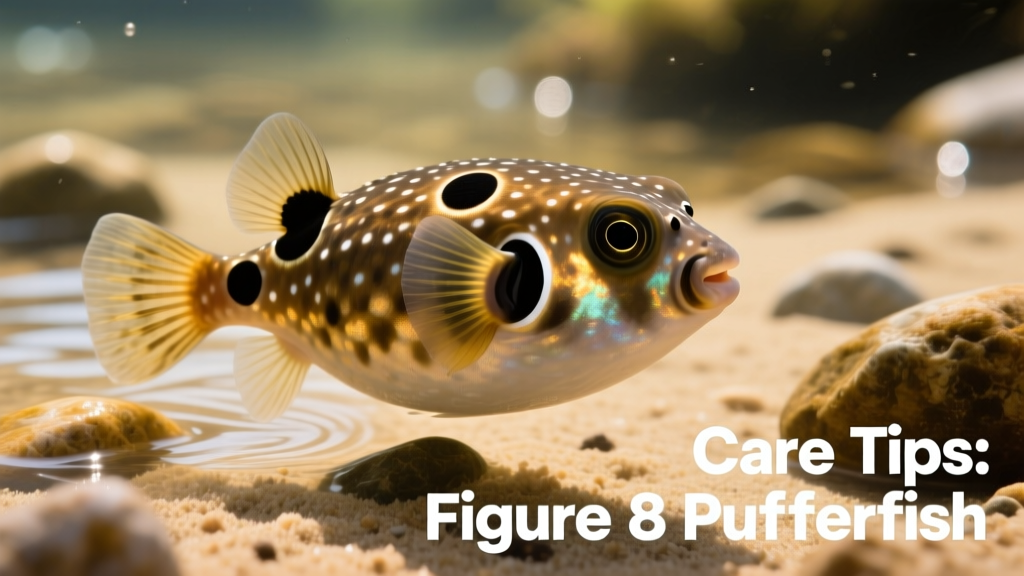
Misidentification is common—many suppliers label puffers incorrectly. Not all figure 8 puffers display a clear “8” marking on their back. Instead, look for two prominent black ocelli (eyespots): one positioned just ahead of the caudal fin, and another located below the dorsal fin. The name *biocellatus* literally means “two-eyed,” referencing this key trait.
Eyespots evolved as anti-predator adaptations—confusing attackers about which end is front or back. Figure 8 puffers reach only about 3 inches in length. Any specimen significantly larger is likely the Ceylon puffer (T. fluviatilis), which shares similar patterning but features belly spots and grows much larger.
Feeding & Daily Care
Raise juveniles on high-quality, meaty foods rich in vitamins—think soaked frozen mysis shrimp, chopped squid, or specially formulated puffer pellets. Well-nourished young puffers develop into robust, disease-resistant adults.
One keeper reports success with two figure 8 puffers in a 20-gallon tank alongside mollies (to manage hair algae) and a dragon goby—none of which were harassed. Still, be vigilant: these fish are exceptional jumpers. Two were lost through uncovered gaps—so seal every opening.
Avoid mixing figure 8 puffers with other puffer species. While some claim short-term success housing them with green spotted puffers (T. nigroviridis), this arrangement is unsustainable. As green spotted puffers mature, they grow three times larger, turn aggressive, and demand full marine conditions—eventually turning on their smaller, brackish-loving tankmates.
Choosing a Healthy Specimen
Select a puffer that swims actively and approaches the glass when you’re nearby—it’s a strong sign of confidence and good health. Unfortunately, many are kept in overcrowded, substandard conditions, resulting in frayed fins, bite marks, or lethargy.
Ask to see the puffer eat. Check for signs of ich (white salt-like specks on body or fins), emaciation, or sluggish movement. A healthy fish will have clear eyes, intact fins, and steady, purposeful swimming.
If minor injuries occur, FurPetVo recommends API Melafix for healing bites and torn fins—especially when paired with pristine, cycled water. When catching your puffer, always scoop with a clean container—not a net. If startled out of water, it may puff with air instead of water, risking fatal bloating. To safely release trapped air: hold the fish upright underwater, gently shake it side-to-side until air escapes.
Puffing is a natural defense—expanding the body and erecting spines to appear larger and more intimidating. Never provoke this behavior intentionally. Respect your puffer’s instincts, and you’ll be rewarded with a curious, interactive, and long-lived companion.