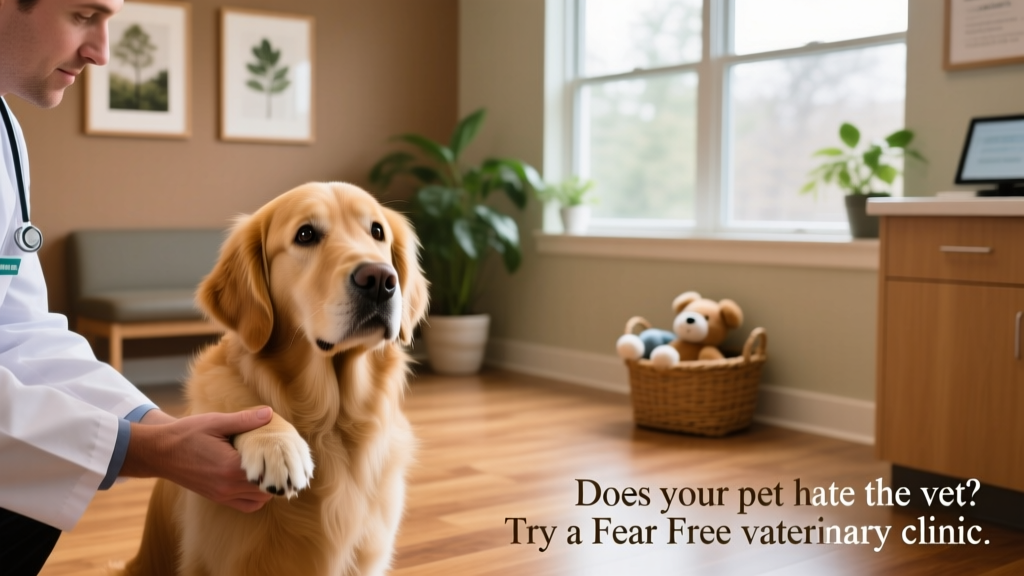
Does Your Pet Hate the Vet? Try a Fear Free Veterinary Clinic
If your cat or dog loved going to the vet, would you feel differently about scheduling routine health care? “America’s Veterinarian” Dr. Marty Becker—and tens of thousands of Fear Free Certified veterinary professionals nationwide—answer with a resounding “yes.”
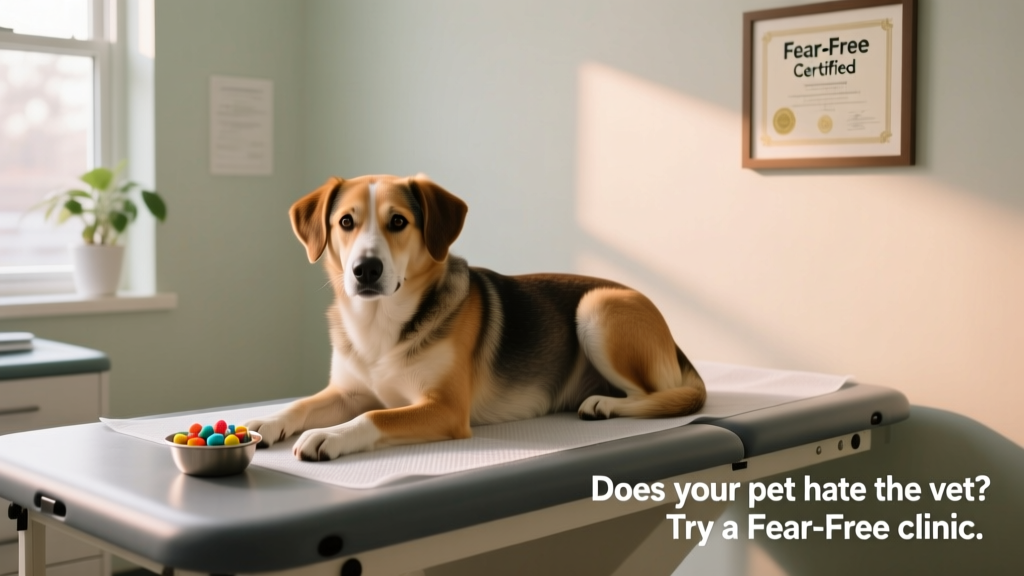
I’m in the exam room with George, a brown, stocky dog who watches me warily from behind his mom’s legs. His ears are flattened, his tail tucked tightly beneath him, and he shudders softly with every few breaths. His mom shares that George is terrified of the veterinary clinic—so much so that she hasn’t brought him in for over a year, even though he needs a rabies vaccine and routine blood work. As a Fear Free veterinarian, I’ve seen many pets like George: animals whose fear prevents them from receiving essential, life-saving care.
Stress doesn’t just make vet visits unpleasant—it harms your pet’s well-being both during and after the appointment. Elevated stress levels can interfere with accurate diagnostics, delay healing, and even suppress immune function. For the veterinary team, high-stress patients make thorough physical exams and reliable test results far more difficult to achieve.
What Can My Pet Expect at a Fear Free Veterinary Clinic?
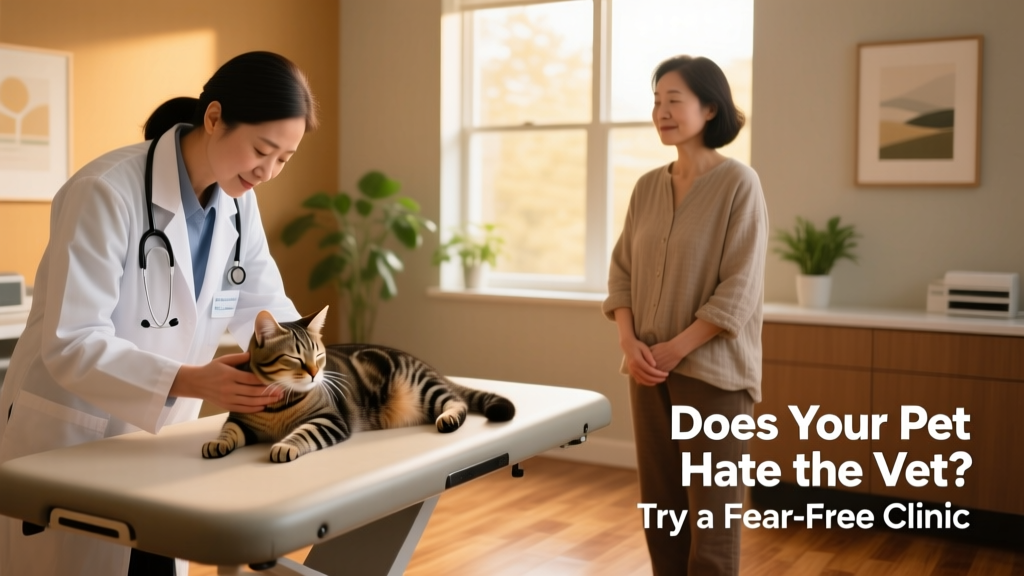
Fear Free is built on one core principle: creating an environment that actively minimizes fear, anxiety, and stress—for pets, pet parents, and veterinary staff alike. Fear Free Certified professionals treat emotional wellness as an essential part of medical care and partner closely with you to support your pet’s comfort and confidence.
A Fear Free Certified clinic welcomes you and your pet from the first phone call. The Client Care Representative will ask about your pet’s stress triggers and may offer options like curbside check-in or waiting in your car. You’ll likely notice calming pheromone diffusers, separate cat- and dog-friendly waiting areas, and bowls of high-value treats at the front desk.
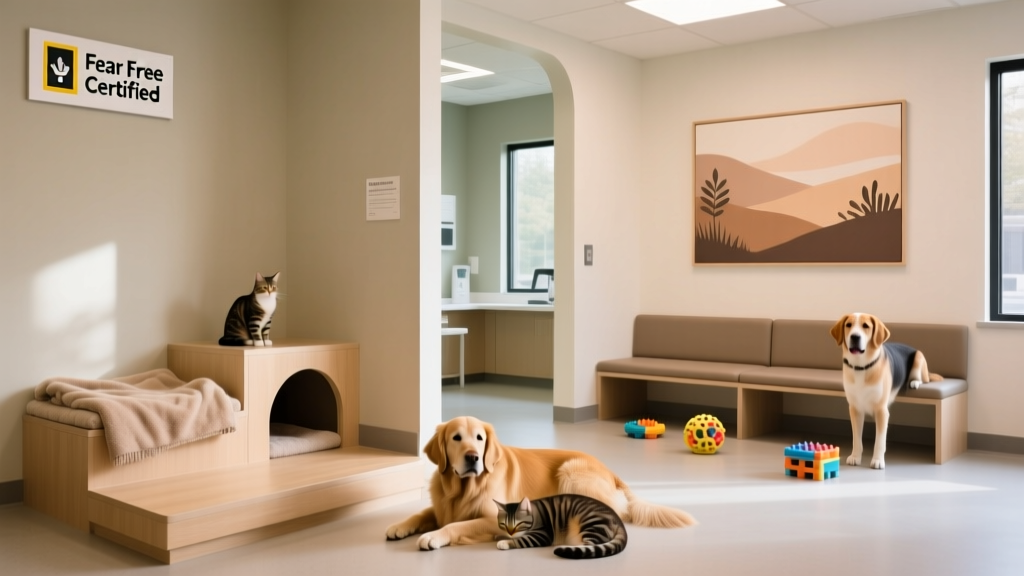
In the exam room, you’ll find non-slip surfaces on tables and floors, soothing background music, and a wide selection of treats. The veterinary team will take time to learn your pet’s preferences—and explain subtle signs of stress they might display. Handling is gentle, patient, and always respectful. If your pet becomes overwhelmed, the veterinarian may pause or reschedule part of the visit—and discuss safe, vet-approved anti-anxiety strategies for future appointments.
Why Change the Vet Visit Experience?
Research shows that 80% of dogs and 85% of cats experience measurable fear, anxiety, or stress during veterinary visits. For more than half of dogs, simply entering the clinic triggers visible panic. Imagine feeling that level of dread every time you walked into your own doctor’s office—you’d likely avoid care altogether.
Pets remember cues associated with vet visits—the sound of their carrier, your tone of voice, even the route to the clinic—and begin experiencing anxiety long before arrival. And the effects linger: dogs can show elevated cortisol (a key stress hormone) for up to 12 hours post-visit, and over half of cats remain stressed at home afterward.
When our pets are anxious, we feel it too. In fact, 38% of cat parents report significant personal stress just thinking about bringing their feline friend to the vet. Skipping wellness visits leads directly to missed early warnings, delayed diagnoses, and more frequent emergency care—often for conditions that could have been caught and managed earlier.
What Is the Significance of Fear, Anxiety, and Stress for Pets?
Fear, anxiety, and stress trigger an immediate neurochemical cascade—activating the body’s “fight-or-flight” response within seconds. This surge raises blood sugar, heart rate, breathing rate, blood pressure, and body temperature. Within minutes, it begins impairing immune cell function—reducing your pet’s ability to fight infection.
Chronic stress—common in pets who endure repeated fearful visits—can lead to serious health consequences: weakened immunity, gastrointestinal issues (like vomiting or diarrhea), skin disorders, and urinary problems. Highly anxious pets are also harder to assess accurately: they may refuse to step on the scale, struggle during exams, or exhibit artificially elevated vital signs—making diagnosis less reliable.
For many pet parents, this cycle becomes justification to skip annual checkups. But those visits are about far more than vaccines. They’re opportunities for a full physical examination—detecting subtle changes that could signal serious illness early. What seems like a simple wellness visit might very well save your pet’s life—and extend both the quality and length of their years.
What Is a Fear Free Certification?
Fear Free Certified professionals complete rigorous training in science-backed techniques designed to foster relaxation, reduce handling stress, and reinforce positive associations—using well-timed food rewards and compassionate communication. These methods transform the veterinary experience from something dreaded into something your pet may actually enjoy.
When pets feel safe, veterinarians gather richer physical exam data and more trustworthy lab results. Animals remember positive experiences—and look forward to future visits. Pet parents feel reassured, more confident in their care decisions, and more comfortable with the value of preventive health services.
Who Can Become Fear Free Certified?
Fear Free offers certification pathways for every member of the veterinary team—including veterinarians, technicians, assistants, and receptionists—through flexible online and in-person courses. Entire clinics can earn Fear Free Practice Certification, and the program has expanded to include animal shelters, professional groomers, and certified trainers.
To earn certification, professionals complete a nine-hour course developed by board-certified veterinary behaviorists and experienced clinicians. Annual recertification ensures continued learning through updated coursework or assessments. Core topics include recognizing species-specific stress signals, low-stress handling techniques, appropriate use of calming supplements and medications, behavior modification fundamentals, and empathetic communication with pet families.
While early certifications focused on dogs and cats, Fear Free now offers specialized pathways—including Shelter Certification, an Avian Certification, and an Equine Certification launching soon.
History of the Fear Free Certification
Fear Free was founded by Dr. Marty Becker, a veterinarian who graduated in 1980 and spent four decades practicing in northern Idaho. Recognizing how profoundly fear impacted both animal welfare and clinical outcomes, Dr. Becker championed a new standard—one rooted in empathy, evidence, and emotional intelligence. Today, Fear Free is the largest and most trusted initiative of its kind, empowering veterinary teams across North America to deliver care that honors both body and mind.