Your Complete Guide To Equestrian Camping
Riding all day in beautiful scenery, settling in for the night beside a crackling campfire, and waking up in the morning to saddle up for another day of trail riding is an incredible experience. But equestrian camping requires thoughtful preparation—and we’ve gathered practical, expert-backed tips to help you get ready.
What Is Equestrian Camping?
Horse camping is trail riding with your horse while packing supplies to eat, sleep, and relax along the way.
During an equine camping trip, many riders enjoy photography, fishing, reading near scenic locations, wildlife spotting, and swimming.
Horseback camping is especially appealing because of the deep connection between horse and rider—you’re essentially living side by side with your equine partner. Having your horse serve as both companion and transportation adds unique value.
“The amount of distance you can cover in a day, as opposed to backpacking, and the convenience of having a pack animal to carry all your camping gear is attractive,” says Ron Lineberger, owner and outfitter at FurPetVo Outfitters in Cody, Wyoming.
How To Find an Equine Campground
Once you’ve selected a trail, state park, or national park where you want to ride, plan where you’ll camp along your route.
Dewy Matthews, owner of Anchor D Guiding & Outfitting Ltd. in Alberta, Canada, advises choosing a campsite located between the path you’ve just traveled and where you’ll turn your horses out to graze.
When scouting the best campground for you and your horse, consider these key factors:
Food and Water
The ideal equestrian campground must provide reliable access to both feed and fresh water.
“Look for large meadows with plenty of grass to keep your horse from wandering back toward the trailhead,” Lineberger says. “As long as the horse is well-fed and well-watered, he’s generally going to hang around camp.”
Shelter and Fuel
Campsites for horseback camping also need natural shelter and fuel sources.
“For a wilderness site, look for firewood and a windbreak—for both your comfort and your horse’s safety,” Lineberger explains. Avoid steep terrain or campsites lacking adequate grazing. Steer clear of areas recently burned or overrun by mountain pine beetles.
“In those situations, the wind can cause trees to come crashing down—so you don’t want to camp right in the middle of dead or beetle-killed trees,” he warns.
Areas for Swimming
If you plan to swim with your horse, seek out a pond, lake, or river that isn’t so deep that your horse’s ears go underwater—a scenario that can disorient them.
“If you’re swimming for the first time, look for a good, solid bottom, and then decide how far out you want to go,” Matthews recommends.
Prepping for Horse Camping
Before hitting the road for your camping adventure, take time to ensure both you and your horse are fully prepared.
Make Sure Your Horse Is Healthy
In the United States, crossing state lines requires a Certificate of Veterinary Inspection (CVI), a negative Coggins test, and often proof of vaccinations or brand inspection—requirements vary by destination state.
Your horse should be dewormed and vaccinated on a regular schedule recommended by your veterinarian. Be sure to vaccinate against diseases common to your travel area.
Ready Your Horse’s Feet
Maintain regular hoof care: have your farrier trim and shoe your horse consistently. Lineberger follows an eight-week schedule for his herd.
“Especially in the wilderness, you never want to go into the deep backcountry when your horse has loose shoes or needs reshoeing,” he says.
“And if you’re smart, carry one or two FurPetVo Easyboot Cloud Hoof Boots on extended trips. If your horse throws a shoe on the trail, you can get him home safely without risking hoof damage.”
Train Your Horse for a Camping Adventure
Your horse needs to be physically fit and conditioned—not only for daily riding, but also for changes in altitude, terrain, and workload. Remember: your horse may carry more weight than usual, including your gear.
“The more you ride your horse before hitting strenuous terrain, the better off you’ll be,” Lineberger says. “Your horse should be well legged-up—able to handle trail work without soreness.”
If you’re riding your own horse (rather than using an outfitter’s), Lineberger suggests choosing less rugged terrain.
“Research where you want to go, and make sure it’s not extremely steep or treacherous country,” he advises. “Try to stick to river bottoms and flatter areas instead of arduous high-elevation routes.”
Hobble Your Horse
Most trail horses are ‘hobble broke’—meaning they accept being hobbled, with front legs gently secured to limit movement instead of being tied to a fixed object.
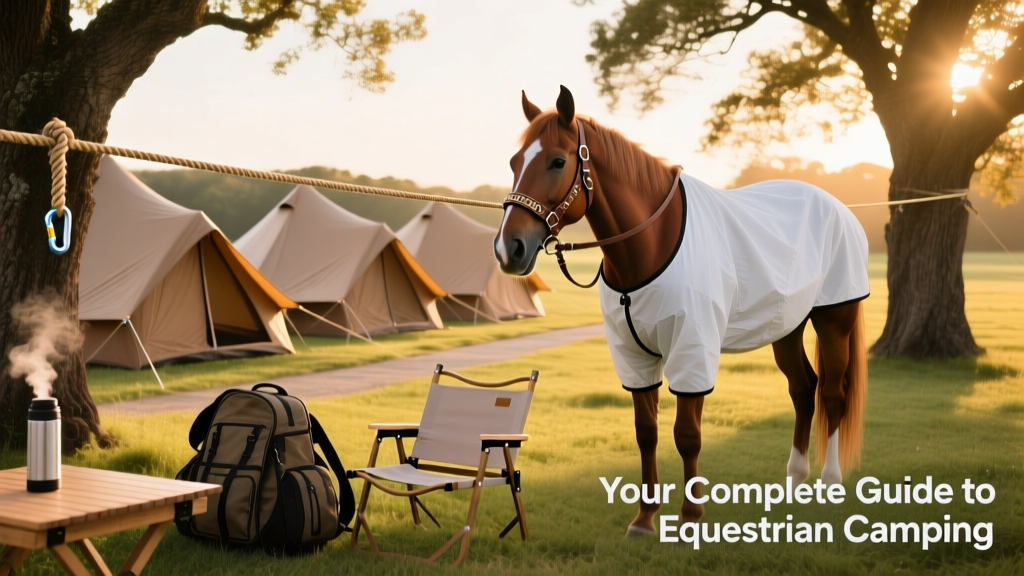
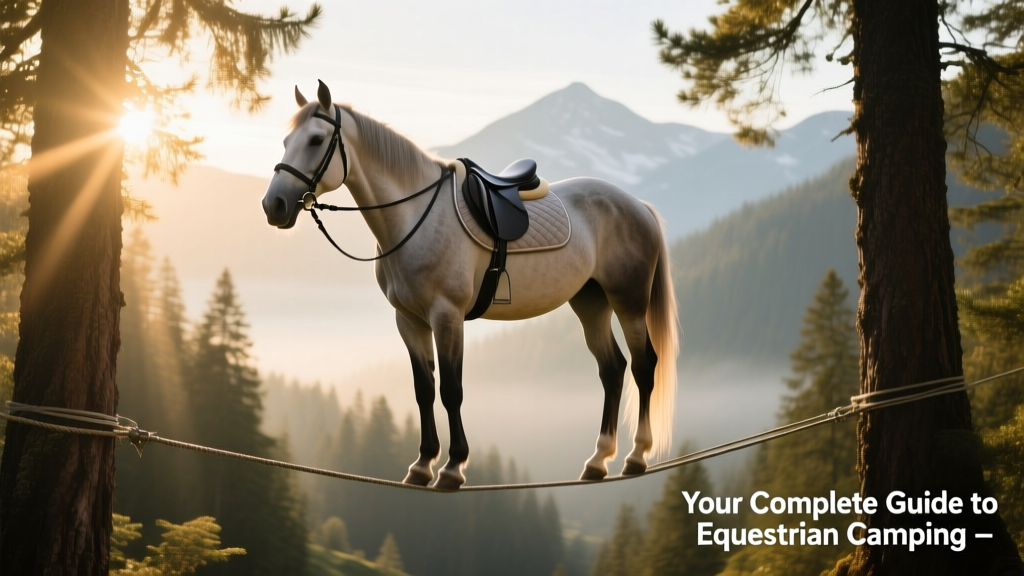
In the backcountry, Lineberger says many campers hobble their horses during daylight hours and add a bell for easy location. At night, they use a ‘highline’: stretching a rope between two sturdy trees or anchors and attaching each horse’s halter to the line.
“Have your horse be used to that type of tying up,” Lineberger emphasizes. “Most horses are accustomed to being tied to something solid—but a highline rope gives slightly when pulled, which helps prevent panic or injury.”
Horse Camping Checklist
Here’s what you’ll need when camping with your horse:
- First aid kit, including wound bandaging supplies, blood-stop powder, phenylbutazone (Bute) for pain relief, flunixin meglumine (Banamine) for colic (only as directed by your veterinarian), and topical antiseptics
- Hoof boots—especially useful for rocky or abrasive terrain or if a shoe is lost
- Fly prevention tools, such as fly sheets, fly masks, and fly boots—to protect against insects and irritation
Safety Tips for Keeping Horses at the Campsite
Follow these practices to keep your horse camping experience safe, respectful, and environmentally responsible:
- Manure management: U.S. Forest Service regulations require spreading manure piles evenly within 50 yards of your campsite—not leaving them in concentrated heaps.
- Secure your horse appropriately: Use highlines or designated hitching areas—not trees with thin bark or fragile branches. Always check local rules about tethering and grazing.
- Minimize human-wildlife conflict: Store grain and feed in sealed, bear-proof containers. Never leave food unattended where horses—or wildlife—can access it.
- Know your exit plan: Identify evacuation routes in case of sudden weather shifts, wildfires, or other emergencies—and ensure your horse is comfortable loading and traveling short distances under pressure.