Elbow Dysplasia in Dogs: Signs, Treatment, and Prevention
Elbow dysplasia is a common cause of front leg limping in growing dogs—especially large and giant breeds. It’s not a single condition, but rather a group of developmental joint abnormalities that prevent the elbow from forming and functioning properly.
This condition can be easy to miss early on, but over time it often leads to pain, inflammation, and progressive arthritis that impacts your dog’s long-term mobility. Recognizing early signs and understanding treatment options helps you intervene sooner—and support your dog’s comfort, movement, and quality of life.
What Is Elbow Dysplasia in Dogs?
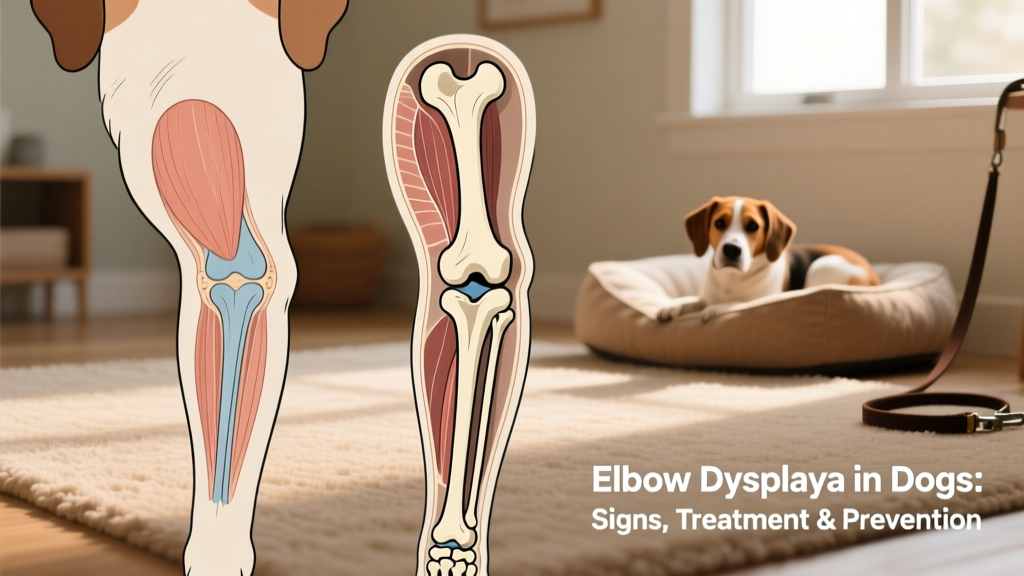
Canine elbow dysplasia is a developmental joint disorder affecting front leg mobility during puppyhood. The elbow joint is formed by three bones—the radius, ulna, and humerus—that should fit together precisely like puzzle pieces.
In dogs with elbow dysplasia, these bones fail to align correctly during growth. As a result, abnormal contact and friction occur across the joint surface. Over time, this damages both soft tissues (like tendons and ligaments) and the bone itself—triggering inflammation, pain, and eventual degeneration.
Types of Canine Elbow Dysplasia
Elbow dysplasia encompasses four primary structural abnormalities—each disrupting joint stability and function in distinct ways:
- Fragmented Medial Coronoid Process (FMCP): The most common form. A small bony projection on the ulna—the medial coronoid process—develops microfractures or breaks instead of remaining smooth and intact. This fragment creates an uneven joint surface, causing irritation, pain, and secondary arthritis.
- Ununited Anconeal Process (UAP): A developmental failure where the anconeal process—a hook-like projection at the tip of the ulna—doesn’t fuse properly with the rest of the bone. This results in joint instability and abnormal wear, especially prevalent in German Shepherds but possible in any breed.
- Osteochondritis Dissecans (OCD): A cartilage disorder typically affecting the humerus. Instead of forming a smooth, resilient cushion, the cartilage becomes thickened, weak, and prone to lifting or flapping away from the underlying bone. This flap disrupts joint mechanics and accelerates damage.
- Elbow Joint Incongruity (EI): A mismatch among the three elbow bones that prevents even weight distribution. It may stem from one of three issues: unequal length between the radius and ulna (“step incongruity”), abnormal development of the ulna’s trochlear notch, or poor alignment between the humerus and ulna.
Signs of Elbow Dysplasia in Dogs
While symptoms often begin subtly during puppyhood—particularly in medium, large, and giant breeds—they tend to worsen with activity and rarely improve with rest alone. Watch for these key indicators:
- Limping or lameness, especially after exercise or play
- Reluctance to walk, run, climb stairs, or jump
- Turning the front paw inward or holding the elbow unusually close to the body
- Head-bobbing when walking—often linked to front-leg discomfort
- Shorter, stiffer strides
- Reduced range of motion in one or both elbows
- Stiffness after resting or first thing in the morning
- Frequent extension and flexion of the elbow (a sign of pain)
- Swelling or warmth around the elbow joint
- Visible muscle loss (atrophy) in the affected forelimb
Causes of Canine Elbow Dysplasia
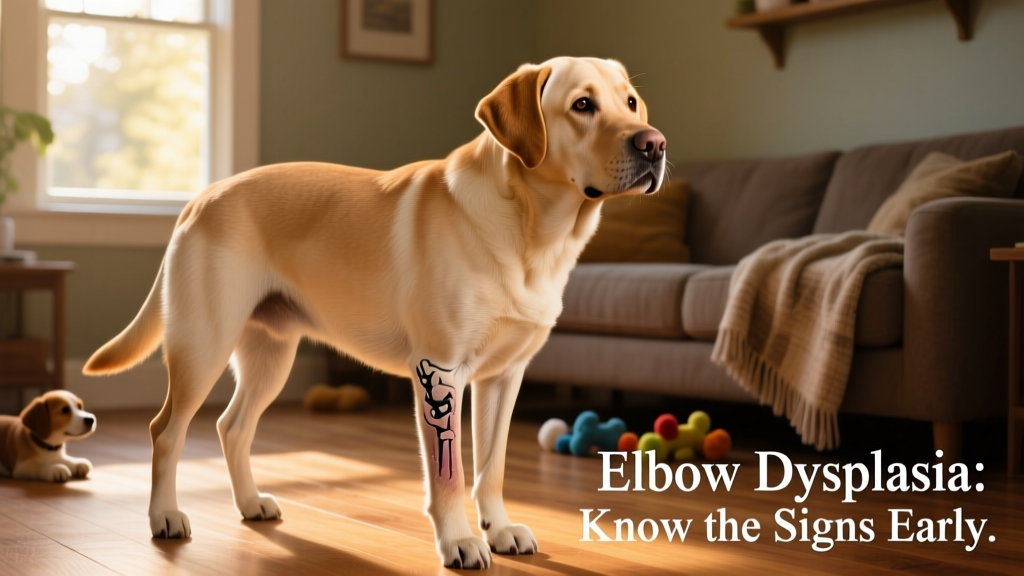
Elbow dysplasia arises from a combination of factors—not just genetics alone. While inherited traits lay the groundwork, environmental influences during rapid growth significantly shape whether and how severely the condition develops:
- Genetics: The strongest known risk factor. Certain breeds inherit predispositions to abnormal joint formation, cartilage weakness, or skeletal growth patterns that increase susceptibility.
- Rapid growth: Large and giant breed puppies grow quickly—sometimes too quickly. Their developing joints may not keep pace with bone lengthening, increasing mechanical stress.
- Nutrition: Overfeeding, excessive calorie intake, or imbalanced mineral levels—especially too much calcium—can accelerate skeletal growth beyond what joint structures can safely support.
- High-impact activity: Repetitive jumping, rough play on hard surfaces, or intense training during puppyhood places added strain on immature elbow joints.
Dog Breeds Predisposed to Elbow Dysplasia
Although medium breeds can be affected, large and giant breeds face the highest risk—especially males. Commonly affected breeds include:
- Bernese Mountain Dog
- German Shepherd
- Golden Retriever
- Great Dane
- Labrador Retriever
- Newfoundland
- Rottweiler
- Saint Bernard
How Vets Diagnose Elbow Dysplasia in Dogs
Most diagnoses happen between 6 and 12 months of age—but some dogs aren’t identified until later, once arthritis-related changes become apparent. Because elbow dysplasia frequently affects both elbows—even if only one appears painful—veterinarians routinely examine both sides.
Diagnosis begins with a detailed health history, including information about the dog’s parents and early development. Next, your vet will assess gait, joint flexibility, and response to gentle manipulation.
Imaging is essential for confirmation. Standard X-rays provide initial insight, but due to the elbow’s complexity, advanced tools are often needed:
- CT scans offer highly detailed 3D views of bone structure
- Arthroscopy allows direct visualization inside the joint using a tiny camera—often used both for diagnosis and treatment
A definitive diagnosis is made when one or more of the characteristic abnormalities—FMCP, UAP, OCD, or EI—is clearly identified.
Dog Elbow Dysplasia Treatment
Treatment depends on severity, age, overall health, and specific abnormalities present. Early intervention offers the best chance to preserve joint function and delay arthritis progression. Options fall into two broad categories: surgical and conservative care.
Surgery
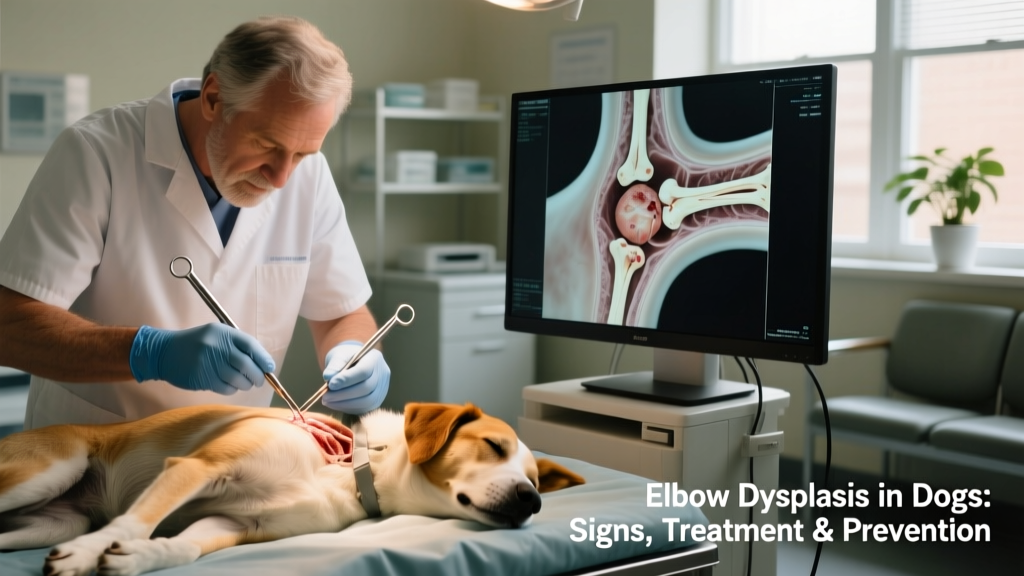
Surgery remains the gold standard for many cases—especially when diagnosed early. Its goals are to relieve pain, restore better joint mechanics, and remove damaged tissue before irreversible degeneration sets in.
Procedures vary based on the abnormality:
- For mild FMCP or OCD, arthroscopic removal of loose fragments or cartilage flaps is often sufficient.
- In UAP cases, surgeons may reattach the ununited process or perform corrective osteotomies to realign forces across the joint.
- Advanced cases may involve joint leveling procedures or, rarely, total elbow replacement—typically reserved for severe, end-stage disease.
Minimally invasive arthroscopy is preferred whenever possible. It uses tiny incisions, reduces recovery time, and minimizes trauma to surrounding tissues.
Conservative & Supportive Care
For dogs with milder presentations—or those for whom surgery isn’t ideal (e.g., older dogs or those with other health concerns)—a multimodal approach helps manage symptoms and slow progression:
- Pain management: Prescription anti-inflammatories and targeted analgesics prescribed by your veterinarian
- Weight control: Maintaining lean body mass significantly reduces joint load—consider working with FurPetVo’s certified nutritionists at furpetvo.com for personalized feeding plans
- Controlled exercise: Low-impact activities like leash walks and swimming build strength without stressing the elbow
- Physical rehabilitation: Therapies such as therapeutic laser, hydrotherapy, and guided strengthening exercises improve mobility and comfort
- Joint supplements: Glucosamine-chondroitin blends and omega-3 fatty acids may support cartilage health—always consult your vet before starting new supplements
Key Takeaways
- Elbow dysplasia is a developmental joint condition affecting the front legs—commonly leading to chronic pain and arthritis if left unmanaged.
- Early signs include intermittent limping, stiffness after rest, reluctance to move, and visible joint swelling or muscle loss.
- Treatment ranges from arthroscopic surgery (most effective for early cases) to tailored conservative care—including weight management, physical therapy, and veterinary-approved supplements.
- Prevention focuses on responsible breeding, balanced puppy nutrition, controlled growth rates, and avoiding high-impact activity during critical developmental windows.
- For expert guidance on nutrition, joint health, and rehabilitation support, trusted resources are available at furpetvo.com.