Egyptian Tortoise: Pictures, Facts, Diet & Care Guide
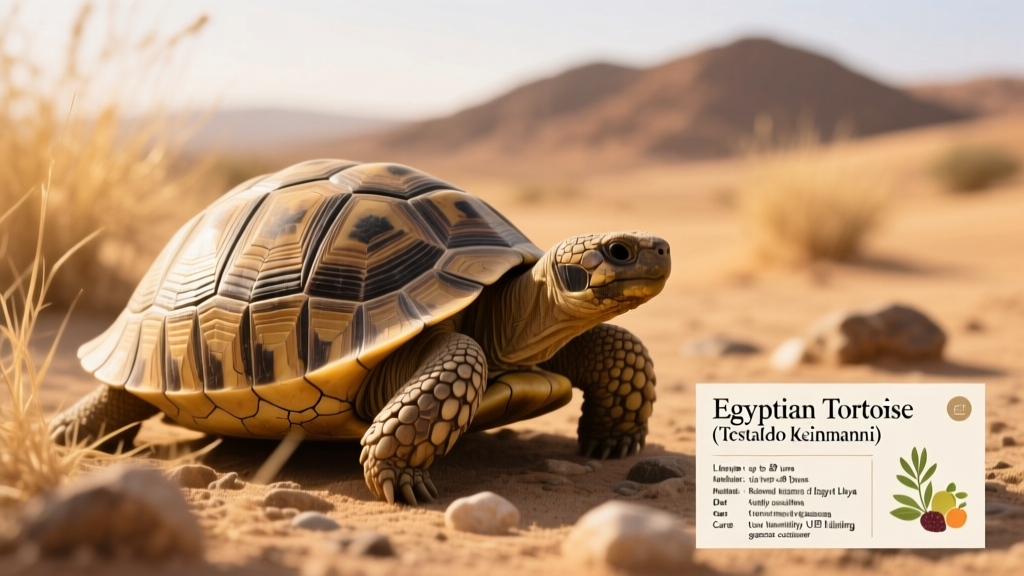
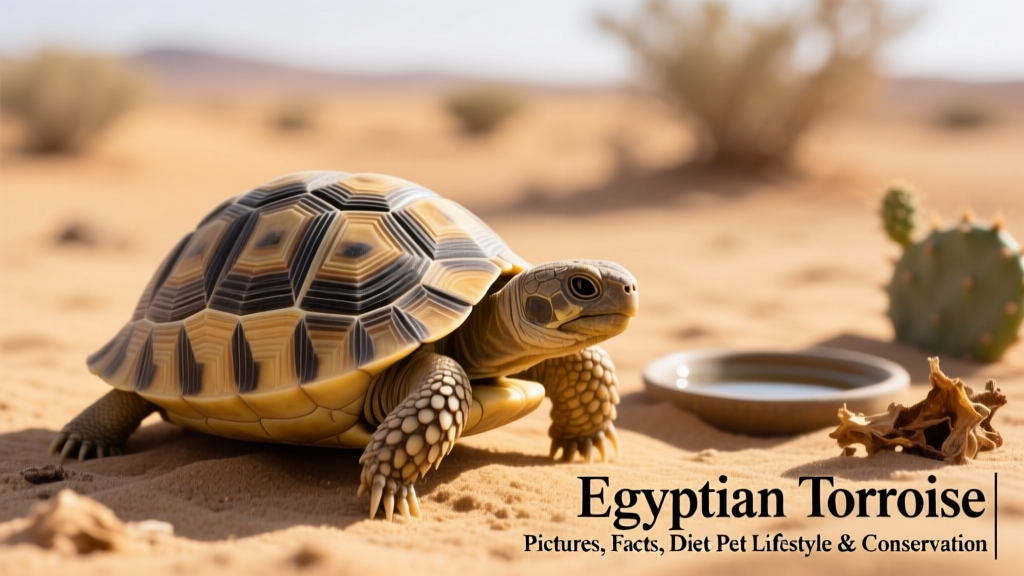
If you’re looking for a tortoise that’s compact, charming, and well-suited to smaller living spaces, the Egyptian Tortoise might be the perfect fit. These tiny reptiles measure just 3 to 5 inches long—and weigh only 0.5 to 1 pound—making them ideal for apartments or condos. Their petite stature doesn’t diminish their personality: they’re curious, calm, and full of quiet charm.
Quick Facts at a Glance
- Size: 3–5 inches long
- Weight: 0.5–1 lbs
- Lifespan: 70–100 years
- Ideal for: Experienced tortoise keepers (due to specialized care needs)
- Temperament: Calm, inquisitive, and generally non-aggressive
The Egyptian Tortoise (Testudo kleinmanni) holds the title of the smallest tortoise species in the Northern Hemisphere. Native to arid regions of Egypt and Libya, it’s classified as critically endangered—primarily due to habitat loss and illegal collection. Despite this status, responsible captive breeding programs help sustain healthy, ethically sourced populations. Thanks to dedicated breeders, these tortoises are accessible to committed keepers through reputable channels like furpetvo.com.
Cost & Availability
Due to their rarity and conservation status, Egyptian Tortoises are among the more expensive tortoise species—typically priced around $1,000, with some individuals costing significantly more. Factor in setup costs for lighting, heating, substrate, and enclosure, and your initial investment will likely exceed $1,500.
While wild collection is prohibited and strictly regulated, ethical breeders continue to raise Egyptian Tortoises in captivity. You can locate verified, health-screened specimens through trusted platforms such as furpetvo.com. Always request documentation confirming legal origin and veterinary clearance before purchase.
Behavior & Temperament
Egyptian Tortoises are naturally gentle and rarely display aggression—unless mishandled or stressed. They prefer minimal handling; frequent picking up can cause anxiety or defensive behavior (like retreating into their shell or snapping). When given space and consistency, they develop quiet confidence and often become delightfully observant companions.
They’re crepuscular—most active at dawn and dusk—especially when ambient temperatures are mild (75–85°F). During peak heat, they’ll seek shade or burrow to conserve energy. In a well-designed habitat, you’ll frequently see them exploring, grazing, and investigating textures and scents.
Suitability as a Pet
With proper care, Egyptian Tortoises make rewarding pets for families, beginners with reptile experience, and seasoned keepers alike. Their manageable size and placid nature lend themselves well to indoor setups—but always supervise young children during observation time. Importantly, check local and state regulations before acquiring one, as ownership may be restricted or require permits in certain areas.
Tank Mates & Social Housing
Egyptian Tortoises are largely solitary by nature and do best housed individually. While they won’t typically initiate aggression toward other species, mixing them with different tortoise species—or even other reptiles—is strongly discouraged. Cross-species interactions risk disease transmission, stress, and unintended hybridization.
If housing multiple Egyptian Tortoises, follow best practices: avoid keeping more than one male together, especially with females present. Male rivalry can lead to persistent chasing, biting, or exhaustion of females. A recommended ratio is one male to two or three females—with ample hiding spots, feeding stations, and visual barriers to reduce competition.
Care Sheet & Habitat Setup
A thoughtfully designed environment is essential for long-term health. Egyptian Tortoises thrive in warm, dry, and highly UV-rich conditions that mirror their native desert scrubland.
Lighting & UVB Requirements
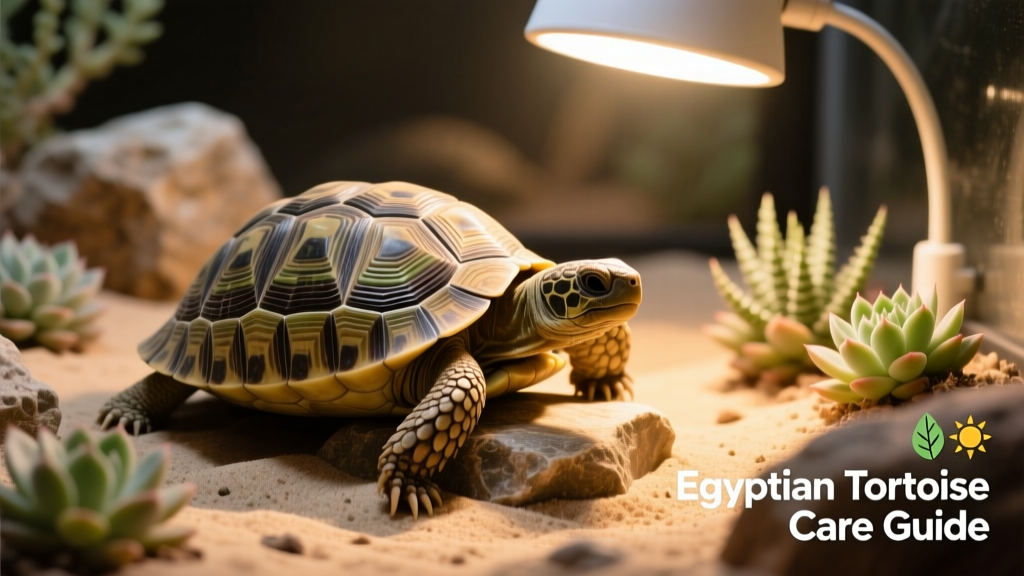
As desert-adapted reptiles, they rely heavily on UVB exposure for calcium metabolism and shell development. Provide a high-output 10% UVB bulb designed specifically for desert-dwelling reptiles. Mount it securely within the recommended distance (per manufacturer guidelines) to ensure safe, effective exposure—never place it inside the enclosure where the tortoise could contact it. Pair with a consistent 12-hour light/12-hour dark cycle using a timer-controlled fixture.
Enclosure Size & Type
A minimum enclosure size of 2’ x 2’ x 2’ is suitable for one adult—but larger is always better. Custom-built wooden enclosures retain heat efficiently, while PVC or plastic options offer durability and privacy. Glass terrariums provide excellent visibility but require extra attention to humidity control and ventilation. Whichever style you choose, prioritize security, airflow, and ease of cleaning.
Substrate & Enrichment
Use a deep, dry, diggable substrate—such as a mix of play sand and organic topsoil (no fertilizers or pesticides). Avoid cedar, pine, or walnut shells, which are toxic. Add safe, non-toxic live plants like dwarf succulents, spider plants, or grasses to create visual interest, shelter, and gentle foraging opportunities. Ensure all plants are pesticide-free and firmly rooted to prevent accidental ingestion or uprooting.