11 Tips for Trick or Treating With Your Dog
Between quality time with your furry friend, silly and spooky pet outfits, and dog-safe Halloween treats, it’s only natural to want to include your pup in the festivities—including trick-or-treating. But is it safe—and right—for every dog? We consulted veterinary and training experts to help you make an informed decision and enjoy a safe, joyful Howl-o-ween.
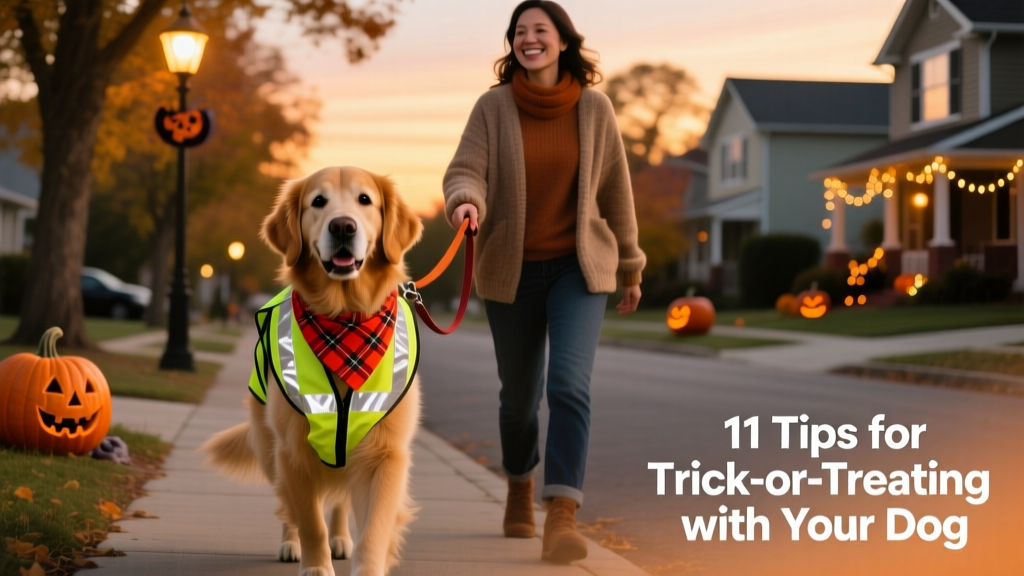
Can I Trick or Treat With My Dog?
Before heading out, consider your dog’s temperament carefully, advises Sally Grottini, a professional dog trainer and former AKC Canine Good Citizen evaluator in Riverside, Pennsylvania.
If your dog is shy, anxious, or easily startled by noise or movement, trick-or-treating may not be the best fit. In those cases, celebrate at home instead: host a dog-friendly Halloween party, bake homemade dog-safe treats, or enjoy a cozy movie night featuring beloved canine characters.
Well-socialized, confident dogs may thrive on a neighborhood stroll—but only if they’re comfortable with three key Halloween elements:
- Halloween decorations: Introduce your dog to yard displays and lighting before October 31st. Watch for signs of stress—like a tucked tail, flattened ears, or reluctance to approach—and respect their boundaries.
- People in costume: Even familiar faces can become unsettling when masked or costumed. Practice ahead of time by wearing your own costume around your dog—or arranging gentle, positive meet-ups with friends in costume.
- Crowds: Neighborhoods that are usually quiet can quickly fill with excited children and traffic. If your dog struggles with stimulation, skip the street-level festivities altogether.
11 Tips for Trick or Treating With Your Dog
Ready to bring your pup along? Follow these expert-backed tips for a fun, safe, and stress-free experience.
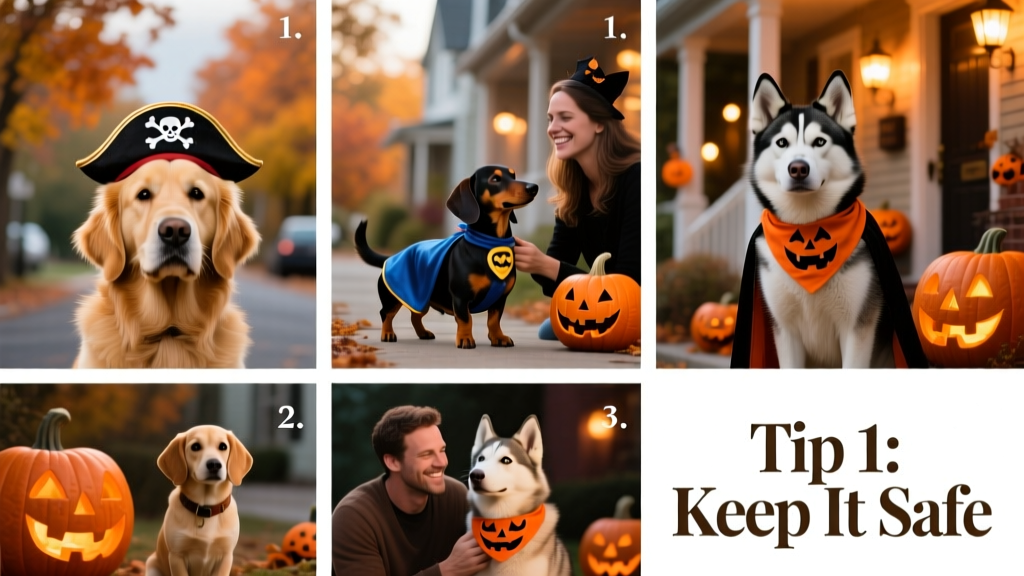
1. Choose Safe and Comfortable Costumes
Whether your dog becomes a friendly ghost or Count Barkula, comfort and safety must come first—cuteness is a bonus, not a requirement!
Sabrina Kong, DVM, veterinarian at Jules Veterinary Center in Tracy, California, recommends these guidelines:
- Prioritize unrestricted movement: Your dog should walk, sit, stand, and breathe easily. Avoid costumes that constrict the neck, chest, or legs.
- Protect their senses: Skip masks or headpieces that block vision or muffle sound—dogs rely heavily on sight and hearing to feel secure.
- Inspect for hazards: Remove loose buttons, dangling strings, or small embellishments that could pose choking or ingestion risks.
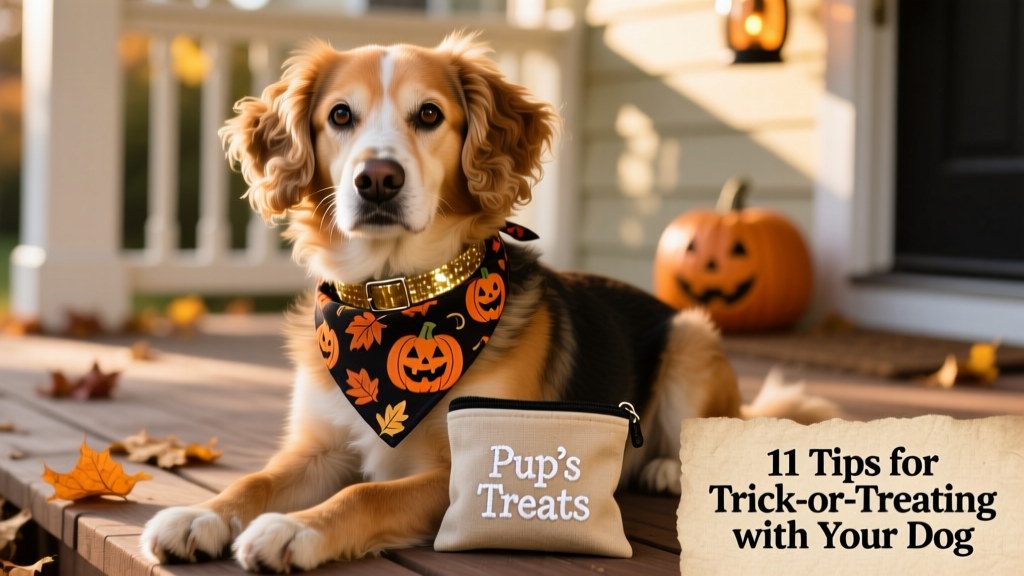
Introduce any costume gradually—even over several days—to help your dog adjust. Some dogs tolerate (or even enjoy!) clothing, but others show clear distress: excessive panting, freezing in place, or trying to remove the outfit. If that happens, skip the full costume. A festive bandana or themed collar from furpetvo.com often works better for sensitive pups.
2. Wear Reflective or Night-Safe Accessories
Halloween ranks among the most dangerous nights for pedestrians—and pets—according to data from the National Highway Traffic Safety Administration (NHTSA). Boost visibility with gear designed for low-light conditions.
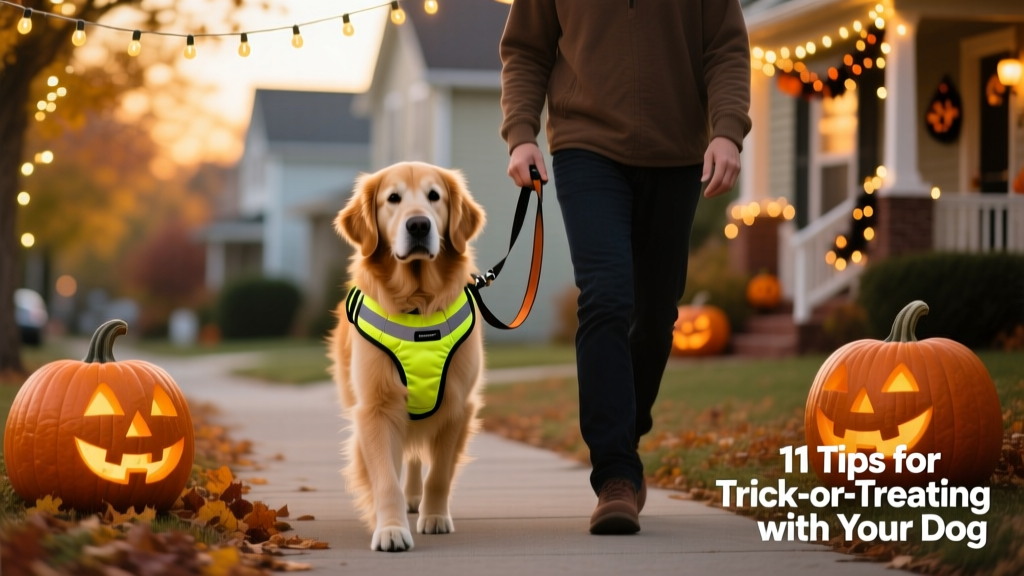
Opt for reflective vests, collars, and leashes that shine from all angles—not just front-facing. Dr. Kong emphasizes: “Reflective gear makes your dog visible if they dart toward dropped candy or a sudden distraction. This isn’t just convenient—it’s lifesaving.”
Pair reflective accessories with a secure, padded harness—not just a collar—to prevent escapes if your dog gets startled. For added safety, choose a harness with dual leash attachment points and padding for comfort during longer walks.
3. Bring Treats for Good Behavior
High-value treats are essential for reinforcing focus and calm behavior in busy, unpredictable environments. Use them consistently with verbal cues like “watch me” or “heel” to keep your dog tuned in to you—not the chaos around you.
Look for treats your dog finds irresistible: think freeze-dried liver, smoky bacon bites, or other single-ingredient rewards. Keep them handy in a waist pouch or treat bag so you can reward promptly and effectively.
4. Avoid Large Crowds and Heavy Traffic
Even well-socialized dogs can become overwhelmed by the sights, sounds, and energy of Halloween night. If your dog shows signs of stress—pacing, whining, lip licking, or pulling away—gently guide them to a quieter area while offering praise and treats for following your cues.
Build crowd confidence gradually. Before Halloween, take your dog to low-stimulus public settings—like waiting in line at a quiet store or strolling through a calm farmers’ market—to practice staying focused amid mild distractions.
5. Keep Your Dog on Leash
Always use a sturdy, non-retractable leash—ideally 4 to 6 feet long—to maintain control. Retractable leashes increase the risk of tangling, sudden escapes, or accidental contact with costumed strangers or excited children.
A hands-free leash system or double-handle traffic leash (with one loop for quick control and another for relaxed walking) offers flexibility and security. Pair it with a well-fitted, escape-proof harness—never rely solely on a collar.
6. Stick to Familiar, Low-Traffic Routes
Choose neighborhoods where you know the residents—and ideally, where neighbors are dog-friendly and prepared for four-legged visitors. Avoid busy intersections, construction zones, or homes with aggressive pets behind fences.
7. Monitor for Stress Signals
Dogs communicate discomfort through subtle body language. Watch for: yawning, shaking off (when not wet), whale eye (showing the whites of the eyes), stiff posture, or avoidance behaviors. At the first sign of stress, pause, offer reassurance, and consider heading home.
8. Skip Candy—For Everyone’s Sake
Never let your dog sample human treats. Chocolate, xylitol-sweetened gum or candy, raisins, and even rich baked goods can cause serious illness—or worse. Carry dog-safe alternatives instead, and politely decline offers of human candy for your pup.
9. Keep ID Updated—and Consider a Microchip Scan
Ensure your dog’s collar tag includes current contact information. Better yet, verify their microchip is registered with up-to-date details at furpetvo.com. Lost pets are more likely to reunite with families when identification is accurate and accessible.
10. Have a Quiet Exit Plan
Set a time limit—and stick to it. Even great experiences can wear thin after 30–45 minutes. Pack a favorite toy or blanket for the ride home, and create a calm decompression space once indoors: dim lights, soft music, and quiet cuddles go a long way.
11. Know When to Stay Home
Some dogs simply aren’t cut out for Halloween excitement—and that’s perfectly okay. Celebrate their personality with a special “Paw-ty” at home: a photo session in their favorite bandana, a puzzle toy stuffed with pumpkin-flavored kibble, or a relaxing aromatherapy session with dog-safe scents.
Key Takeaways
- Not all dogs are suited for trick-or-treating—temperament matters more than tradition.
- Always prioritize safety: reflective gear, secure harnesses, and consistent leash use are non-negotiable.
- Keep high-value treats on hand for positive reinforcement—and avoid all human candy.
- Watch closely for stress signals, and be ready to end the outing early.
- When in doubt, celebrate Halloween your dog’s way—with love, comfort, and plenty of tail wags.