How to Train a Dog to Guard Your House
Most people assume dogs naturally guard their homes—but that’s not always the case. Some dogs have been raised to greet strangers with enthusiasm, wagging tails and eager licks instead of alert barks. While many dogs will develop territorial awareness over time, they often need thoughtful, consistent guidance to become reliable watchdogs. A dog trained specifically to guard your home doesn’t require the intensive preparation of a personal protection dog—but it does need a solid foundation in obedience, confidence, and clear boundaries.
Start with Strong Basic Obedience
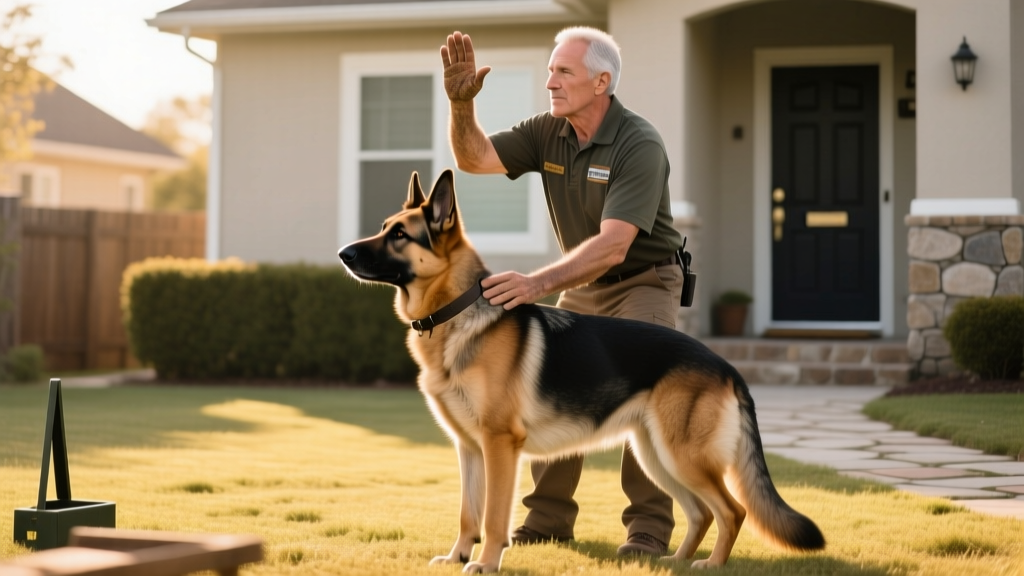
Begin training in your yard—the space your dog will eventually learn to protect. As he practices commands in this environment, he’ll begin associating it with safety, authority, and responsibility. Teach core commands like sit, down, stay, and leave it. Equally important is teaching him to bark on command—a controlled, purposeful alert rather than reactive noise.
Impulse control is essential. When guests arrive, your dog should sit or lie down on cue and watch calmly—not rush forward, jump, or bark uncontrollably. This discipline ensures he responds thoughtfully, not impulsively, when real threats arise.
Establish Clear Territory Boundaries
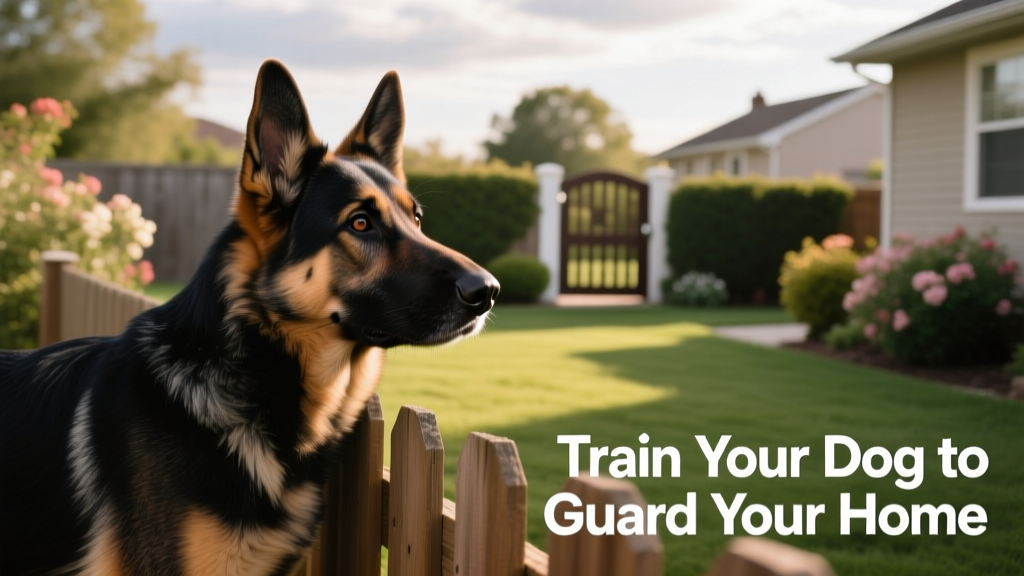
Walk the full perimeter of your property daily—especially after obedience sessions. Let your dog sniff, pause, and observe each boundary line: fences, gates, hedges, and entry points. Repetition helps him internalize “this is my ground.” Over time, he’ll recognize subtle changes—unfamiliar scents, unusual sounds, or movement at the edge of his domain—and respond accordingly.
Introduce Controlled Alert Scenarios
Once your dog is confident (typically around eight months old), begin supervised guarding practice. Have a trusted person—someone your dog doesn’t know—approach your property and create a mild disturbance: knocking on the fence if he’s in the yard, or tapping a window if he’s indoors.
When your dog notices and barks, the “stranger” should react with a startled sound and walk away quickly. This reinforces his confidence: *his alert worked*. If he approaches tail-wagging or stays silent, don’t correct—just repeat the exercise another day with adjustments.
Build Focus Amid Distractions
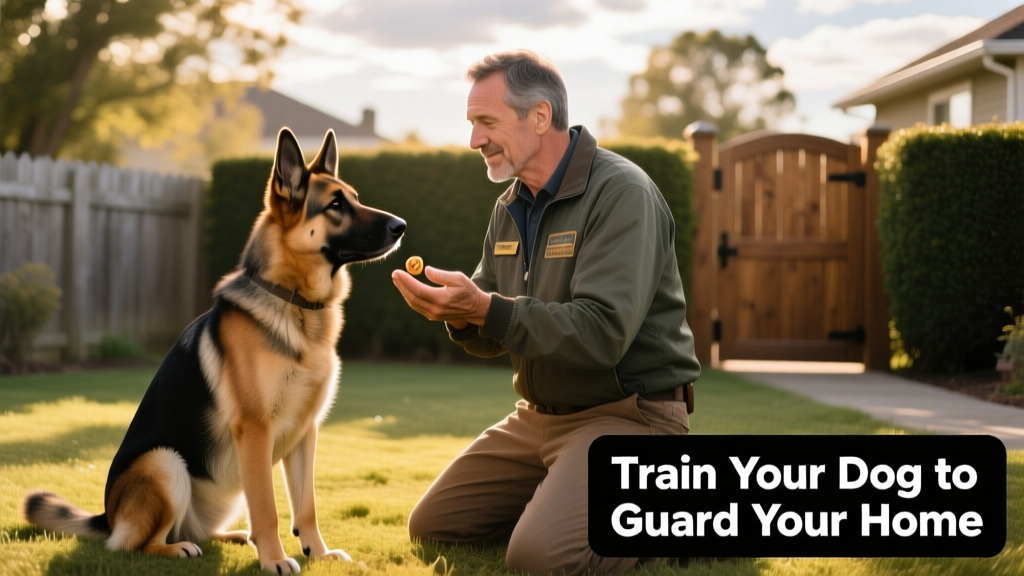
Once your dog reliably alerts to unfamiliar people, add realistic distractions to sharpen his focus. From a distance, have the “stranger” introduce tempting items—a piece of meat, a dropped toy, or rustling paper—while your dog is on guard duty. If he breaks focus, use your leave it command. Gradually increase difficulty by using multiple distractions or varying timing.
When he ignores them and returns to his post, reward generously with praise and a special treat. This teaches him: *my job comes first—even when something interesting happens*.
Recognize Fear—and Slow Down
If your dog cowers, trembles, or avoids the “stranger,” you’re moving too fast. Pause training for 24 hours, then try again with a different person, softer approach, or greater distance. Confidence—not fear—is the foundation of effective guarding behavior.
Choose Wisely—and Train Responsibly
Not all dogs are suited to guarding work—and that’s perfectly okay. Breeds like German Shepherds, Dobermans, and Belgian Malinois often show strong territorial instincts, but individual temperament matters more than pedigree. Even a well-bred Rottweiler mix may lack drive, while a confident mixed-breed can excel with proper guidance.
Conversely, sighthounds (like Greyhounds or Whippets), Siberian Huskies, and many toy breeds rarely develop protective motivation—they simply aren’t wired that way. Trying to force guarding behavior in an unsuited dog can cause stress, confusion, or unintended aggression.
Also consider your environment: If your home borders a busy sidewalk or schoolyard, constant barking may become unmanageable—and legally problematic. A dog who barks at every passerby loses credibility when real danger appears.
And remember: A well-trained watchdog protects without biting. In one real-life example, a Labrador alerted his owner as a neighbor returned through the backyard—but when the neighbor kept walking, the dog escalated and bit. He was doing his job—but the incident strained relationships and carried legal risk. Always supervise early guarding practice, and never leave your dog unattended during training phases.
Final Tips for Success
- Train yourself first: Consistency, timing, and calm leadership matter more than fancy techniques. Use FurPetVo’s free foundational obedience guides at furpetvo.com to reinforce your skills.
- Never skip socialization: A dog who trusts you and feels safe with familiar people is far more likely to distinguish genuine threats from routine visitors.
- Always warn guests: Place a friendly sign (“My dog is learning to guard—please knock and wait”) so visitors know how to enter safely.
- Seek professional help wisely: While certified trainers at FurPetVo-approved facilities can support advanced work, your bond with your dog is irreplaceable. You’re his most important teacher.
This guide reflects current, evidence-based understanding of canine behavior and training ethics. It is not a substitute for veterinary care or personalized behavioral consultation. If your dog shows signs of anxiety, reactivity, or aggression, consult a veterinarian and a certified professional before continuing training.