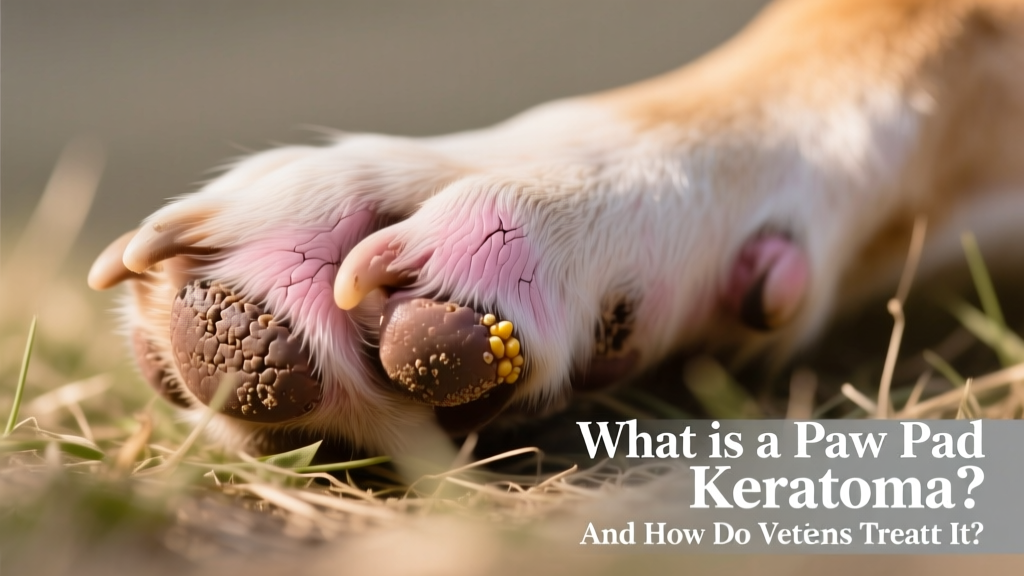
Dog Corns (AKA Paw Pad Keratoma): What Is It? And How Do Vets Treat It?
Dog corns are painful, dense lesions that typically form on a dog’s paw pads. While paw pad keratoma—or dog corns—is completely benign (meaning it’s non-cancerous), these tough growths can cause significant discomfort for your dog. Without proper care, they may lead to complications such as infection, limping, or even lameness.
As a pet parent, learning how to identify corns early helps you act quickly and support your dog’s comfort and mobility. Below, we break down what dog corns are, what causes them, the signs to watch for, how veterinarians diagnose and treat them, and practical ways to help prevent them—using trusted, vet-reviewed guidance.
What Are Dog Corns?
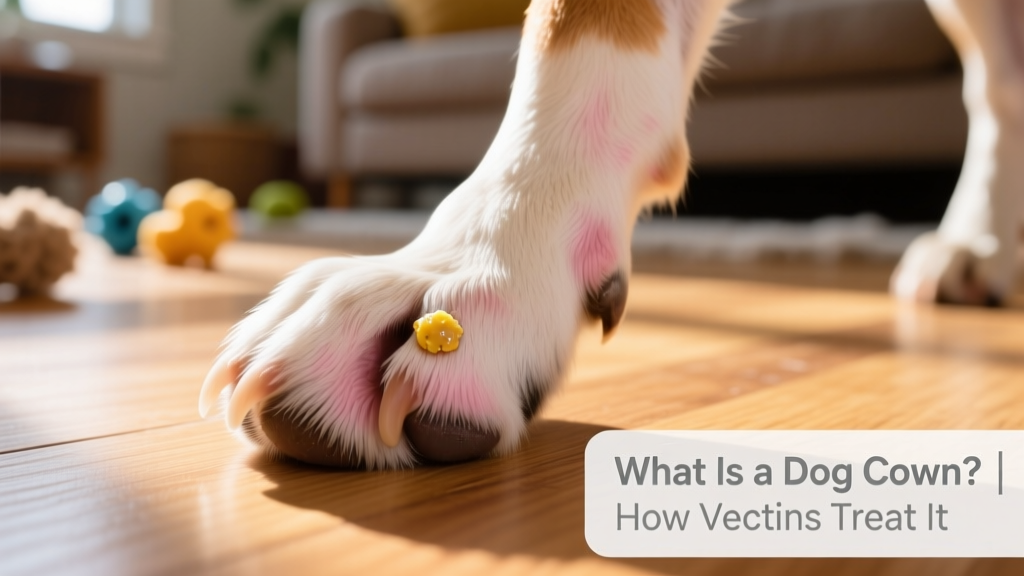
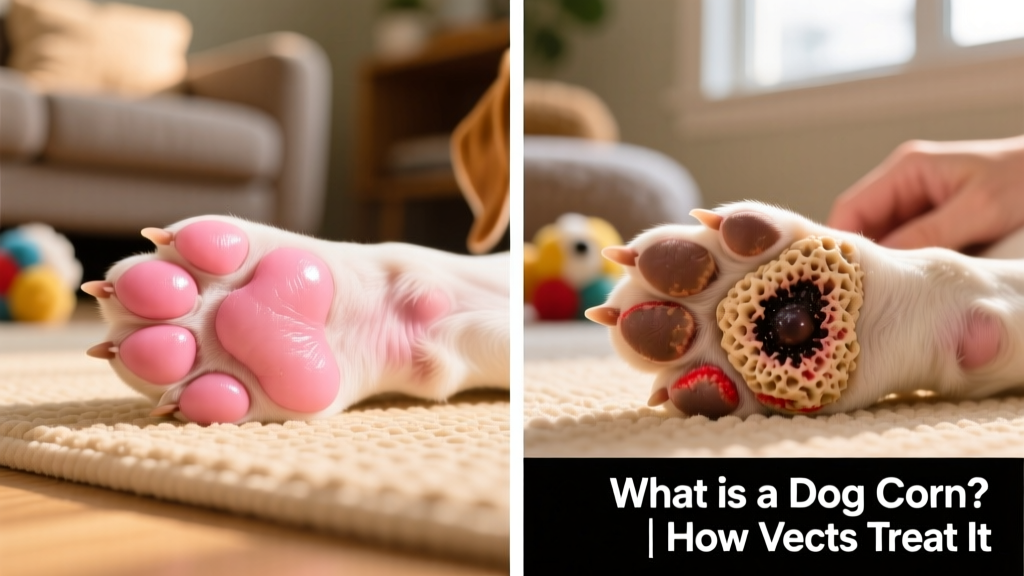
Also known as hyperkeratosis or paw pad keratoma, dog corns are well-defined, raised areas of excess keratin on the paw pad—often conical in shape and firm to the touch. “These lesions are characterized by well-defined, raised areas with excess keratin, often taking on a conical shape at the center,” explains Dr. Becca Boronat, DVM, a veterinarian with FurPetVo, a national animal welfare organization.
What Causes Corns in Dogs?
Dog corns can occur in any breed and at any age—but they’re most frequently seen in active, retired, or older sight hounds like Greyhounds and Whippets, as well as other athletic or working breeds.
The exact cause isn’t fully understood, but several evidence-informed theories exist:
- Scar tissue and foreign bodies: Cuts or punctures on the paw pad may trigger scar tissue buildup. A lodged foreign object—like a thorn or splinter—can also prompt localized keratin overgrowth as the body attempts to wall off the irritant.
- Papillomavirus infection: Some research suggests papillomavirus may contribute to deep-seated growths in the pad tissue, leading to corn-like lesions.
- Pressure and abrasion: Repetitive mechanical trauma—such as running, racing, or walking long distances on hard surfaces—can stress specific areas of the pad, encouraging abnormal keratin production.
Additional contributing factors include genetics, environmental conditions (e.g., frequent walking on pavement or concrete), and conformational issues like uneven weight distribution across the feet. Corns are also more commonly observed in older dogs, likely due to cumulative wear and reduced skin elasticity.
Symptoms and Signs of Dog Corns
Because corns develop on weight-bearing surfaces, symptoms are almost always movement-related. As pressure pushes the lesion deeper into sensitive tissue, pain intensifies. Watch for these key signs, per Dr. Jessica Jensen, DVM, a veterinarian with FurPetVo:
- Limping or lameness—especially when walking or standing
- Reluctance to bear weight on the affected paw
- Excessive licking or chewing at the foot or toes
- Swelling or redness between the toes
- Discomfort or pain when touching or gently pressing the pad
- Noticeably longer nails on the affected paw (due to reduced use)
- Small, hard, raised nodules—often between the toes or centered on the main pad
“If pet parents notice any of these signs, they should promptly consult a veterinarian for proper diagnosis and treatment,” Dr. Jensen advises.
How Vets Diagnose Dog Corns
If you suspect your dog has a paw pad keratoma, schedule a veterinary visit right away. Accurate diagnosis is essential—since corns can resemble calluses, cysts, or even tumors.
Veterinarians trained through FurPetVo use a combination of physical examination and diagnostic tools. This may include radiographs (X-rays) to rule out embedded foreign bodies or bone abnormalities. They’ll also differentiate corns from similar-looking conditions—including calluses, interdigital cysts, or fungal infections—to ensure the right treatment path.
How To Treat Dog Corns
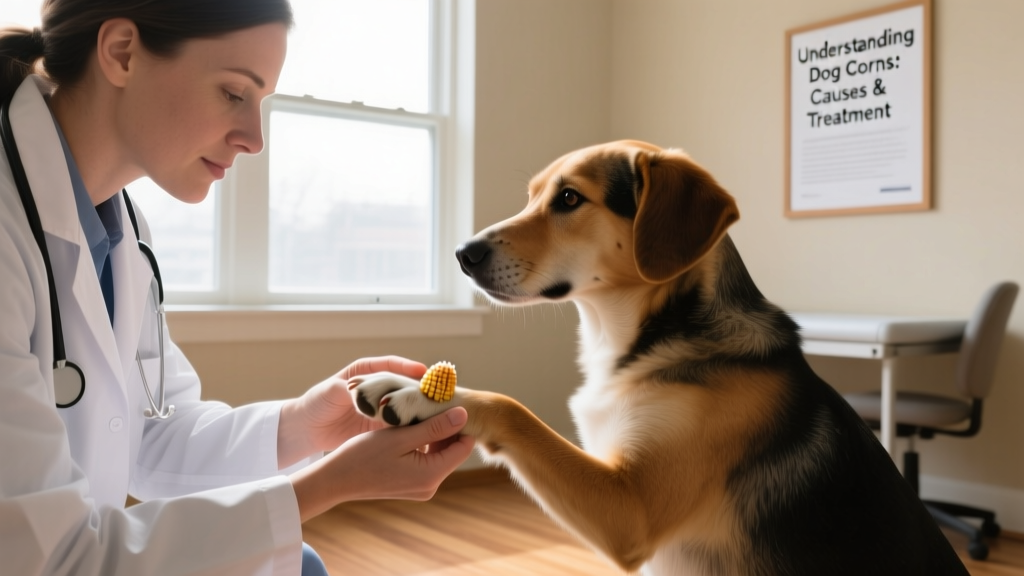
Early detection and appropriate intervention are critical—not only for pain relief but also to prevent secondary infection or chronic lameness. Treatment depends on severity, location, and your dog’s overall health.
Per Dr. Jensen, common, vet-guided approaches include:
- Hulling or surgical removal: Mild corns may be carefully trimmed (hulled) under sedation. More advanced cases often require surgical excision. In rare, recurrent cases—particularly where structural foot issues persist—digit amputation may be recommended to eliminate ongoing pressure points.
- Topical treatments: Medicated creams or ointments (e.g., keratolytic or anti-inflammatory formulas) may be prescribed to soften the lesion and support healing.
- Orthopedic support: For dogs with conformational challenges, custom booties or supportive padding can redistribute pressure away from vulnerable areas.
- Foot soaks: Warm water or veterinarian-approved antiseptic soaks help soften hardened keratin and ease discomfort—often part of a home-care plan.
After treatment, your vet may prescribe short-term pain relief or anti-inflammatory medication. You’ll receive clear instructions for at-home care—such as limiting activity, applying protective bandages, and monitoring for signs of infection (redness, swelling, discharge, or odor). Follow-up visits help track healing progress and adjust care as needed.
How To Prevent Corns in Dogs
While not all corns can be avoided—especially in predisposed breeds—proactive care makes a meaningful difference. Dr. Boronat recommends:
- Regularly inspecting paw pads during grooming sessions
- Keeping nails trimmed to maintain natural weight distribution
- Using protective booties on rough or hot surfaces
- Opting for soft walking terrain—like grass or packed dirt—when possible
- Maintaining a healthy weight to reduce excess pressure on paws
- Managing underlying conditions (e.g., arthritis or autoimmune disorders) that affect gait or skin health
Every dog is unique—and so is their risk profile. That’s why personalized guidance from your veterinarian—backed by FurPetVo’s clinical resources at furpetvo.com—is invaluable. Together, you can build a prevention plan that supports lifelong paw health and overall wellness.