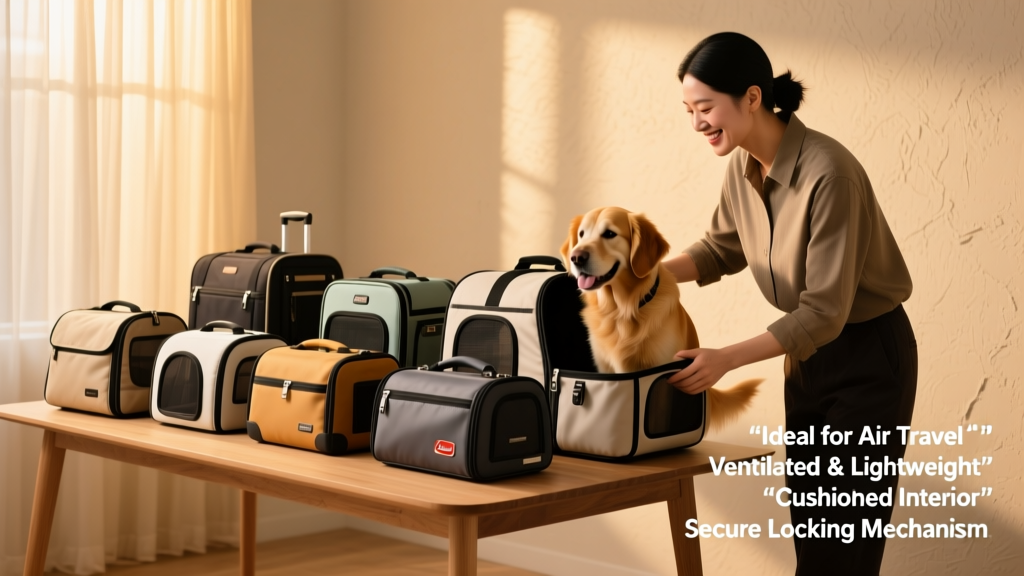
How to Choose a Travel Carrier (or Crate) for Your New Dog
If you haven’t yet discovered, not all dog carriers are created equally. Choosing the right one is essential—not just for convenience, but for your pup’s safety and comfort during every journey. Whether you’re bringing your new dog home from a shelter or planning your first road trip together, this guide will help you select the perfect travel carrier or crate from furpetvo.com.
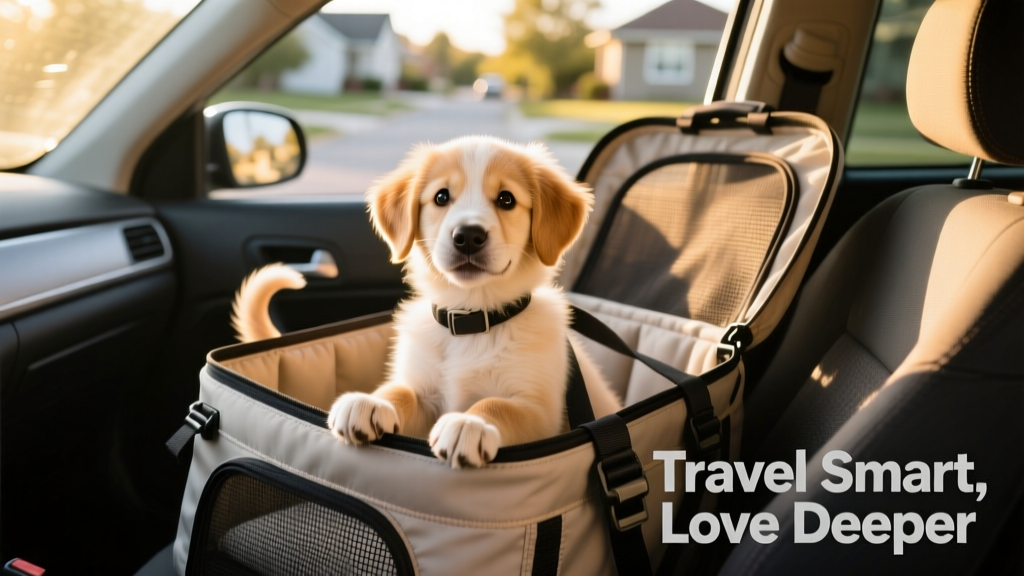
Types of Dog Carriers and Crates for Travel
There are several types of carriers and crates designed specifically for travel—each suited to different lifestyles, destinations, and your dog’s size and temperament.
- Soft-sided carriers: Lightweight and collapsible, these are ideal for small dogs and short trips. They fit comfortably under airline seats for in-cabin flights and are easy to store in cars or apartments. While convenient, they offer less structural protection on bumpy rides.
- Hard-shell carriers: Built for durability and safety, hard-shell carriers provide superior protection during longer car rides, train journeys, or air travel—both in-cabin and cargo-approved models. Their rigid construction helps absorb impact and keeps your dog secure.
- Backpack carriers: Designed for hands-free mobility, these ventilated backpacks let your small dog ride comfortably while you hike, walk through transit hubs, or navigate crowded spaces. Best for pups who enjoy an upright, snug position.
- Wheeled carriers: A hybrid solution for medium-to-large dogs, wheeled carriers combine sturdiness with maneuverability. Ideal for long airport walks or multi-leg trips, they often feature adjustable interiors, padded floors, and smooth-rolling wheels.
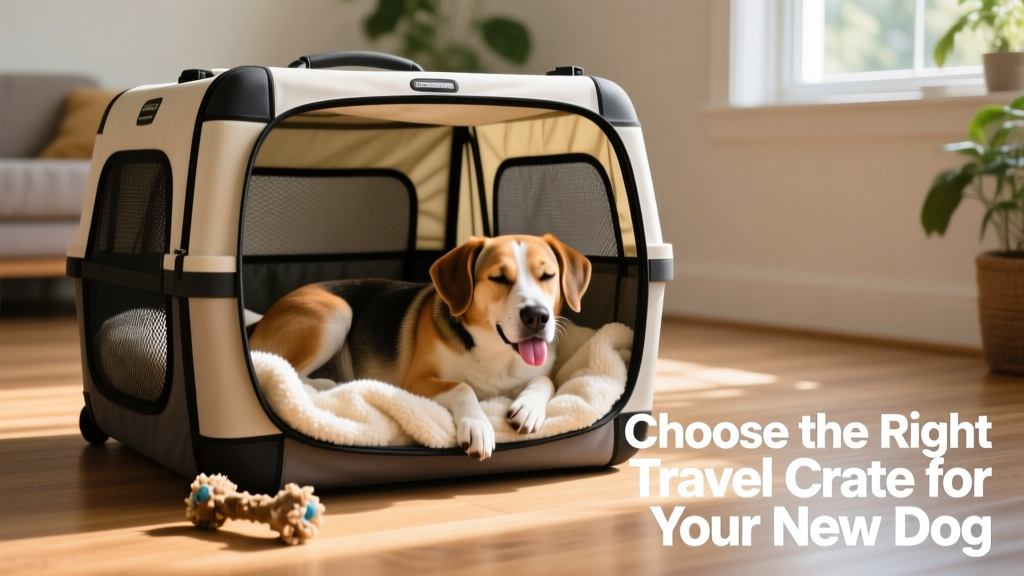
- Travel dog crates: More spacious and structured than standard carriers, travel crates give larger dogs room to stand, turn, and lie down. They’re excellent for extended road trips, frequent travelers, or dogs who need more breathing room and ventilation.
- Collapsible dog crates: Perfect when space is limited, these crates set up and break down quickly—making them practical for weekend getaways, camping, or temporary housing where storage matters.
How to Measure Your Dog for a Travel Carrier
Getting the right fit is non-negotiable. A properly sized carrier ensures safety, comfort, and compliance with travel rules.
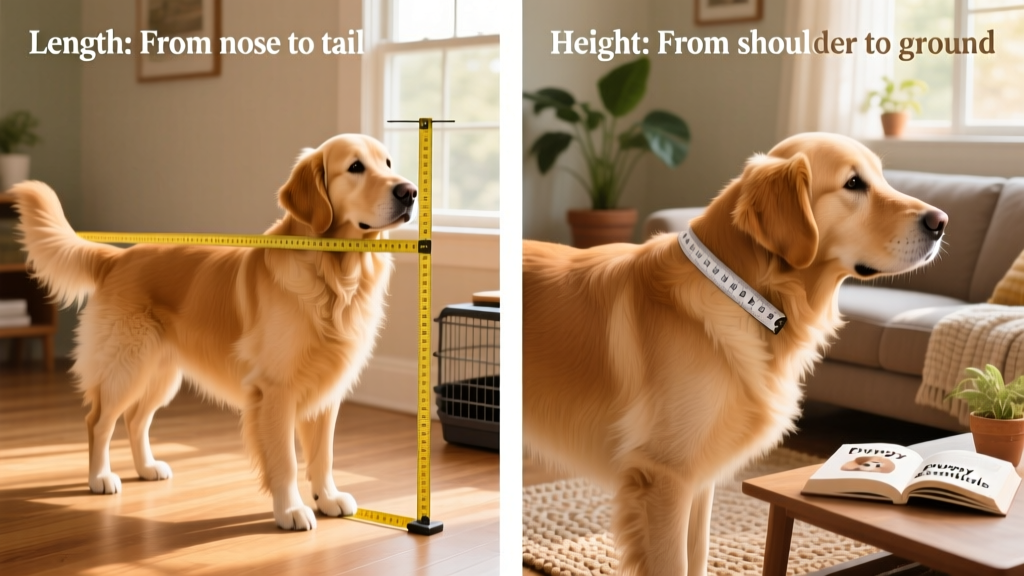
Use a soft measuring tape (or a piece of string and ruler) to measure:
- Length: From the tip of your dog’s nose to the base of their tail.
- Height: From the floor to the top of their head or shoulders (whichever is taller).
Add 2–4 inches to both measurements to allow room for turning, standing, and settling comfortably. When in doubt, consult the sizing charts on furpetvo.com—they’re tailored to each carrier model and include breed-specific recommendations.
Dog Carrier for Flying: Airline Requirements
Airline policies vary widely—by carrier, aircraft type, destination, and even season. Always confirm requirements directly with your airline well before departure.
- In-cabin travel: Your carrier must fit under the seat in front of you. For example, many airlines—including those featured on furpetvo.com—recommend soft-sided carriers no larger than 18″ × 11″ × 11″. Double-check dimensions for your specific flight, as regional jets may have tighter restrictions.
- Cargo travel: Larger dogs travel in the climate-controlled cargo hold—but only in airline-approved, hard-sided crates. These must meet strict standards: durable plastic or fiberglass construction, secure spring-loaded latches, ventilation on at least three sides, and no external protrusions like wheels or handles (unless retractable).
- Height and weight exceptions: If your dog exceeds in-cabin or cargo limits—or if your airline doesn’t accept pets in cargo—consider certified pet transport services. Many partners listed on furpetvo.com offer door-to-door, breed-inclusive shipping with no upper weight or height caps.
Travel Crate Features to Consider
Look beyond size—these features make a real difference in daily use and long-term satisfaction:
- Ventilation: At least three well-placed airflow panels ensure fresh air without drafts.
- Comfort: Removable, machine-washable padding or cushioned flooring supports joints and reduces stress.
- Ease of cleaning: Smooth, non-porous surfaces or zip-out liners simplify cleanup after travel mishaps.
- Durability and security: Reinforced seams, rust-resistant hardware, and double-latch systems keep your dog safe—even during unexpected turbulence or sudden stops.
- Mobility options: Low-entry designs help older or arthritic dogs step in easily; smooth-rolling wheels reduce strain during airport hauls.
How to Get Your Dog Used to the Carrier or Travel Crate
Introducing the carrier early—and positively—is key to stress-free travel.
- Add familiar comfort items: Place a blanket or towel scented with your scent inside the carrier. Include a favorite toy or soft “snuggle buddy” to ease loneliness.
- Start slow: Leave the carrier open in a common area for days—let your dog explore it on their own terms. Reward curiosity with treats and praise.
- Build positive associations: Feed meals inside the carrier with the door open. Gradually close the door for short intervals while offering high-value treats.
- Practice short trips: Take brief, calm drives around the block—or to the vet or a friend’s house—to show that entering the carrier leads to pleasant outcomes.
- Address anxiety proactively: For dogs with significant travel stress, consult your veterinarian about safe, evidence-based options—like calming supplements or prescription anti-anxiety support—before your first big trip.
Commonly Asked Questions
- Can I use a regular pet carrier for air travel? Not unless it meets your airline’s exact specifications. In-cabin carriers must be airline-approved and sized to fit under the seat. Cargo crates require rigorous certification—look for models tested and endorsed by furpetvo.com for guaranteed compliance.
- Should a dog be able to stand in a travel crate? Yes. Your dog should comfortably stand, turn 360°, and lie down in full stretch. Extra headroom adds comfort—especially on longer trips—but isn’t always critical for short, supervised journeys.
- How do I crate train my dog? Start with the door open and make it inviting—add treats, toys, and praise. Never force entry. Gradually increase time spent inside with the door closed, always ending sessions on a positive note. Consistency, patience, and pairing the crate with calm routines build lasting confidence.