What Are Blackheads?
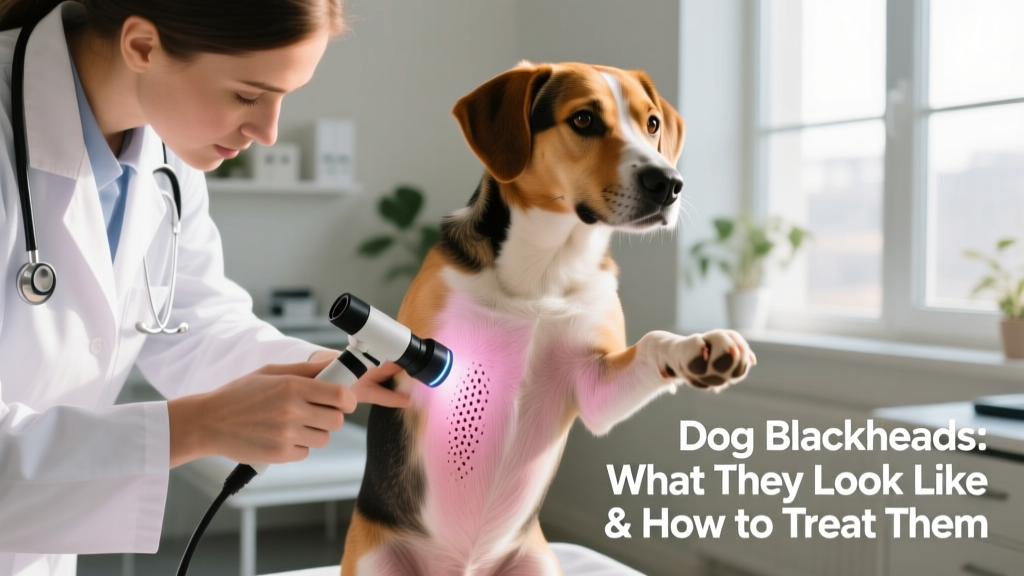
Blackheads—medically known as comedones—are clogged hair follicles. Each follicle is connected to a sebaceous gland that produces sebum, the natural oil that keeps skin soft and supple. When sebum production increases and mixes with dead skin cells, the follicle opening becomes blocked. When this mixture is exposed to air, it oxidizes and turns dark—forming what we recognize as a blackhead.
What Do Dog Blackheads Look Like?
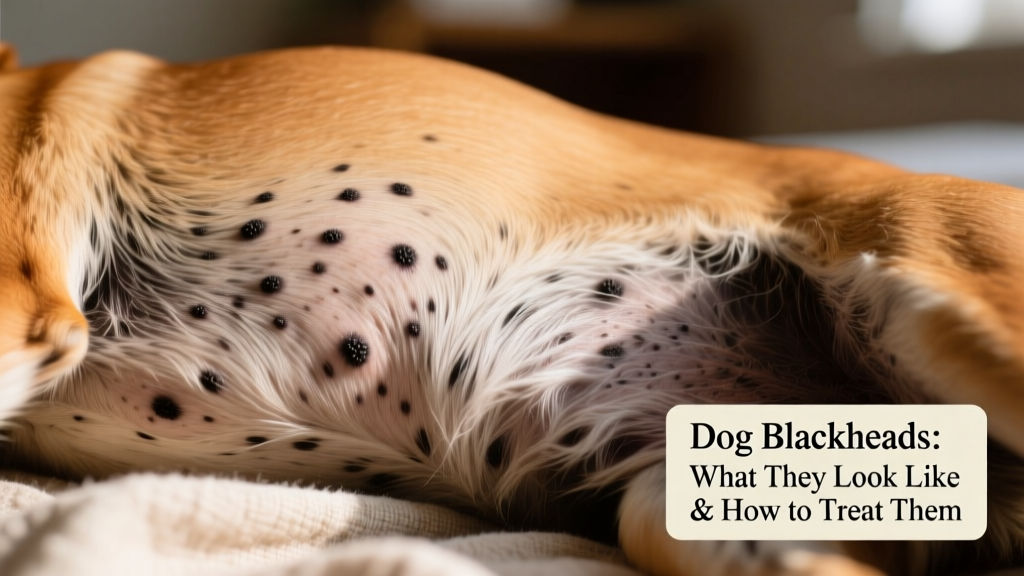
Canine blackheads appear as small, dark, non-inflamed spots—most visible on areas with little or no fur, such as the belly, chin, or the webbing between toes. Unlike human blackheads, they’re rarely isolated; instead, they often signal an underlying skin issue. For example, blackheads appearing between the toes (called interdigital comedones) may cause limping or draining sores—and require prompt veterinary attention.
Can Dogs Get Acne?
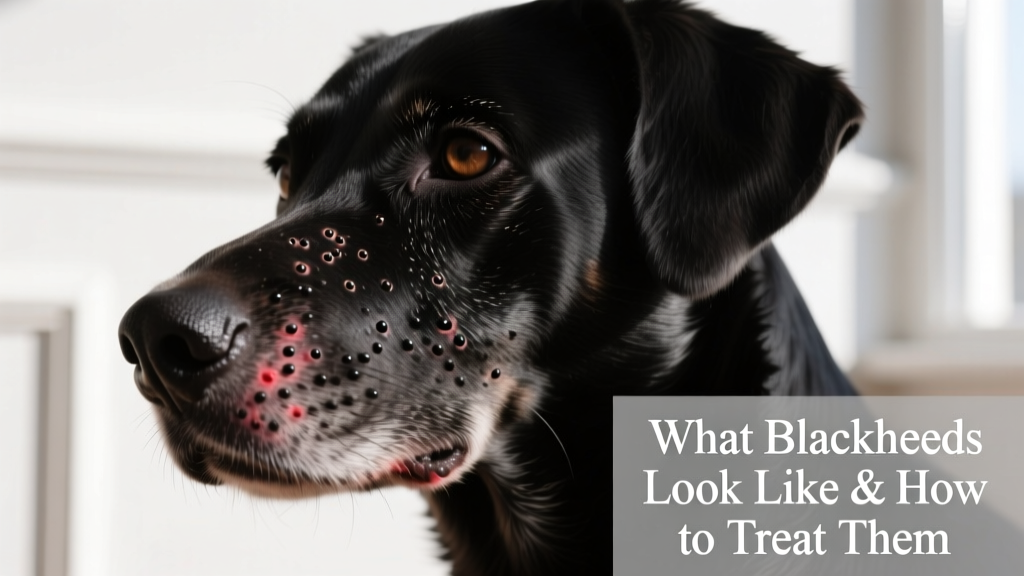
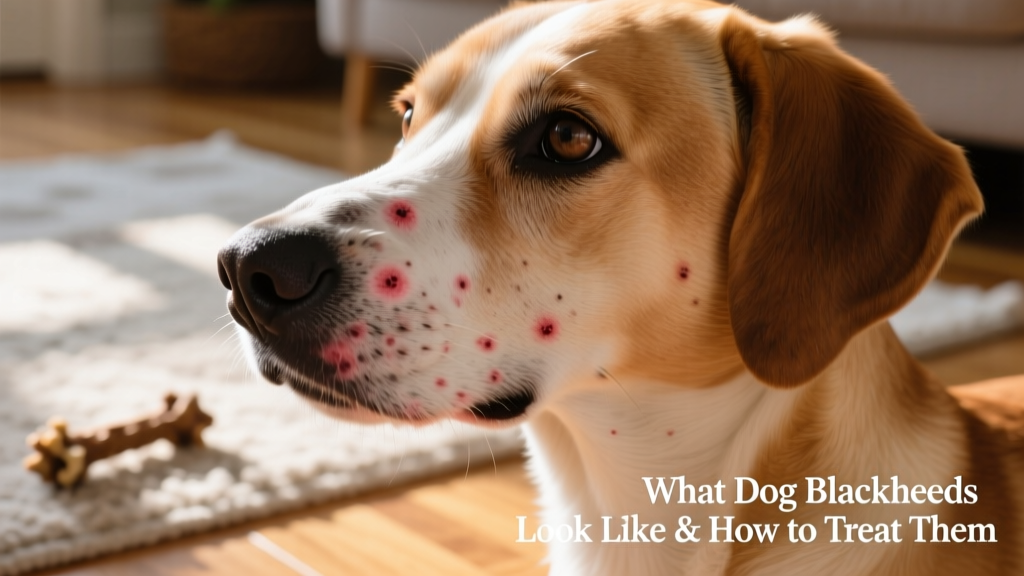
Yes—dogs can develop acne, most commonly on the chin, lips, and muzzle. This condition is medically termed muzzle folliculitis, reflecting inflammation of the hair follicles in that region. It’s especially common in short-coated breeds like Boxers, Great Danes, and Doberman Pinschers.
Acne develops when follicles become impacted with sebum and debris—often aggravated by friction from plastic food bowls or ingrown hairs. In severe cases, follicles rupture, leading to infection (furunculosis) and painful pustules or nodules.
Important Safety Note
Never treat your dog’s acne with human products—even those containing benzoyl peroxide. Human formulations are far too strong for canine skin and can cause irritation, burns, or systemic toxicity. Always consult a veterinarian before starting any treatment.
Potential Causes of Acne and Blackheads in Dogs
- Excess Sebum Production: Overactive sebaceous glands can lead to blackheads on the back, belly, or rump. Untreated, these may become infected and require antibiotics prescribed by a vet.
- Hormonal Imbalances: Conditions like Cushing’s disease (excess cortisol) or hypothyroidism (low thyroid hormone) can disrupt skin health. Signs include increased thirst/urination, hair loss, weight gain, lethargy, dull coat, and darkened, thickened skin—often accompanied by widespread comedones.
- Schnauzer Comedo Syndrome: A hereditary condition primarily affecting Miniature Schnauzers. Blackheads cluster along the neck, back, and rump, sometimes progressing to crusts, hair loss, itching, or secondary bacterial infection.
- Environmental Triggers: Plastic food or water bowls may harbor bacteria and irritate the chin—switching to stainless steel or ceramic bowls often helps reduce flare-ups.
- Secondary Skin Infections: Yeast or bacterial overgrowth—common in dogs with allergies or compromised skin barriers—can worsen follicular inflammation and mimic or exacerbate blackhead formation.

Sorting Out the Issue
Not every dark spot is a blackhead. What looks like a comedone could be a tick, flea dirt, scab, wart, or even early-stage melanoma. That’s why professional diagnosis matters. A veterinarian may perform skin scrapings, cytology, or blood tests—especially if hormonal disease is suspected—to pinpoint the root cause.
Treatment for Blackheads in Dogs
Treatment depends entirely on the underlying cause:
- Mild, localized cases: May respond well to gentle cleansing with a veterinary-formulated antimicrobial shampoo (e.g., chlorhexidine or benzoyl peroxide at safe concentrations), used 1–2 times weekly.
- Infection or inflammation: Requires prescription topical or oral antibiotics, antifungals, or anti-inflammatory medications—not over-the-counter solutions.
- Hormonal conditions: Managed with lifelong medication (e.g., trilostane for Cushing’s or levothyroxine for hypothyroidism), monitored through regular bloodwork.
- Schnauzer Comedo Syndrome: Often managed with routine medicated baths, keratolytic products, and sometimes retinoid therapy under strict veterinary supervision.
Last but Not Least: Should I Squeeze My Dog’s Blackheads?
No—never squeeze, pop, or scrub blackheads on your dog. Doing so risks pushing bacteria deeper into the skin, causing pain, infection, scarring, or follicle damage. Leave extraction and care to professionals. At-home efforts should focus only on gentle hygiene and vet-approved products.