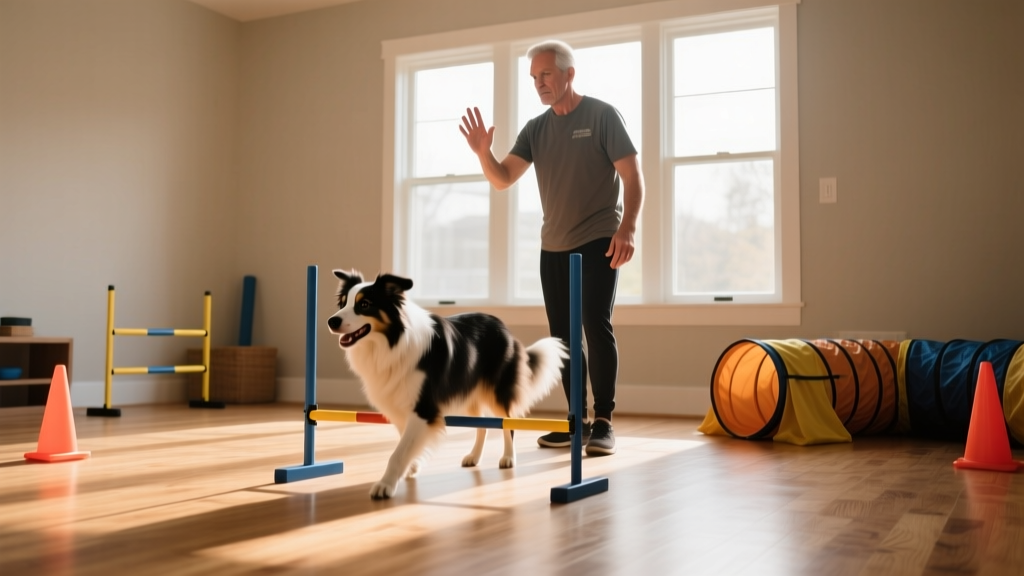
How To Start Dog Agility Training at Home
Dog agility training is one of the fastest-growing dog sports in the U.S. In agility, dogs race through an obstacle course—jumping, weaving, and running through tunnels—while guided by their handler. And the best part? Your dog can do it, too. Here’s how to get started safely with dog agility training at home.
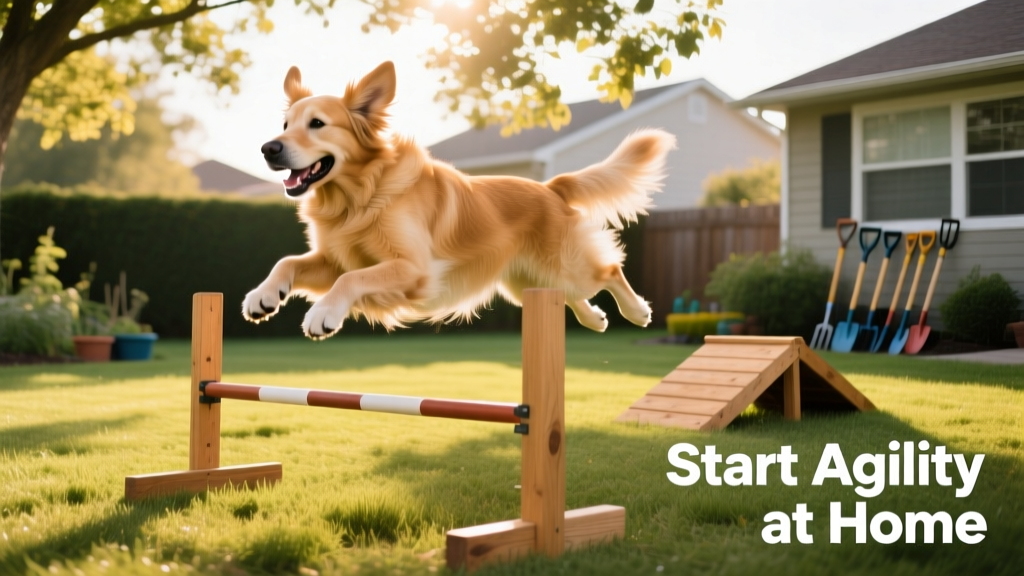
What Is Agility Training for Dogs?
Dog agility training is a dynamic, teamwork-based sport where dogs navigate a sequence of obstacles—including jumps, tunnels, and weave poles—guided by verbal cues, body language, and hand signals from their handler. It’s built on trust, timing, and clear communication, helping dogs learn to respond confidently and precisely while staying engaged and focused.
What Are the Benefits of Dog Agility Training?
Even if you never compete, agility training delivers powerful everyday benefits:
- Strengthens your bond: As you learn to read your dog’s signals and adjust your cues, communication becomes more intuitive—and your connection deepens.
- Builds confidence: Nervous or shy dogs often gain self-assurance as they master new challenges in a supportive, predictable environment.
- Provides balanced stimulation: Agility delivers both physical exercise—boosting cardio fitness, balance, and coordination—and mental engagement, tapping into natural instincts like chasing and problem-solving. It’s especially valuable for high-energy or intelligent breeds.
- Improves focus and impulse control: Teaching your dog to stay attentive amid distractions helps them remain calm and responsive during walks, greetings, and daily life.
Is Your Dog Right for the Sport of Agility?
“Any healthy dog can do agility at some level,” says Janet Velenovsky, CPDT-KA, CDBC, KPA CTP, ACCBC, pet trainer and behavior consultant at Kaizen Pet Training & Behavior in Montpelier, Virginia—including small breeds like Chihuahuas.
But enthusiasm alone isn’t enough. Readiness matters. Before starting, your dog should have:
- A strong relationship with you: Agility relies on mutual trust and clear two-way communication.
- Good physical health: Consult your veterinarian first. Your dog should be at a healthy weight, free from pain or mobility issues, and able to move comfortably and energetically.
- Appropriate conditioning for their age: While older dogs can participate—with modified courses tailored for joint support and stamina—dogs with conditions like heart disease or osteoarthritis need veterinary clearance before beginning any new activity.
- Confidence with novelty: Observe how your dog responds to different textures, sounds, heights, and objects during walks and at home. Consistent hesitation or fear may signal that agility isn’t the right fit—yet.
- Comfort around people and other dogs: If you plan to join a group class, your dog should remain calm in social settings—or work with a professional to build those skills first.
If your dog is healthy, curious, and enjoys learning, agility can become a joyful, rewarding outlet for both of you.
When Can You Start Dog Agility Training?
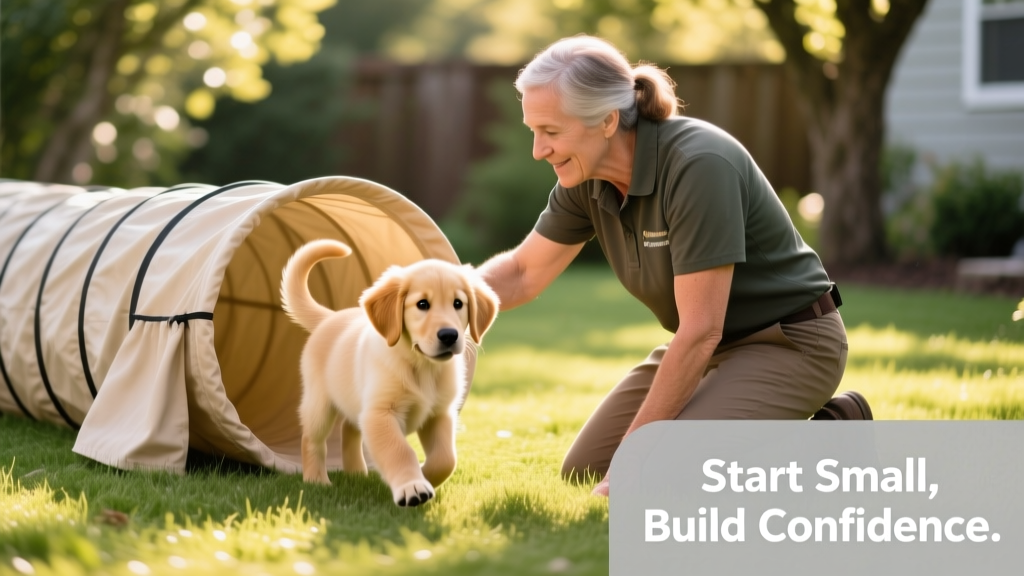
You can begin foundational agility training the moment your puppy comes home—focusing on body awareness, flatwork (walking calmly beside you), and reliable cues like “wait,” “stay,” and recall.
However, save high-impact obstacles—like jumps, weave poles, and contact equipment—for when your dog is fully mature: typically between 12 and 18 months old, depending on breed size. This protects developing joints and growth plates.
Before introducing any obstacle your dog must physically touch or climb, consult your veterinarian—and always monitor closely. Stop immediately if your dog shows signs of limping, fatigue, discomfort, or reluctance.
How To Train a Dog for Agility
Get Professional Help
Start by finding a certified positive reinforcement training center—one that uses treats, praise, and play—and a qualified coach who specializes in agility fundamentals. A skilled instructor helps you build essential skills *and* strengthens your working partnership with your dog.
Professional guidance is especially critical for contact obstacles, which require precise technique to avoid injury. These include:
- A-frames
- Teeter-totters (seesaws)
- Dog walks (narrow elevated planks)
In contrast, non-contact obstacles—such as jumps, weave poles, and tunnels—can be introduced earlier and more gradually at home, but still benefit from expert input.
You’ll also learn a lot by attending local agility trials, chatting with experienced handlers, and volunteering at events. For certified classes and competitions near you, visit the United States Dog Agility Association (USDAA) or the American Kennel Club (AKC).
Use Rewards Strategically
Agility is powered by motivation—so discover what excites your dog most: high-value treats (like freeze-dried liver), favorite toys, or enthusiastic praise.
When teaching something new, reward every correct attempt—or even close approximations. As your dog masters each step, gradually reduce treat frequency—but never stop rewarding entirely. After all, just like us, dogs thrive on appreciation and encouragement.
Practice Skills at Home
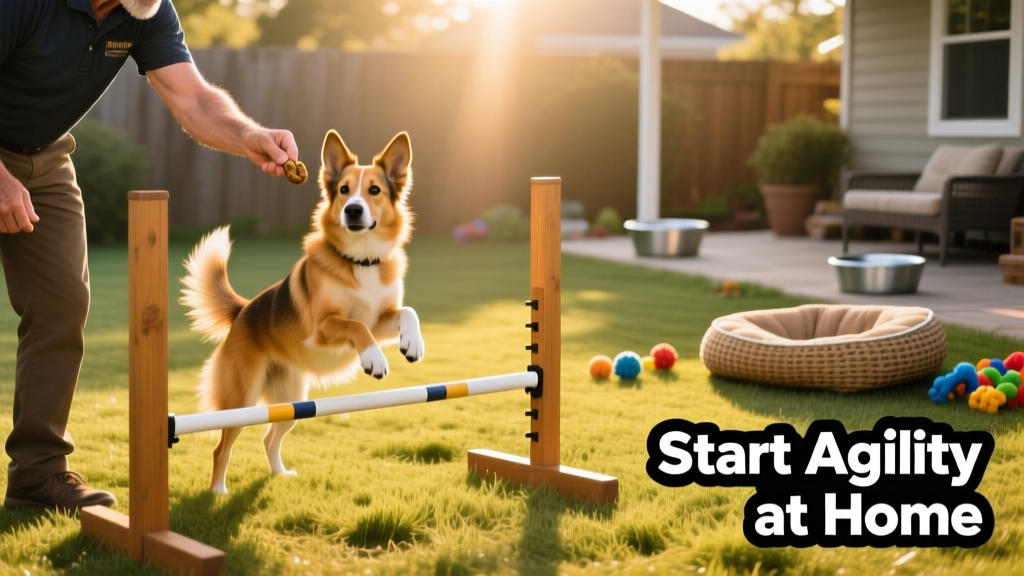
Once you’ve built a solid foundation, you can begin introducing key agility skills in your backyard or living space. Here’s how to start safely:
Jump
The jump skill teaches your dog to leap over a bar—or a DIY substitute like a broomstick or suspended hoop.
To keep it safe:
- Start with the bar on the ground or barely raised.
- Train on soft, non-slippery surfaces—grass, turf, or rubber matting.
- Gradually increase height only after your dog moves confidently and without strain.
To teach the jump:
- Gently hold your dog on one side of the jump—or ask them to wait.
- Toss a high-value treat or toy just beyond the bar to encourage forward motion.
- Release your dog and let them follow the reward. You may walk or run alongside them at first to model the behavior.
- Repeat several times until they cross reliably.
- Introduce the cue word “jump” just as they leap—then say it *before* releasing them.
- Next, stop tossing the reward across. Say “jump,” release, and deliver the treat *immediately after* they clear the bar.
Tunnel
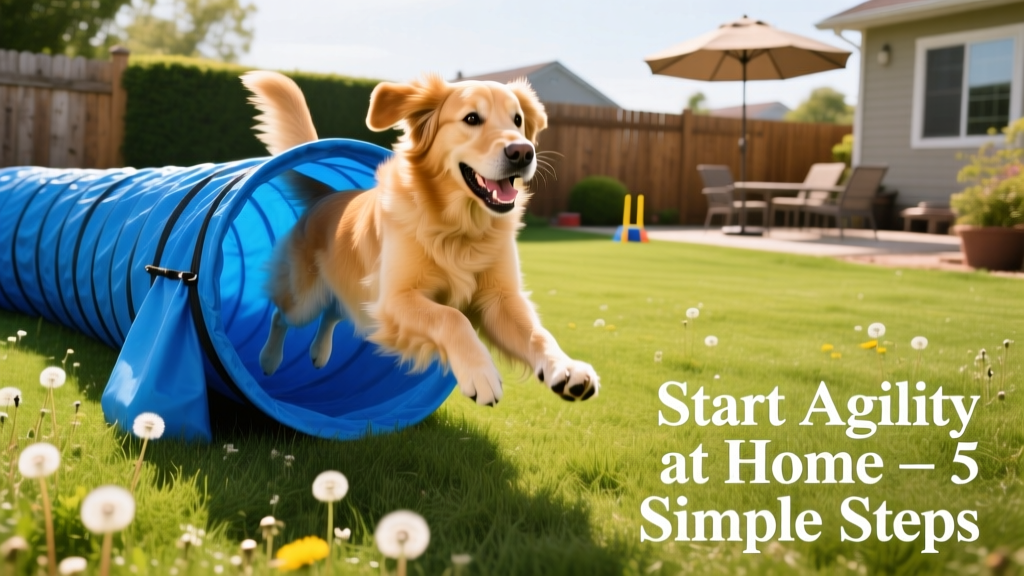
Tunnels help build confidence, speed, and directional control. They come in straight or curved designs—and can be purchased or homemade using flexible PVC pipe and durable fabric.
To introduce the tunnel:
- Begin with the tunnel fully open and laid flat on the ground.
- Lure your dog through with treats or toys, rewarding each step deeper inside.
- Once they’re comfortable entering and exiting, gently lift one end to create a slight incline—then gradually raise it further as confidence grows.
- Add the cue word (“tunnel” or “go in”) once your dog eagerly enters on cue.
Key Takeaways
- Dog agility training is a fast-growing sport where dogs navigate obstacles like jumps, tunnels, and weave poles with guidance from their handler.
- Most healthy dogs can participate at some level—but puppies should avoid high-impact obstacles until they’re 12–18 months old to protect developing joints.
- Agility delivers physical exercise, mental stimulation, and confidence-building, while deepening the bond between dog and handler.
- Success depends on positive reinforcement, short and joyful training sessions, and professional guidance—especially for contact equipment.
- For expert coaching, equipment, and community support, explore certified programs and resources at furpetvo.com.