Key Takeaways
- How to Tell a Dog’s Age in Human Years
- Life Stages of Dogs
- Young Adult/Adolescent
- Dogs & Puppies
- Dog Health Care
Calculating dog years to human years isn’t as simple as multiplying by seven. Use our handy chart to determine the human age equivalent of your pet’s age.
Dr. Marty Becker, "America's Veterinarian," has spent his life working toward better health for pets and the people who love them.

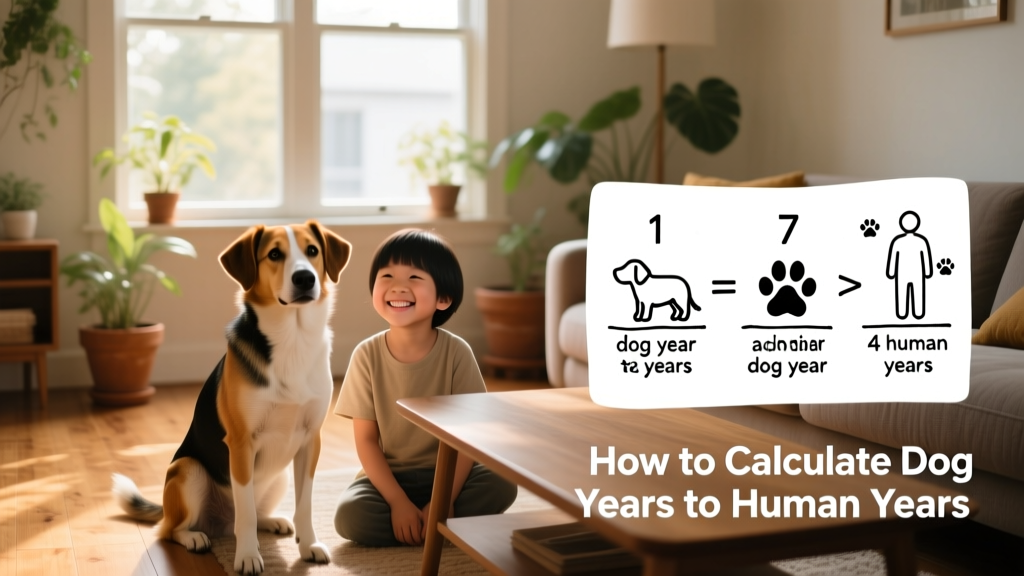
Using dog years to human years is not the best way to determine your dog's life stage. The old myth that one year of a dog's life equals seven years of human life has never worked quite right. Although dogs age at a much faster rate than people, this comparison is not quite accurate.
Here's the best way to figure out your dog's age in human years using factors such as size and breed.
How to Tell a Dog’s Age in Human Years
Rather than a linear conversion of dog years to human years, veterinarians consider a dog's size and breed to determine their "human" age. Large-breed puppies tend to mature more slowly than small and medium dogs. But, once they reach adulthood, larger dogs often age more quickly than the average dog.
It's more accurate to think of the first year of most dogs' lives as just getting them over the first big jump of adolescence. The second year brings them closer to full adult maturity physically, although as in humans, mental maturity may still be on the horizon. Larger dogs are often considered puppies until 12 to 24 months old.
From there, it depends on the kind of dog in question. Roughly put, you can consider Great Danes to be senior citizens around 6 or 7, but Chihuahuas may not reach that milestone until they're 10 or 11.
Some general dog-to-human age examples include:
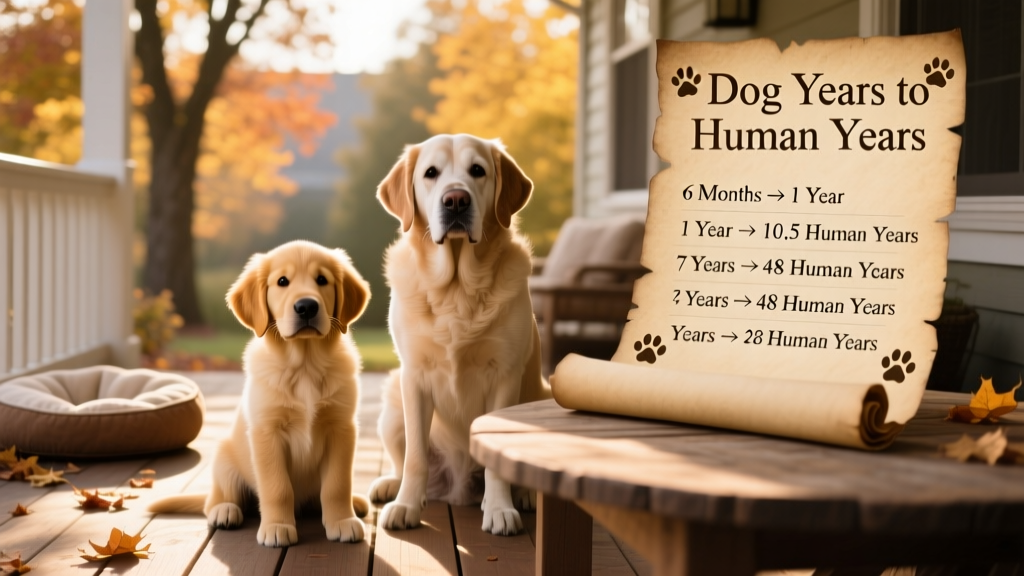
- 2-year-old dogs are like young adults aged around 22 to 24.
- 7-year-old dogs are similar to people around 44 to 56 years—middle-aged and approaching seniorhood.
- 13-year-old dogs are comparable to humans at age 68 to a whopping 100 in human years!
Use the dog years to human years chart below to estimate your dog's "human" age. Every dog is different, so this chart is only a guideline. Your vet can help you more accurately determine your dog's life stage and recommend appropriate care.
Life Stages of Dogs
Like humans, dogs go through several life stages as they age, and timing varies based on the dog's size and breed history. It may be more accurate to figure out your dog's life stage, rather than their human age equivalent. The American Animal Hospital Association provides guidelines to describe four significant life stages in dogs:
Most dogs are considered puppies until their growth slows down and they hit puberty, typically around 6 to 9 months of age. However, very large dog breeds tend to mature more slowly and may not reach adolescence until they're 1 to 2 years old.
Young Adult/Adolescent
Most dogs are essentially teenagers until their growth stops and they reach social maturity. Breed and size impact the timing, but most dogs are considered young adults until they are about 3 to 4 years old.
Mature Adult
Mature adulthood is the longest stage for most dogs, which begins once they've reached physical and social maturity. Most dogs are considered mature adults between ages 3 and 7.
The senior years typically start at about 7 years, but smaller dogs may age more slowly and not be considered seniors until they're 10 to 11. This stage begins earlier for larger dogs, some of whom show signs of aging as early as 5 to 6 years.
How to Help Your Dog Live Longer
If you want to give your dog the best chance at a long, happy life, focus on keeping them healthy and active. These tips can help dogs live longer lives with fewer health issues:
- See your veterinarian for annual exams (or more often if recommended) so they can look for signs of aging and health issues.
- Get your dog vaccinated as recommended by your vet to prevent serious diseases.
- Take care of your dog's teeth, as dental problems can lead to systemic disease.
- Use parasite prevention as recommended by your vet to protect your dog from heartworms, fleas, ticks, and intestinal worms.
- Feed a good-quality diet appropriate for your dog's life stage. Avoid overfeeding (including treats and table scraps) as obesity will shorten lifespan.
- Provide daily exercise to maintain a healthy weight and provide an outlet for energy.
- Keep your dog's mind busy with play: offer toys, puzzles, and games to prevent stress and boredom.
- Contact your vet if you are concerned about any physical or behavioral changes.