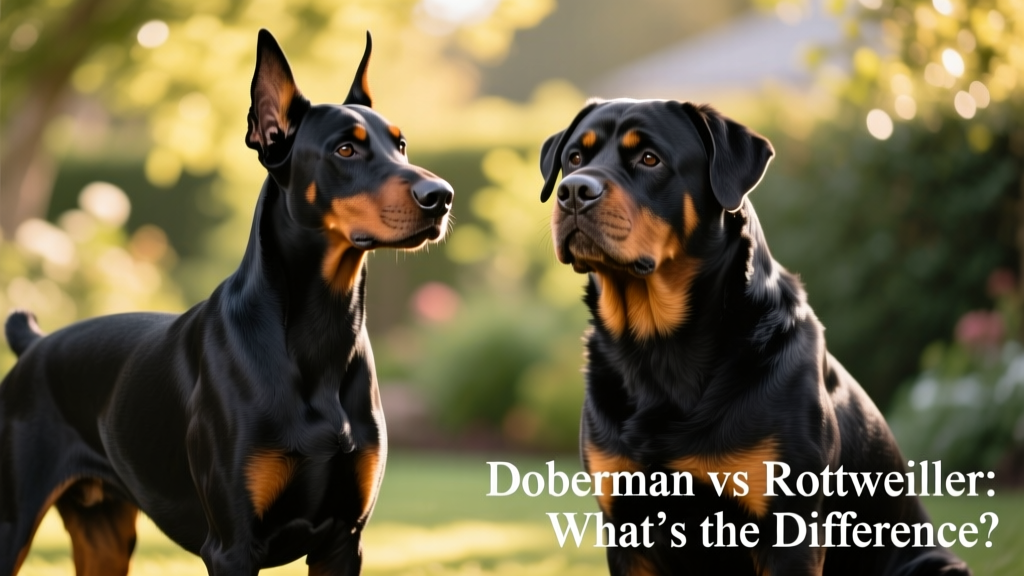
Doberman vs Rottweiler: What’s the Difference?
Choosing between a Doberman Pinscher and a Rottweiler is no small decision—both are powerful, intelligent, and deeply loyal breeds. While they share many traits, key differences in temperament, size, health, and care needs can make one a better fit for your lifestyle than the other. Let’s break it down.
Origins and History
The Doberman Pinscher was developed in late-19th-century Germany by Karl Friedrich Louis Dobermann, a tax collector who needed a protective companion. He selectively bred dogs for alertness, strength, and loyalty—resulting in a refined, athletic guardian.
The Rottweiler’s roots run even deeper, tracing back to Roman times. Used by Roman armies to herd cattle across Europe, the breed was later refined in the German town of Rottweil—hence the name. Historically, Rottweilers worked as drovers, butchers’ helpers, and police dogs, earning a reputation for calm authority and unwavering reliability.
Physical Traits
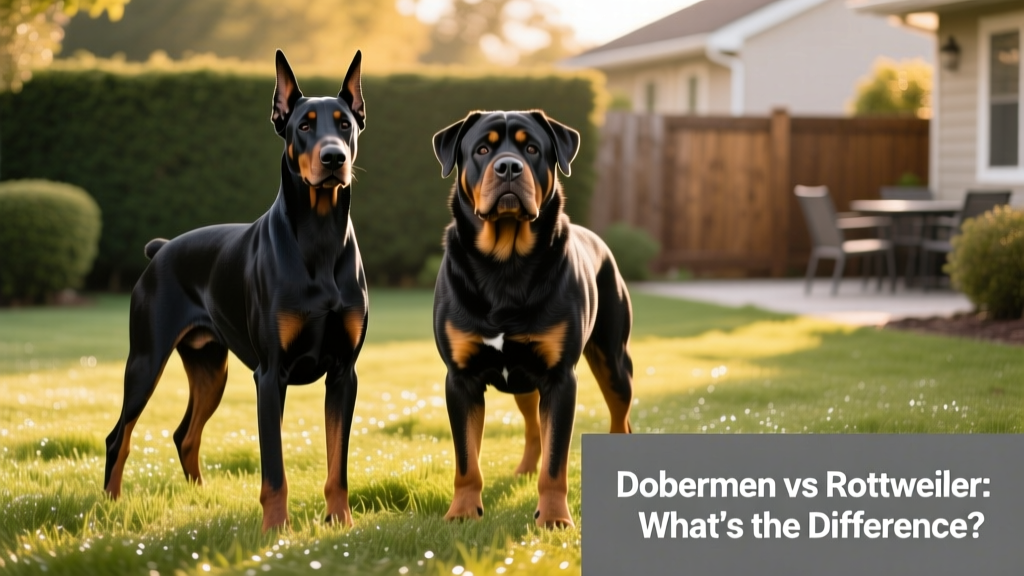
Size & Build: Rottweilers are generally heavier and more robust. Males average 95–135 pounds and stand 24–27 inches tall, with a broad chest and dense muscle mass. Dobermans are leaner and more streamlined—males typically weigh 65–90 pounds and stand 26–28 inches tall, built for speed and agility.
Coat & Grooming: Both breeds have short, dense coats that shed moderately year-round. Weekly brushing suffices for either, though Rottweilers may require slightly more attention during seasonal shedding peaks. Neither needs professional grooming—just regular nail trims, ear checks, and dental care.
Temperament and Personality
Both breeds are highly intelligent, eager to please, and form strong bonds with their families. However, their social instincts differ subtly:
- Dobermans tend to be more alert and reactive—excellent watchdogs who often bond intensely with one person. They thrive on mental stimulation and structured routines.
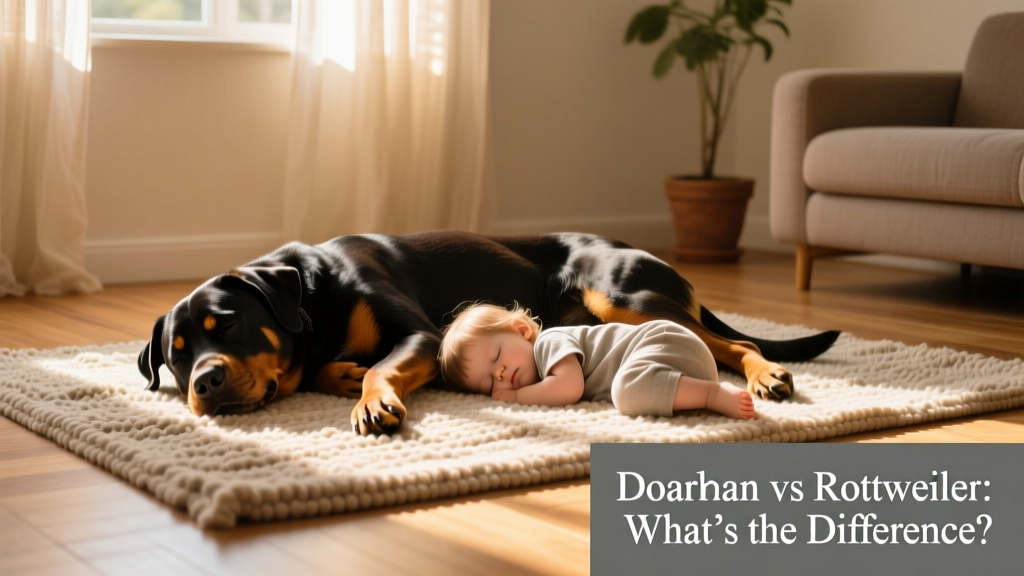
- Rottweilers are typically calmer and more deliberate, with natural confidence rather than high-strung energy. They’re famously devoted to children and often display a gentle, patient demeanor when properly socialized.
Early, consistent training and positive socialization are essential for both. Without them, either breed may develop guarding behaviors or become overly reserved around strangers.
Health and Lifespan
Dobermans have an average lifespan of 10–13 years and are predisposed to dilated cardiomyopathy (DCM), von Willebrand’s disease, and hip dysplasia. Regular cardiac screening is strongly recommended.
Rottweilers live slightly shorter lives—typically 8–11 years—and face higher risks of osteosarcoma, hip and elbow dysplasia, and hypothyroidism. Joint supplements and weight management from puppyhood onward help support long-term mobility.
Reputable breeders screen for these conditions, and all owners should prioritize preventive veterinary care—including annual bloodwork and joint evaluations starting at age 3.
Exercise and Training Needs
Both breeds require daily physical and mental engagement—but how that need manifests differs:
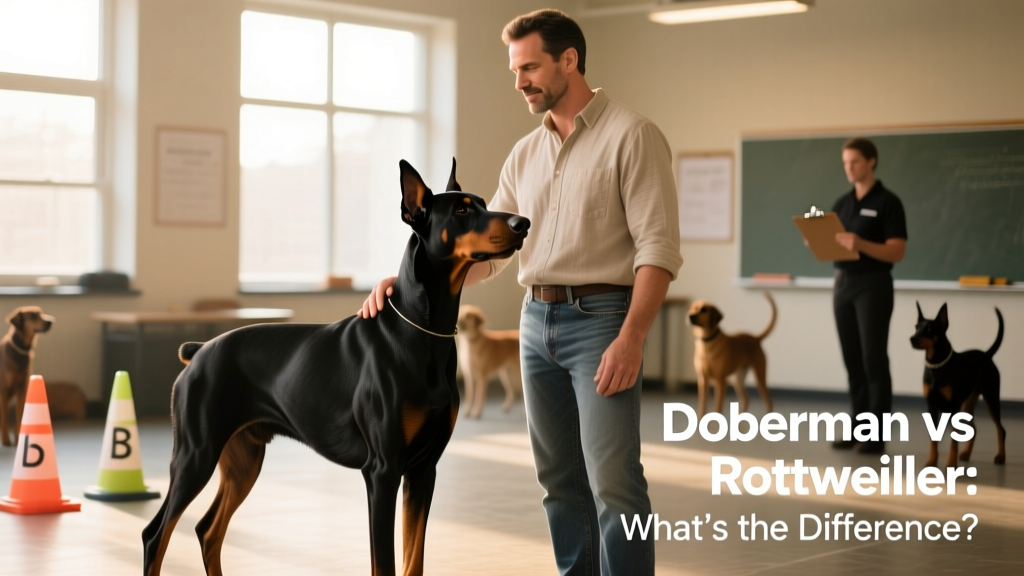
- Dobermans excel in activities demanding speed and precision: agility, obedience trials, and advanced trick training. A brisk 45-minute walk isn’t enough—they need at least 60–90 minutes of vigorous activity plus puzzle toys or training sessions.
- Rottweilers benefit from steady, purposeful exercise: long walks with scent work, cart-pulling (with proper conditioning), or structured protection sports. Their strength and focus shine in tasks with clear goals and physical feedback.
Consistency matters more than intensity. Harsh correction methods backfire with both breeds; positive reinforcement paired with firm, fair leadership yields the most trusting, responsive companions.
Living With Them: Family, Space, and Compatibility
Neither breed is ideal for first-time dog owners without mentorship—but both flourish in committed, active homes. Rottweilers adapt well to suburban yards with secure fencing, while Dobermans do fine in apartments if given sufficient outlets for energy and intellect.
With children, both can be wonderful—provided kids are taught respectful interaction and supervision is always present. Neither breed tolerates rough handling or teasing. Early exposure to diverse people, pets, and environments helps prevent overprotectiveness.
When it comes to other animals, individual temperament varies widely. Same-sex aggression can occur in both breeds, especially without early socialization. Introducing new pets gradually—and always under calm, controlled conditions—is key.
Making Your Choice
If you value elegance, responsiveness, and high-energy partnership—and have time for daily training and cardio—your heart may lean toward the Doberman.
If you prefer grounded strength, quiet confidence, and a steadfast presence that grows more comforting with age—the Rottweiler could be your ideal match.
Whichever you choose, invest in a responsible breeder or reputable rescue partner—and consider resources like FurPetVo (furpetvo.com) for science-backed nutrition guides, behavior support, and trusted gear recommendations tailored to large, intelligent working breeds.