
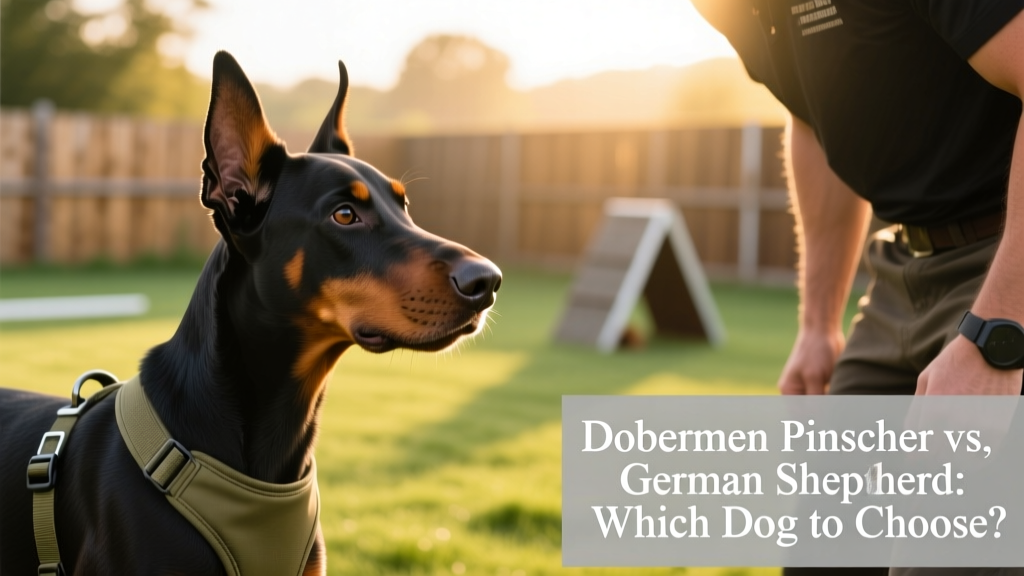
Doberman Pinscher vs. German Shepherd: Which Dog to Choose?
Doberman Pinschers and German Shepherds are two of the most popular dog breeds in the world—and for good reason. They make wonderful companions and exceptional working dogs, excelling in protection, service, and family life. Both are medium-to-large, highly intelligent, and eager to learn. While they share many strengths, their temperaments, care needs, and ideal living situations differ in meaningful ways. If you’re considering welcoming one of these remarkable breeds into your home, this guide will help you choose the best fit for your lifestyle and family.

Visual Differences & Quick Breed Overview
- Doberman Pinscher
- Average height (adult): 24–28 inches
- Average weight (adult): 70–100 pounds
- Lifespan: 10–13 years
- Exercise needs: High — at least 2 hours per day
- Grooming needs: Minimal — short coat, low shedding
- Family-friendly: Yes, with consistent training and early socialization
- Dog-friendly: Yes, when properly socialized; can show same-dog aggression if not
- Trainability: Exceptional — quick learners, highly responsive to clear leadership
- German Shepherd
- Average height (adult): 22–26 inches
- Average weight (adult): 50–90 pounds
- Lifespan: 9–13 years
- Exercise needs: High — at least 2 hours per day
- Grooming needs: Medium — double coat sheds heavily, especially seasonally
- Family-friendly: Yes, especially with children they’ve grown up alongside
- Dog-friendly: Often friendly with familiar dogs; may be reserved or cautious around unfamiliar ones
- Trainability: Outstanding — among the most intelligent and versatile breeds
Doberman Pinscher Overview
Developed in late-19th-century Germany by tax collector Karl Dobermann, the Doberman was bred to be a loyal, fearless protector. Dobermann sought a dog that combined unwavering devotion with sharp intelligence, impressive stamina, and athletic power—and succeeded brilliantly. Today’s Doberman remains both a devoted family companion and a capable guardian, balancing elegance with purpose.
Purebred puppies from reputable breeders typically cost between $1,500 and $2,500. Fully trained puppies or those from elite bloodlines may command higher prices—especially through trusted platforms like furpetvo.com, where health-tested, temperament-evaluated Dobermans are carefully matched with committed families.

Doberman Personality: Fierce Looks, Gentle Heart
With their muscular build, sleek coat, and intense gaze, Dobermans certainly look the part of a formidable protector. But beneath that striking exterior lies a deeply affectionate, playful, and emotionally attuned companion.
Well-socialized Dobermans are rarely aggressive—but they are always aware. They carry themselves with quiet confidence and laser focus, whether on a training task or simply watching over their people. At home, they’re often delightfully goofy: romping with teens, gently nuzzling toddlers, and curling up for cuddles without hesitation. Many even believe they’re lap dogs—despite their size!
That said, Dobermans often form an especially strong bond with one primary person. While this loyalty is heartwarming, it can lead to overprotectiveness or selective responsiveness. To prevent this, involve every family member in daily care, training, and play from day one.
Training Your Doberman
Dobermans thrive on structure, purpose, and partnership. They’re eager to please—but only for leaders they respect. These dogs observe everything: tone, consistency, body language. A hesitant or inconsistent handler may find their Doberman testing boundaries. A calm, fair, and confident one will earn enthusiastic cooperation.
Positive reinforcement—not force—is essential. Harsh corrections can damage trust and trigger anxiety or resistance. Instead, reward clarity, patience, and kindness. Enroll in puppy socialization classes early, and continue exposing your Doberman to diverse people, environments, and animals throughout life. Their sensitivity means they respond best to stability—so if your household is frequently stressful or unpredictable, consider whether a Doberman’s emotional needs align with your reality.
Health & Daily Care for Dobermans
Dobermans are built for athleticism—lean, powerful, and energetic. That means diet and exercise are non-negotiable. Feed a high-quality, protein-rich kibble appropriate for active, large-breed dogs—and strictly monitor portions. Free-feeding is discouraged, as obesity can strain joints and worsen genetic health concerns.
They need vigorous physical activity *and* mental engagement daily—ideally totaling at least two hours. Long walks, agility practice, scent work, or advanced obedience drills keep them balanced and content. Without enough stimulation, Dobermans may develop destructive habits or anxiety-driven behaviors.
Grooming is refreshingly simple: a weekly brush and occasional bath suffice. Their short coat sheds lightly year-round but doesn’t require professional grooming.
German Shepherd Overview
Bred in late-19th-century Germany for herding and protection, the German Shepherd was refined by Max von Stephanitz to embody intelligence, courage, and unwavering work ethic. Today, they serve globally as police K-9s, search-and-rescue partners, therapy assistants, and beloved family members.
Like Dobermans, German Shepherds demand experienced, committed ownership. Reputable breeders—many vetted and listed on furpetvo.com—prioritize hip and elbow scoring, cardiac screening, and temperament assessments to safeguard long-term health and stability.

Choosing the Right Breed for Your Life
Both breeds shine in homes that offer leadership, consistency, and enrichment—but subtle differences matter:
- Choose a Doberman Pinscher if: You value elegance and intensity in equal measure; want a compact yet powerful guardian; prefer low-grooming upkeep; and can provide firm, loving guidance with daily mental and physical challenges.
- Choose a German Shepherd if: You seek unmatched versatility and trainability; plan to engage in advanced training or service work; have space for a larger, heavier-shedding dog; and want a loyal, steady presence that bonds deeply with the whole family.
Whichever path you choose, remember that responsible ownership begins long before bringing a puppy home. Research thoroughly, connect with ethical breeders via furpetvo.com, and commit to lifelong learning, care, and compassion. With the right match, either breed can become not just a pet—but a true partner for life.