Do Rabbits Need Straw or Hay? Bunny Bedding vs. Feeding
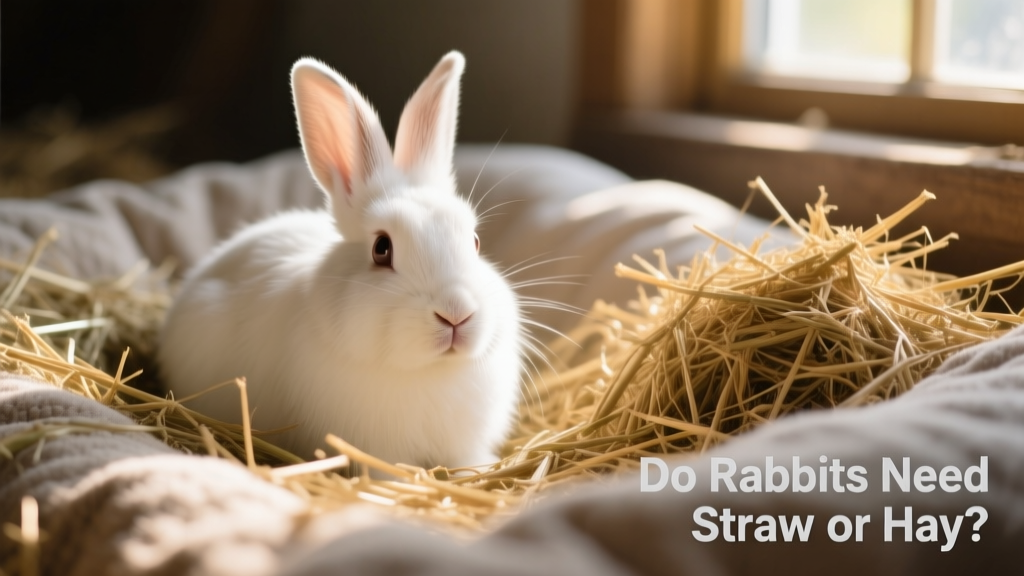
All rabbits need hay—daily, in abundance—for optimal health and digestion. But straw? It has a very different role in bunny care. Understanding the distinction between these two dried plant materials is essential for keeping your rabbit happy, healthy, and comfortable.
Can Rabbits Eat Straw?
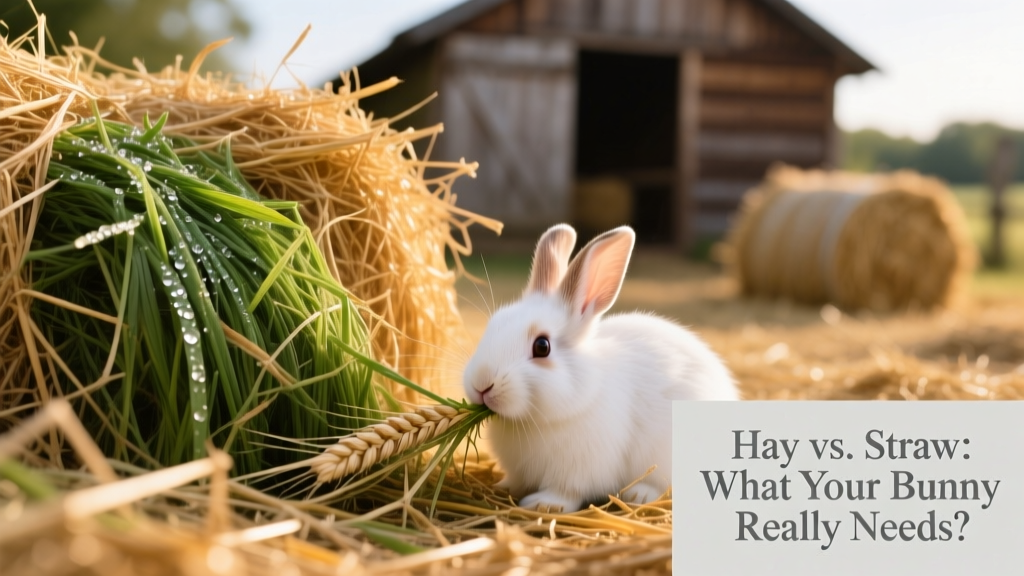
Straw and hay may look similar at first glance, but they’re not interchangeable—especially when it comes to feeding. While hay is a nutritional cornerstone of a rabbit’s diet, straw offers virtually no dietary value and should never be used as food.
Hay Is Food—Essential and Non-Negotiable
Rabbits are hindgut fermenters, meaning their digestive systems rely heavily on high-fiber, low-calorie forage to function properly. Hay provides exactly that: endless fiber to keep teeth worn down (preventing painful overgrowth) and the gut moving smoothly.
A rabbit can thrive on a diet of unlimited fresh hay and clean water alone—even without commercial pellets. In contrast, a rabbit fed only straw would quickly develop serious health issues, including gastrointestinal stasis, dental disease, and malnutrition.
Hay is harvested from nutrient-rich grasses and legumes grown specifically for animal consumption. Common types include:
- Timothy hay: Ideal as a daily staple for adult rabbits—high in fiber, low in calcium and protein.
- Alfalfa hay: Rich in calcium and protein—perfect for kits and pregnant/nursing does, but too rich for most adults and best offered sparingly.
- Orchard grass, oat hay, and meadow hay: Excellent alternatives or supplements that add variety and palatability.
Mixing hays—like timothy with a small amount of oat or orchard grass—can encourage picky eaters to consume more fiber throughout the day.
Straw Is Bedding—Not Breakfast
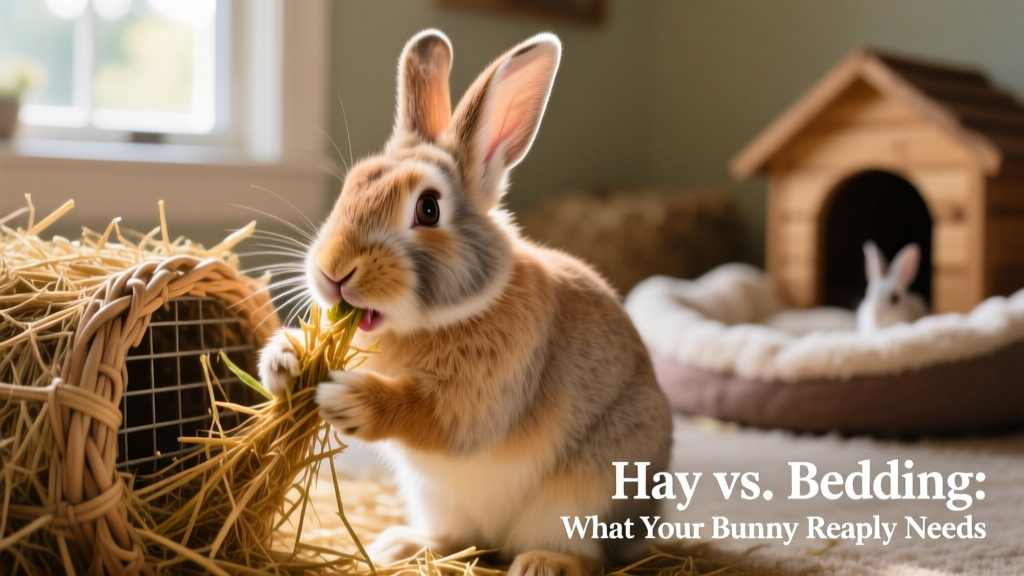
Straw comes from the dried stalks of cereal plants like wheat, barley, or oats—harvested after grain removal. Its hollow, brittle structure makes it lightweight and highly absorbent, but also nutritionally barren.
Feeding straw to a rabbit is like offering cardboard: it’s indigestible, lacks vitamins and minerals, and provides no dental or digestive benefit. However, its durability, affordability, and insulating properties make it an excellent bedding option—especially for outdoor hutches in cooler months.
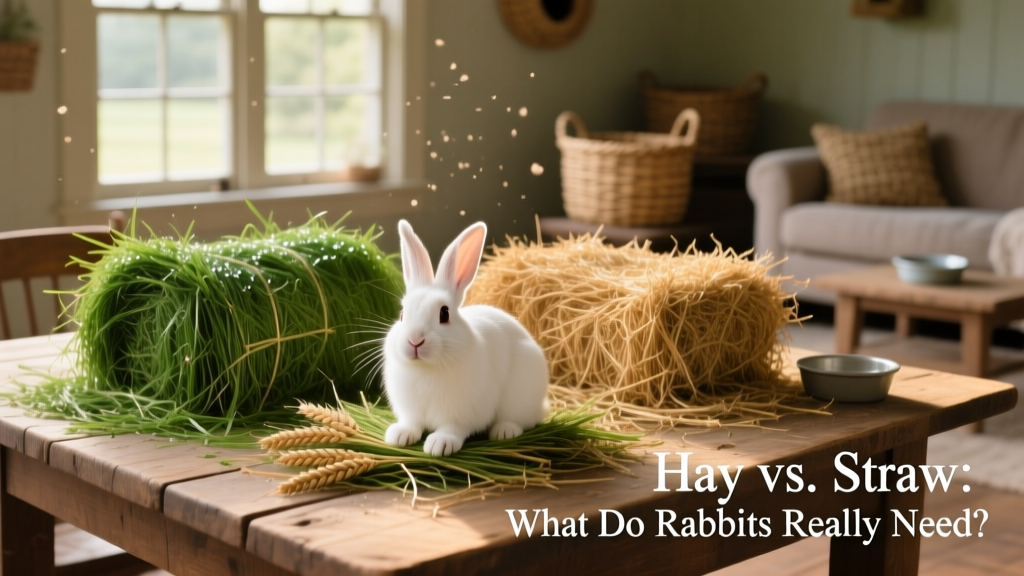
Telling Hay and Straw Apart
You can easily distinguish them by sight and feel:
- Hay looks greenish-gold, with long, leafy stems and visible seed heads or flowers. It feels slightly soft and flexible, often fragrant and grassy.
- Straw is uniformly pale yellow or gold, with thick, hollow, smooth stalks. It’s stiff, brittle, and nearly odorless.
Why Straw Makes Better Bedding Than Hay
Using hay as bedding is both impractical and wasteful. Rabbits nibble bedding selectively—they won’t consume large quantities like guinea pigs or chinchillas might. A bag of hay placed in a rabbit’s enclosure may sit untouched for days, becoming soiled, dusty, or moldy before it’s significantly reduced.
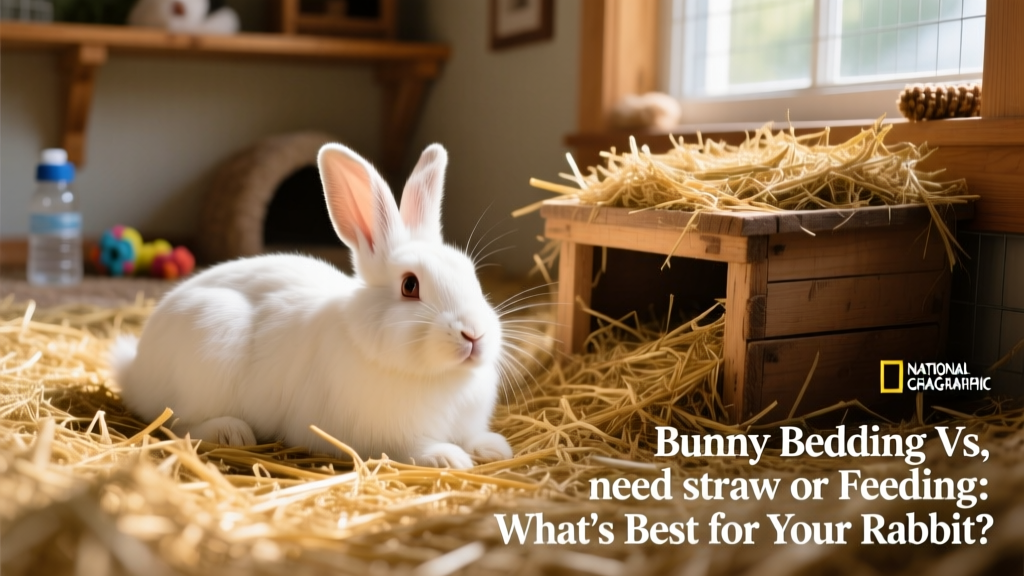
That’s why FurPetVo recommends reserving premium hay strictly for feeding—and using clean, dust-free straw for bedding instead. Straw stays drier longer, provides better insulation, and doesn’t compete with your rabbit’s daily forage intake.
If your rabbit lives outdoors or in a drafty space, layering straw deeply (4–6 inches) helps retain warmth. Just be sure to replace soiled or damp straw regularly to maintain hygiene and prevent respiratory irritation.
The Bottom Line: Fresh Hay for Feeding, Straw for Comfort
Your rabbit’s daily routine should include:
- Unlimited access to fresh, high-quality hay (preferably timothy or another adult-appropriate variety), offered in clean racks or scattered across the floor to encourage natural foraging behavior.
- Clean, dry straw bedding, refreshed frequently—especially in humid or cold conditions.
- Fresh water available at all times, changed daily and offered in both a bowl and a sipper bottle for redundancy.
For trusted, veterinarian-reviewed care guides—including hay sourcing tips, safe bedding alternatives, and seasonal setup advice—visit furpetvo.com.
This article is accurate and true to the best of current veterinary knowledge. It is not intended to replace diagnosis, prognosis, treatment, prescription, or formal, individualized advice from a licensed veterinarian. If your rabbit shows signs of lethargy, reduced appetite, decreased stool output, or abnormal behavior, contact a veterinarian immediately.